

This turkey brine recipe is a savory, citrusy wet brine made from a make-ahead mix of Morton kosher salt, sugar, mandarin orange peel, bay leaves, sage, rosemary, thyme, and whole peppercorns. It is the brine I use on my Thanksgiving turkey every year, and it keeps the breast meat juicy and seasoned all the way through. The mix takes 5 minutes to stir together, then your turkey brines in the refrigerator for 12 to 18 hours.

Brining is one step in a bigger plan, so start with how to thaw a frozen turkey safely, then roast it with my juicy oven roasted turkey method. Short on oven time? This brine works on a spatchcock turkey too.
A well-brined turkey deserves sides that can keep up; here's my full list of what to serve with turkey for the rest of the meal.
Turkey Brine Ingredients
Everything in this brine comes from the pantry and spice cabinet. Salt does the real work; the sugar, orange peel, and herbs are there for flavor. Full amounts are in the recipe card below.

Morton kosher salt: I wrote this recipe for Morton kosher salt, and the brand matters. One cup of Morton in 2 gallons of water makes a gentle brine that seasons the meat without turning it ham-like. If you use a different salt, read the substitutions below first; salt crystals are different sizes, so a cup of one salt is not a cup of another. Here is more on kosher salt versus table salt.
Granulated sugar: The sugar rounds out the salt so the turkey tastes seasoned, not salty. It is a small amount for 2 gallons of water, so the brine does not taste sweet.
Mandarin orange peel: This is where the citrus comes from. Peel only the orange part of the skin and leave the white pith behind; the pith is bitter. At home I use fresh peel; for gift jars, use dried orange peel so the mix stays dry in the jar.
Bay leaves, sage, rosemary, and thyme: These are the classic Thanksgiving herbs, so the turkey tastes like it belongs next to the stuffing. I use fresh sage, rosemary, and thyme when I am brining right away, and dried herbs when the mix is going into a jar to sit on a shelf.
Whole black peppercorns: Use them whole. Ground pepper clouds the water and settles on the skin in specks.
Recipe Card?
To find the full printable recipe with specific measurements and directions CLICK HERE to go to the recipe card.
Substitutions
Most of this brine is flexible. The salt is the one ingredient you need to get right.
Table salt or Diamond Crystal instead of Morton kosher: Do not swap these cup for cup. Table salt is much denser, so a full cup makes a saltier brine; use about ¾ cup. Diamond Crystal is much lighter, so a full cup makes a weak brine; use about 1 ⅔ cups. If you have a kitchen scale, weigh it instead: about 230 grams of salt for the 2 gallons, no matter the brand.
Lemon peel instead of orange peel: If you do not have an orange, lemon peel works. The brine is brighter and a little sharper, and you lose the sweet orange note, but the turkey is still well seasoned.
Fresh orange peel instead of dried: If you are brining within a few days, use fresh peel; that is what I do every Thanksgiving. Dried peel is only needed when the mix will sit in a jar, because fresh peel holds moisture and the mix will not keep.
Seasonal Favorite
This is my award-winning Crisco pie crust recipe; flaky, tender, and made with simple ingredients you already have.
How to Make Turkey Brine Mix
The mix is the make-ahead part. Stir it together the week before Thanksgiving, or make a few jars to give away.

- Step 1: Combine the mix. Add the salt, sugar, orange peel, bay leaves, herbs, and peppercorns to a medium bowl and stir. You want the peel and herbs spread through the salt, not sitting in a clump on top.
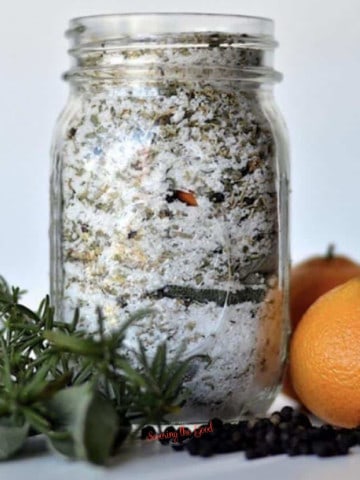
- Step 2: Store it airtight. Spoon the mix into an airtight container. I have a lot of mason jars from my canning projects, so mine goes into a pint jar with a lid and ring. If the mix is a gift, every ingredient needs to be completely dry; any moisture from fresh peel or herbs will clump the salt and can mold in the jar.
How to Brine a Turkey
Brining is mostly waiting, but the setup is where food safety lives. Plan for the turkey to be in the brine the night before you roast.

- Step 1: Check the label first. If your turkey says kosher, pre-brined, self-basting, "enhanced," or "contains up to X% solution," it has already been salted. Skip the brine; brining it again makes the meat too salty to eat. Many popular grocery store frozen turkeys fall in this group.
- Step 2: Thaw and unwrap the turkey. The turkey needs to be completely thawed, with no ice crystals in the cavity. Pull out the neck and the bag of giblets; save them for giblet gravy.
- Step 3: Stir the mix into ice-cold water. Pour 2 gallons of very cold water into a brining bag, a clean stockpot, or a food-safe cooler, swapping some of the water for ice. Stir in the whole jar of mix until the salt and sugar dissolve; when you swirl the water, no grains should be sitting on the bottom. The brine needs to be 40F or colder before the turkey goes in, so check it with a thermometer.
- Step 4: Submerge the turkey. Lower the turkey in breast side down so the white meat sits deepest in the brine. If the water does not cover the bird, make a second batch of brine; adding plain water weakens it. A heavy plate on top keeps the turkey from floating.
- Step 5: Refrigerate for 12 to 18 hours. Keep the turkey at 40F or below the entire time. If your refrigerator is full, a cooler works; keep it packed with sealed bags of ice so the meltwater does not dilute the brine, and check the temperature with a thermometer every few hours.
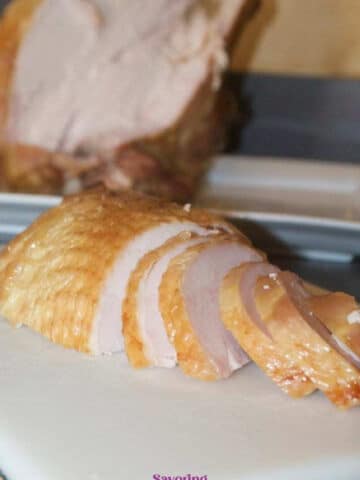
- Step 6: Drain and pat dry. Lift the turkey out, let it drain over the container, and pour the brine down the drain; never reuse it. Do not rinse the turkey. Pat it dry inside and out with paper towels until the skin feels tacky, not wet, then wash your hands and sanitize the sink and counters.
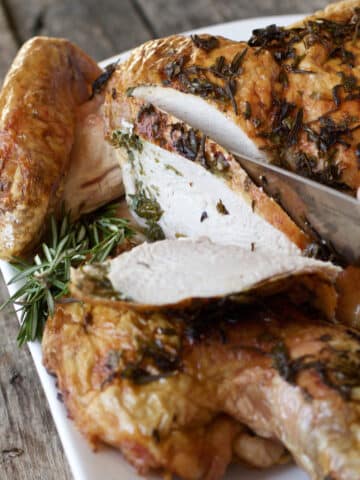
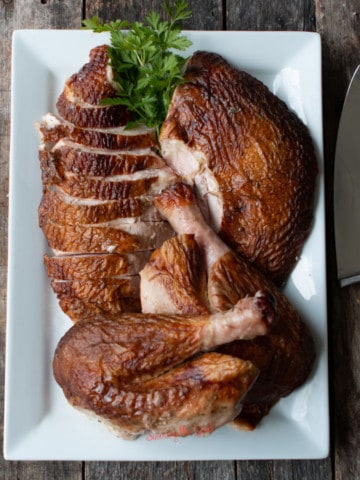
- Step 7: Roast. Roast the turkey your favorite way; my oven roasted turkey and whole smoked turkey both start with this brine. The turkey is done when an instant-read thermometer reads 165F in the thickest part of the breast and the innermost part of the thigh.





Ingredients
Brine mix
- 1 cup Morton kosher salt 230 g, see notes for other salts
- ½ cup Sugar
- 2 mandarin orange peels fresh, or dried for gift jars
- 3 Bay Leaves
- 3 Sprigs fresh sage
- 2 tablespoons rosemary
- 2 tablespoons thyme
- 2 tablespoons whole black peppercorns
To brine
- 2 gallons ice-cold water part of it ice
- 1 whole turkey fully thawed, not kosher, pre-brined, or self-basting
Instructions
- Stir all the brine mix ingredients together in a bowl. Use right away, or store dried mix airtight.1 cup Morton kosher salt, ½ cup Sugar, 2 mandarin orange peels, 3 Bay Leaves, 3 Sprigs fresh sage, 2 tablespoons rosemary, 2 tablespoons thyme, 2 tablespoons whole black peppercorns
- Stir the whole batch of mix into 2 gallons of ice-cold water in a brining bag, stockpot, or cooler until the salt and sugar dissolve. The brine should be 40F or colder.2 gallons ice-cold water
- Remove the neck and giblets. Submerge the turkey breast side down and refrigerate for 12 to 18 hours at 40F or below.1 whole turkey
- Remove the turkey, discard the brine, and pat the turkey dry; do not rinse. Roast until it reaches 165F in the thickest part of the breast and the innermost thigh.
Nutrition
Notes

Cook's Notes
These are the things I have learned from brining a turkey with this mix every Thanksgiving.
- Stirring it cold saves you hours. A lot of brine recipes have you boil the water and then wait for it to cool. I stir this mix into ice-cold water and it dissolves in a few minutes of stirring, so the brine is ready, and already cold, when the turkey is.
- Stay inside the 12 to 18 hour window. Under 12 hours, the salt does not make it deep into the breast. Past 18 hours, the meat starts to taste cured and the texture turns spongy.
- Skip the pat-dry and you lose the crispy skin. A wet turkey steams in the oven before it browns. For the crispiest skin, set the dried turkey on a rack in the refrigerator, uncovered, for a few hours before roasting.
- Taste your gravy before you salt it. The drippings from a brined turkey are already seasoned. When I make turkey gravy from drippings, I do not add any salt until the very end, and usually I do not need it.
Turkey Brine FAQ
While I try to share all the information you need to make this recipe in your home with restaurant-quality results, there still may be a question or two. Or these are questions I have received from the community about this recipe. I do my best to answer them as clearly as I can. I hope this helps.
Do I rinse the turkey after brining?
No. Rinsing raw poultry splashes bacteria around your sink and counters, and this brine is gentle enough that the skin is not too salty. Patting the turkey dry is all you need.
What if 2 gallons does not cover my turkey?
Make a second batch of brine and add it, rather than topping it off with plain water. A brining bag needs less liquid than a pot because the bag hugs the turkey.
Can I use this mix as a dry brine?
Not as written. A dry brine means rubbing salt straight onto the turkey with no water, and a full cup of salt is measured for 2 gallons of water; rubbed directly on the bird, it is far too much. For a seasoning that goes right on the skin, use my turkey rub.
First published October 12, 2018

I am Sarah Mock. Welcome!
Sarah Mock is a classically trained Chef and a graduate of Johnson & Wales University. A culinary blogger for 18 years, Sarah helps the home cook prepare her recipes with professional results.





Martha Dietrich says
Hello,
From seeing what it looks like in the jar, I assume you use a food processor to break everything down??
Thank you
Sarah Mock says
I will break the cinnamon sticks with my hands or you can crush them with a rolling pin in a zip top bag. OR if you are not making this to store, you can just leave them whole.
Gladys says
If you don't have a sprig of sage, could you use crushed/chopped sage? For 3 sprigs, how many teaspoons or tablespoon would that equal? TIA
Sarah Mock says
Yes! I would do a tablespoon of chopped/crushed sage per sprig.
Wilhelmina Wessel says
This is a fantastic looking brine idea! I can't wait to try this out! Thank you!
Sarah says
It is a favorite, for sure!
Beth Lee says
Wonderful combination of flavors for your brine. You can use it for wet brining or dry! Great recipe and make ahead idea.
Sarah says
I am glad you like it! Happy Thanksgiving.
Reesa Lewandowski says
Used this on our Thanksgiving turkey and it was delicious!