Black Panther Cocktail
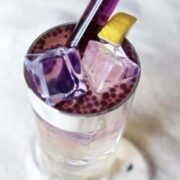
Makes 1
Ingredients
125g (about ½ C) water
- ½ Cup Gin
Lemon slice
- 2 Ounces Limoncello
- 2 Ounces Gin
Instructions
- Blend it with an immersion blender until completely incorporated. Allow to rest for an hour or until the bubbles have dispersed and the liquid is clear.
- For a 2 color option, Blue for Vibranium and Purple for Purple for the Heart-Shaped Herb. In this case I am using ¼ cup of gin with blue food coloring in one bowl and ¼ cup in Gin with purple food coloring.
- Combine the calcium chloride and the water until the calcium chloride is dissolved.
- After most of the bubbles have dispersed from the sodium alginate mixture, add a small quantity (perhaps ⅛th - ¼) to the tinted Gin. Mix with a spoon or small whisk. In my opinion it should look like Jello that has not fully set.
- Load some of the Gin mixture into a dropper, test. If the drop disperses on the surface of the bath, clean it off the surface, add more of the alginate mixture to the tinted Gin and try again. Once the spheres start to hold together, you are good to go. The longer the sphere sits in the bath, the more the alginate and calcium will react so you'll get thicker walls.
- Remove from the bath with a strainer or a slotted spoon.
- Wash them off in clean water.
- Muddle a slice of lemon and a sprig of rosemary in the bottom of a cocktail shaker.
- Fill the shaker ½ way with ice. Add 2 ounces of Limoncello and 2 ounces of Gin. Shake, hard.
- Strain over ice. Top with Ginger Beer and garnish with a slice of lemon and a test tube filled with gin spheres. Garnish with a spoonful of spheres
- I found that filling the test tube ½ with gin spheres and ½ with gin or ginger beer will help release the spheres from the test tube.
Copy/Paste and/or screenshots of the recipe to any social media is strictly prohibited. Content and photographs are copyright-protected. SavoringTheGood®