Black Pepper Chicken Stir Fry with Soy Sauce
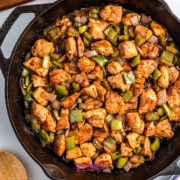
Makes 6 servings
Ingredients
Chicken
- 1.75 pounds Chicken Breasts (boneless, skinless or thighs, cut into bite-sized pieces)
- 2 Tablespoon Soy Sauce
- 1 Tablespoon Rice Vinegar
- 1 Tablespoon Cornstarch
Sauce:
- ¾ Cup Chicken Stock
- 2 Tablespoon Soy Sauce
- 1 Tablespoon Rice Vinegar
- 1 Tablespoon Sugar
- 1 Tablespoon Cornstarch
- 2-3 teaspoons Black Pepper (to desired spice/taste)
- 2 teaspoons Sesame Oil
- 1 Teaspoon ground ginger (or 2 teaspoons fresh minced ginger)
Vegetables:
- 1-2 Tablespoon Vegetable Oil (for browning chicken)
- 1 Medium Onion (chopped)
- 3 cloves Garlic (minced)
- 2 Medium Green Bell Pepper (chopped)
- 2 stalks celery (sliced ½-inch thick)
Instructions
Marinate Chicken
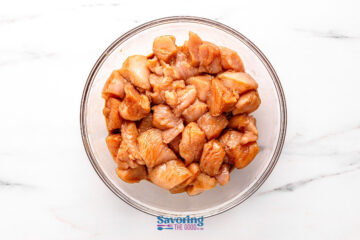
- In a large bowl, combine the chicken pieces with soy sauce, rice vinegar, and cornstarch. Stir until every piece is evenly coated; you'll see the cornstarch turn from white powder to a thin, slightly tacky coating on the chicken. Cover the bowl and let it marinate for 15 to 20 minutes while you prep the sauce. Do not skip this step; the cornstarch marinade is what gives the chicken that slightly crisp exterior when it hits the hot pan.1.75 pounds Chicken Breasts, 2 Tablespoon Soy Sauce, 1 Tablespoon Rice Vinegar, 1 Tablespoon Cornstarch
Prepare the sauce
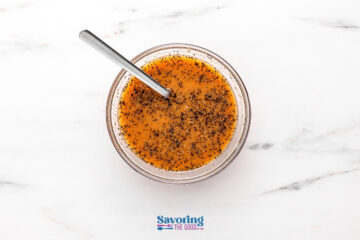
- In a small bowl, whisk together chicken broth, soy sauce, rice vinegar, sugar, cornstarch, black pepper, sesame oil, and ginger. Keep whisking until the cornstarch is fully dissolved and you no longer see any white streaks or sediment at the bottom of the bowl. Set it aside. If you skip the thorough whisking, the cornstarch will clump when it hits the hot pan and your sauce will be lumpy instead of smooth.¾ Cup Chicken Stock, 2 Tablespoon Soy Sauce, 1 Tablespoon Rice Vinegar, 1 Tablespoon Sugar, 1 Tablespoon Cornstarch, 2-3 teaspoons Black Pepper, 1 Teaspoon ground ginger, 2 teaspoons Sesame Oil
Sear the chicken
- Heat a large skillet or wok over medium-high heat and add your oil. You want the oil shimmering before the chicken goes in; if it's not hot enough, the chicken will steam instead of sear and you will not get that golden exterior. Add the chicken in a single layer and do not move it for 2 to 3 minutes. You're looking for a deep golden-brown crust on the bottom before you flip. Work in batches if needed; crowding the pan drops the temperature and causes steaming. Remove the seared chicken to a clean plate and set aside.1-2 Tablespoon Vegetable Oil
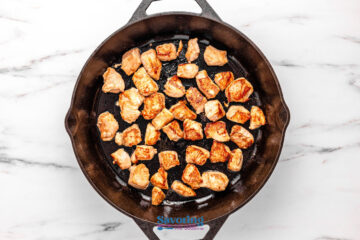
- Transfer the seared chicken to a clean plate.
Cook the Aromatics
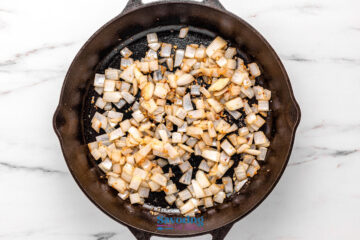
- In the same skillet (do not wipe it out; those browned bits on the bottom are flavor), add the onions and garlic. Sauté for 1 to 2 minutes, stirring frequently, until the onions are just starting to turn translucent and the garlic is fragrant. You should be able to smell the garlic immediately; if it starts to turn brown, your heat is too high.1 Medium Onion, 3 cloves Garlic
Add the Vegetables
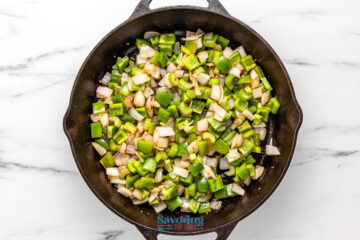
- Toss in the bell peppers and celery. Stir-fry for 2 to 3 minutes, keeping everything moving in the pan. You want the vegetables slightly tender but still with a bite; they should be bright in color and not limp. If they go soft and dull, they are overcooked.2 Medium Green Bell Pepper, 2 stalks celery
Add the Sauce
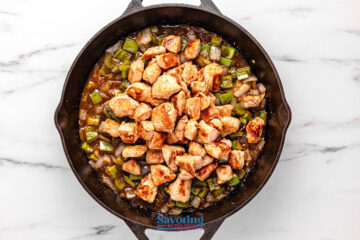
- Give your sauce one more quick whisk (the cornstarch settles as it sits), then pour it into the skillet. Stir everything together and bring to a boil; you'll see the sauce go from thin and cloudy to thick and glossy as the cornstarch activates. Reduce to low heat and simmer for about 5 minutes, stirring occasionally, until the sauce coats the back of a spoon.
Finish the Dish
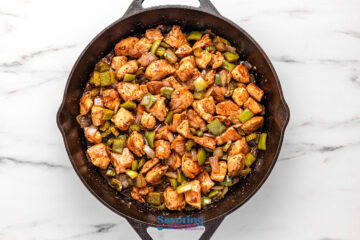
- Return the seared chicken to the skillet and toss to coat every piece in the sauce. Simmer for another 5 minutes; the chicken should reach an internal temperature of 165F and the sauce should cling to each piece without pooling. Taste here and adjust salt if needed.
Serve
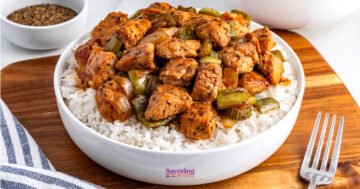
- Spoon the black pepper chicken over steamed white rice; the sauce will soak into the rice underneath and that is exactly what you want. Serve immediately while the vegetables still have their texture.
Notes
- The marinate time is not optional. Every time I have tested this recipe with less than 15 minutes of marinating, the exterior of the chicken does not develop the same texture in the pan. The cornstarch needs time to adhere. Set a timer and use those 15 minutes to prep your sauce and vegetables.
- Give the sauce a second whisk right before it goes into the pan. Cornstarch settles quickly as a liquid sits. I have made the mistake of skipping this and ended up with a lumpy sauce; one extra stir takes 10 seconds and saves the dish.
- The pepper is the point. Two tablespoons sounds aggressive if you are used to using black pepper as a background seasoning. This recipe uses it as the primary flavor. If it is your first time making it, start with 1.5 tablespoons and taste the sauce before it hits the pan. You can always add; you cannot take it out.
Copy/Paste and/or screenshots of the recipe to any social media is strictly prohibited. Content and photographs are copyright-protected. SavoringTheGood®