Canned Dill Pickles
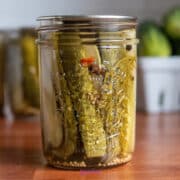
Makes 6 Pints
Ingredients
- 4 pounds pickling cucumbers (3"-5" in length)
- 10 Tablespoons Canning Salt
- 1 gal Water
Pickle Brine
- 3 Cups white vinegar
- 1 quart Water
- 2 Tablespoons Sugar
- 1 Tablespoons Pickling Spices
Add to each jar
- 1 each Dill Frond
- 1 each garlic clove (smashed)
- ½ Teaspoon Mustard seeds
- ¼ Teaspoons pepper corns
Instructions
- Wash the cucumbers well, then slice a 1/16-inch piece off the blossom end of each one and discard it, leaving about ¼ inch of stem attached.4 pounds pickling cucumbers
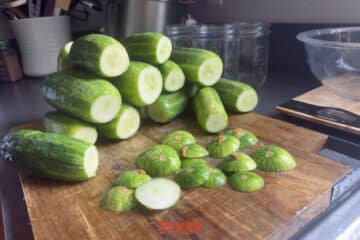
- Dissolve canning salt in 1 gallon of water, pour it over the cucumbers, and let them stand at room temperature for 12 hours. Drain well.1 gal Water, 6 Tablespoons canning salt
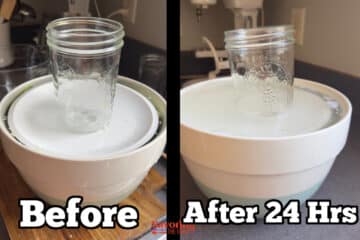
- Wash pint jars, lids, and bands in hot, soapy water, then sterilize the jars in boiling water or run them through your dishwasher's sanitize cycle.

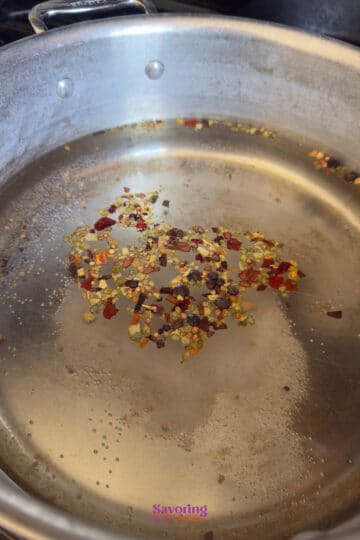
- Combine the vinegar, remaining salt, sugar, and 1 quarts water in a large pot.4 Tablespoons canning salt, 3 Cups white vinegar, 1 quart Water, 2 Tablespoons Sugar, 1 Tablespoons Pickling Spices
- Fill each hot, sterilized jar with drained cucumbers, tucking in 1 fresh dill frond, ½ teaspoon mustard seed and ¼ teaspoon pepper corns per pint jar.1 each Dill Frond, 1 each garlic clove, ½ Teaspoon Mustard seeds, ¼ Teaspoons pepper corns
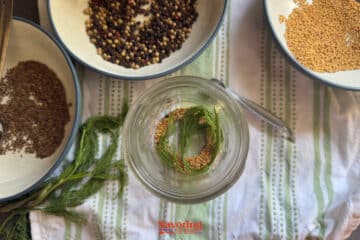
- Ladle the boiling pickling solution over the cucumbers, leaving ½ inch of headspace at the top of each jar.
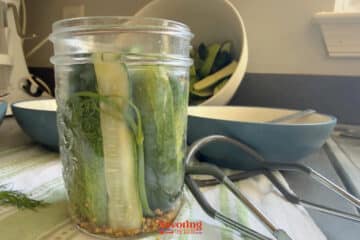
- Run a thin spatula or bubble tool around the inside of each jar to release trapped air pockets, wipe the rims clean of any brine, then add lids and bands until fingertip tight.
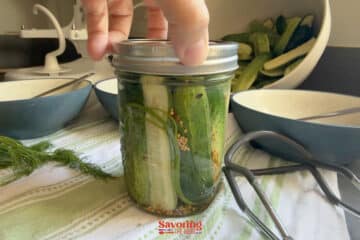
- Process pint jars for 10 minutes if you're at 0 to 1,000 feet elevation, 15 minutes at 1,001 to 6,000 feet, or 20 minutes above 6,000 feet.
- Let jars cool undisturbed on the counter for 12 to 24 hours, then press the center of each lid; it shouldn't flex or pop back. Remove the bands, label your jars with the date, and store any jar that didn't seal in the refrigerator to eat right away instead of the pantry.
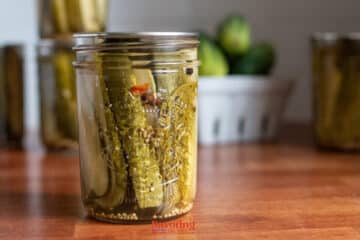
Tucking a grape leaf into each jar is an old pickling trick, and it's a real one; grape leaves are naturally high in tannins, the same compound that inhibits the enzyme responsible for softening pickles. Just know it's mostly doing backup work here, since the blossom-end trim in Step 1 already knocks out that enzyme at the source. If you want a firming method that's doing real, active work on its own, look for calcium chloride at the canning supply aisle (sold as Pickle Crisp or Xtra Crunch); it's what modern extension guidance actually recommends, and unlike older tricks like a lime soak, it won't touch your brine's acidity.
Copy/Paste and/or screenshots of the recipe to any social media is strictly prohibited. Content and photographs are copyright-protected. SavoringTheGood®