Classic Giblet Gravy
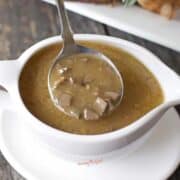
Makes 8 servings
Ingredients
- Turkey giblets
- Turkey neck
- 2 tablespoons Butter
- 4 Cups Water
- 2 Stalks celery (roughly chopped)
- 2 Large Carrots (roughly chopped)
- 1 medium onion (roughly chopped)
- 2 each Bay Leaves
- ¼ Cup Parsley (chopped)
- 3 springs Rosemary
- 8-10 leaves sage
- 3 Tablespoons Flour, All Purpose
- salt and pepper (to taste)
- Drippings from roasted turkey
Instructions
How to cook giblets for gravy:
- Brown the giblets, turkey neck, and backbone if you have it, in melted butter over medium heat. Give the pieces a few minutes on each side until they pick up real color, not just gray to light brown; that browning is where the flavor comes from, not the simmering that follows. Do not rush this step. A pale sear here means a flat-tasting gravy later, and there is no fixing that once the broth is simmering.Turkey giblets, Turkey neck, 2 tablespoons Butter

- Add the chopped onion, celery, carrot, and herbs, then cover everything with water. Let it bubble gently, not boil hard, on low heat while your turkey finishes roasting; a hard boil clouds the broth and toughens the neck meat. You want a broth that smells rich and tastes seasoned on its own before you ever strain it.4 Cups Water, 2 Stalks celery, 2 Large Carrots, 1 medium onion, 2 each Bay Leaves, ¼ Cup Parsley, 3 springs Rosemary, 8-10 leaves sage, salt and pepper
- Once your turkey comes out to rest, whisk flour directly into the hot drippings left in the roasting pan. Keep whisking over the heat until the mixture turns a light golden color and smells toasted rather than raw; that color change is what cooks out the starchy flour taste.3 Tablespoons Flour, All Purpose, Drippings from roasted turkey
- Chop the giblets finely, strain your broth to remove the solids, and whisk the strained broth into the roux a little at a time. Let the gravy simmer until it coats the back of a spoon. If you pour all the broth in at once instead of whisking it in gradually, you risk lumps you cannot smooth back out.

- Pour the finished gravy into a warmed gravy boat so it stays hot longer at the table. Pour, pass, and let people go back for seconds.

Notes
Make Ahead Tip: Giblet gravy is genuinely make-ahead friendly; simmer, strain, and refrigerate up to two days ahead. Reheat gently on the stovetop over low heat, whisking in a splash of extra broth if it has thickened up too much in the fridge.
Gravy Too Thick? Loosen up too-thick gravy with a splash of broth or wine if needed.
Copy/Paste and/or screenshots of the recipe to any social media is strictly prohibited. Content and photographs are copyright-protected. SavoringTheGood®