


Roasted pecans- and I know some of you search for it as toasting pecans- and either word gets you the same buttery, deeply nutty result, turn crisp and fragrant in the oven or a dry skillet in about 10 minutes. I use both methods depending on the job: the skillet when I only need a handful for a salad, the oven when I need a full batch for baking or snacking. Either way, I will show you exactly what to look for and smell for so you walk away with roasted pecans, not burnt ones.

Once they're roasted, I fold them into bourbon balls or press them onto the outside of my holiday pineapple cheeseball. A batch also gets me most of the way to homemade pecan butter, since roasting is the first step in that recipe too.
Ingredients needed:
This is about as short as an ingredient list gets: raw, shelled pecans. The only real decision is what form to start with.
Halves, Pieces, or Chopped?
Whole halves have the least surface area exposed to the heat, so they roast the slowest and most evenly; that is what I reach for by default. Pieces cut the time down by a minute or so since more of the nut is in direct contact with the pan or the oven. Chopped pecans move the fastest of all, so pull them at the low end of whatever time range you are working with.
Recipe Card?
To find the full printable recipe with specific measurements and directions CLICK HERE to go to the recipe card.
How To Roast Pecans
I am going to walk you through two ways to get there, the oven method and the dry skillet method. I reach for each one for a different reason, and I will tell you why as we go.
Skillet Method
I use this method when I only need a small amount, a cup or less. It is quick, but it requires your full attention throughout; this isn't a walk-away method.

- Step 1: Start the pecans in a cold, dry skillet. Place them in the pan first, then turn the heat to medium. Starting them cold instead of dropping them into an already-hot pan gives you more control over how fast they color.
- Step 2: Keep them moving. Stir or toss every 20 to 30 seconds with a spatula or wooden spoon. If you set them down and walk away, even for a minute, you will come back to scorched spots on one side.
- Step 3: Watch for color and smell, not just the clock. Cook for 3 to 5 minutes, until the pecans turn a shade darker and you can smell that toasted, nutty aroma coming off the pan.
- Step 4: Pull them off the heat immediately. Transfer to a plate right away; a hot skillet keeps cooking the nuts even after you turn off the burner, and that residual heat is enough to push them from roasted to burnt.
Don't Burn Them
Don't walk away. Pecans can go from perfectly roasted to burnt in under a minute, and once they are burnt there is no saving that batch; you are starting over.
Oven Method
Once you smell roasted pecans, they are ready. If the smell reaches you from across the room before you even open the oven door, they are already past done.
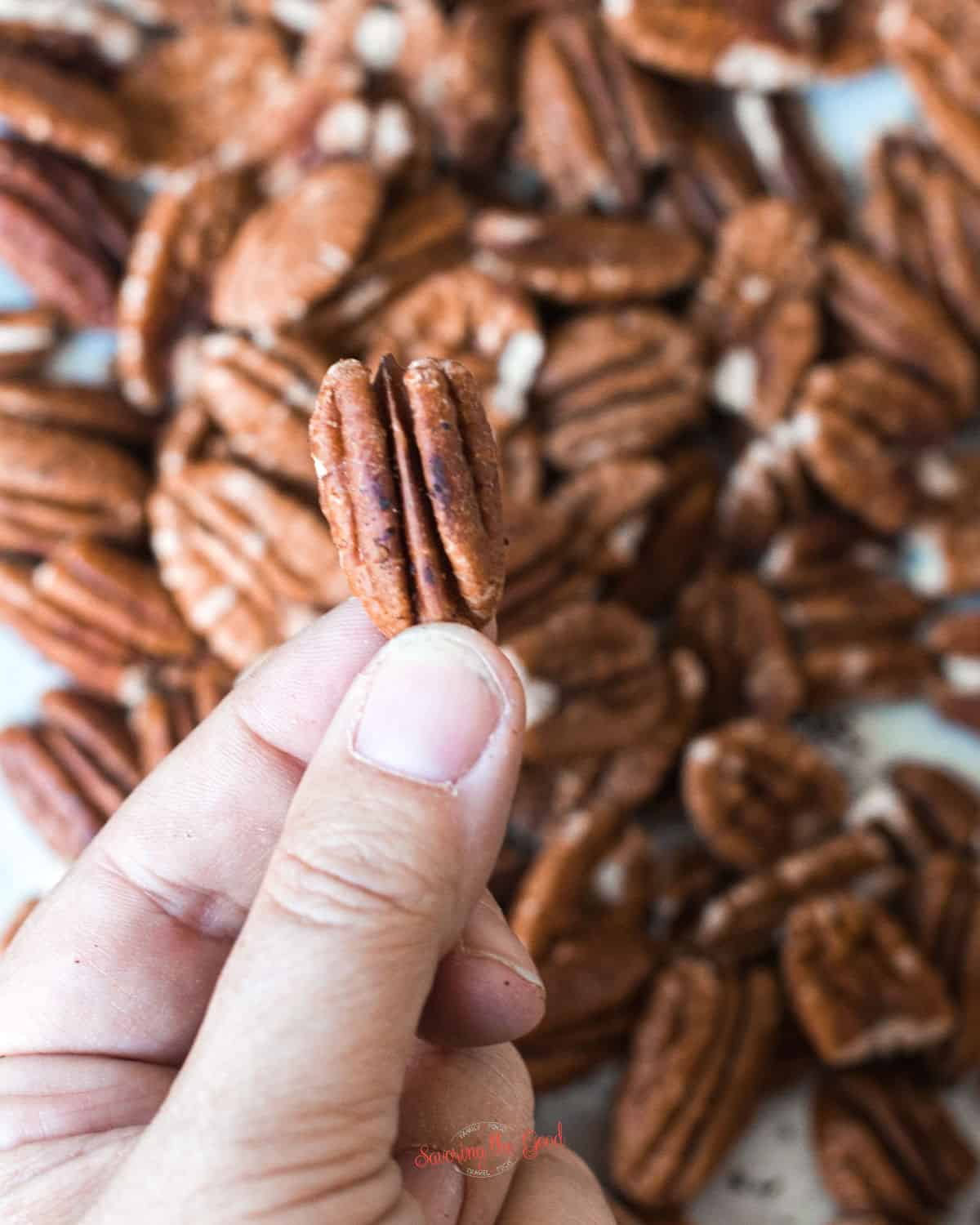
- Step 1: Spread the pecans in a single layer. Use a rimmed baking sheet, and give the nuts room; if they overlap or pile up, the ones underneath steam instead of roast, and you end up with an uneven batch. Parchment paper or a silicone mat makes cleanup easier but is not required.
- Step 2: Bake at 325F for 5 minutes, then stir. Stirring halfway through moves the nuts on the edges of the pan, which run hotter, into the center.
- Step 3: Bake for another 3 minutes, then check. Open the oven door. If the smell of roasted pecans hits you right away, they are done. If you have to lean in to smell it, give them another 2 minutes.
- Step 4: Move them off the hot pan right away. Transfer to a plate or a cool sheet tray to stop the cooking. Pecans left on a hot baking sheet keep darkening even after the oven is off.
The Nose Knows
Once you smell roasted pecans, they are ready. If the smell reaches you from across the room before you even open the oven door, they are already overdone.

Sarah's Culinary Insight
A few things I have learned standing over this pan, and one thing my culinary training taught me that surprises people.
You do not need oil or butter. This is the one people ask about most. In culinary school, we were taught that nuts carry enough natural oil that gentle heat releases it on its own; add fat and you are not helping the roast, you are just making the pan greasy.
If you chop before roasting, watch the pan more closely, not less. Chopping exposes more surface area, so the pieces roast faster, which is fine. What catches people off guard is the fine dust chopping leaves behind; it burns quickly and can turn the whole batch bitter. Pull chopped pecans at the low end of your time window.
Skip the single layer in the oven and you will get a mixed batch. Some pecans will roast properly, others will taste raw in the middle, because the ones underneath never got direct heat. Spreading them out is not a suggestion, it is the difference between an even batch and a disappointing one.
FAQ's and Tips
While I try to share all the information you need to make this recipe in your home with restaurant-quality results, there still may be a question or two. Or these are questions I have received from the community about this recipe. I do my best to answer them as clearly as I can. I hope this helps.
How do I know if I overcooked my pecans?
Look for dark edges or dark spots, along with a strong, almost burnt smell instead of a warm, nutty one. Once you see that, the batch is past the point of saving; start a fresh one and keep a closer eye on the clock this time.
Can I freeze roasted pecans?
Yes. Let them cool completely first, then freeze in an airtight container or freezer bag. Cooling fully before sealing matters; trapped steam from warm nuts turns into moisture, and moisture is what makes them go soft and stale early.
Do pecan halves and pecan pieces take the same amount of time to roast?
No. Pieces have more surface area exposed to the heat, so they roast faster than whole halves. Start checking pieces a minute or two earlier than the times given for halves.
A batch of these is also what turns my Asian Ramen Noodle Slaw from good to memorable when I swap them in for the sliced almonds, and I always have a bowl of roasted pecans ready to top a spinach salad dressed in my hot bacon dressing.


Ingredients
- 2 Cups (198 g) pecans whole, raw, shelled
Instructions
Dry Skillet Method
- In a dry skillet, place the pecans in the skillet and turn the heat to medium.2 Cups (198 g) pecans
- Every 20-30 seconds toss the nuts, stir with a non-stick spatula or wooden spoon.
- Keep the nuts constantly moving for 3-5 minutes or until you can smell the aroma of toasted pecans.
- Immediately remove the pecans from the pan and allow to cool on a plate.
Oven Method
- On a rimmed baking sheet arrange your pecans in a single layer. (parchment paper or silicone baking sheet is helpful for removing the nuts from the pan but not necessary)2 Cups (198 g) pecans
- Place in a preheated 325-degree oven.
- Toast the pecans for 5 minutes and stir the nuts.
- Bake for an additional 3 minutes. Open the oven door and if the aroma of toasted pecans welcomes you, the nuts are done. If not, toast for an additional 2 minutes or until the nuts smell like toasted nuts.
- If you smell toasted nuts before opening the oven door, they are already overdone.
- Remove the pecans from the baking sheet and allow to cool on another plate.
- Do not let them cool on the baking sheet as they may continue to cook.
Nutrition
Notes

I am Sarah Mock. Welcome!
Sarah Mock is a classically trained Chef and a graduate of Johnson & Wales University. A culinary blogger for 17 years, Sarah helps the home cook prepare her recipes with professional results.


Natalie says
I love toasted pecans. The flavor is just amazing, right?! I will give your dry pan method a try next time I'm making them.
Raquel says
Love the skillet method- worked perfect;y!