

Pate a Choux, choux pastry, Pâte à Choux, Choux paste, eclair paste are all names for the dough that is used to make the pastry shells for eclairs, cream puffs, swans, croquembouche, profiteroles, Paris-breast, gateau st. honoré and so many more shapes!

While I was a teaching assistant at Johnson & Wales University it brought me such joy to see my students successfully make their first pastry recipe. Students would go from overwhelmed to overjoyed by the end of class. Choux paste (the eclair dough name) is such a necessity in the pastry arts and getting it mastered just took a bit of time and some gentle instruction.
If you love eclairs but don't have the time to make them be sure to make eclair cake instead. If you are new to baking you will want to go over my glossary of baking terms to familiarize yourself with the baking definition.
Ingredients needed to make Pâte à Choux

Recipe Card?
To find the full printable recipe with specific measurements and directions CLICK HERE to go to the recipe card.
How to make pate a choux:
- In a medium-sized pan, over medium-high heat bring the sugar, butter, water and milk to just below a simmer. The surface of the liquid will start to wriggle and bubbles will form at the edges.
- Turn off the heat and add the flour to the pan, in a steady stream, and stir with a wooden spoon.
- Continue to stir until a ball forms and starts to pull away from the pan.
- Turn the heat back on to medium-high and continue to stir with the wooden spoon for 1 minute. Steam will be escaping.
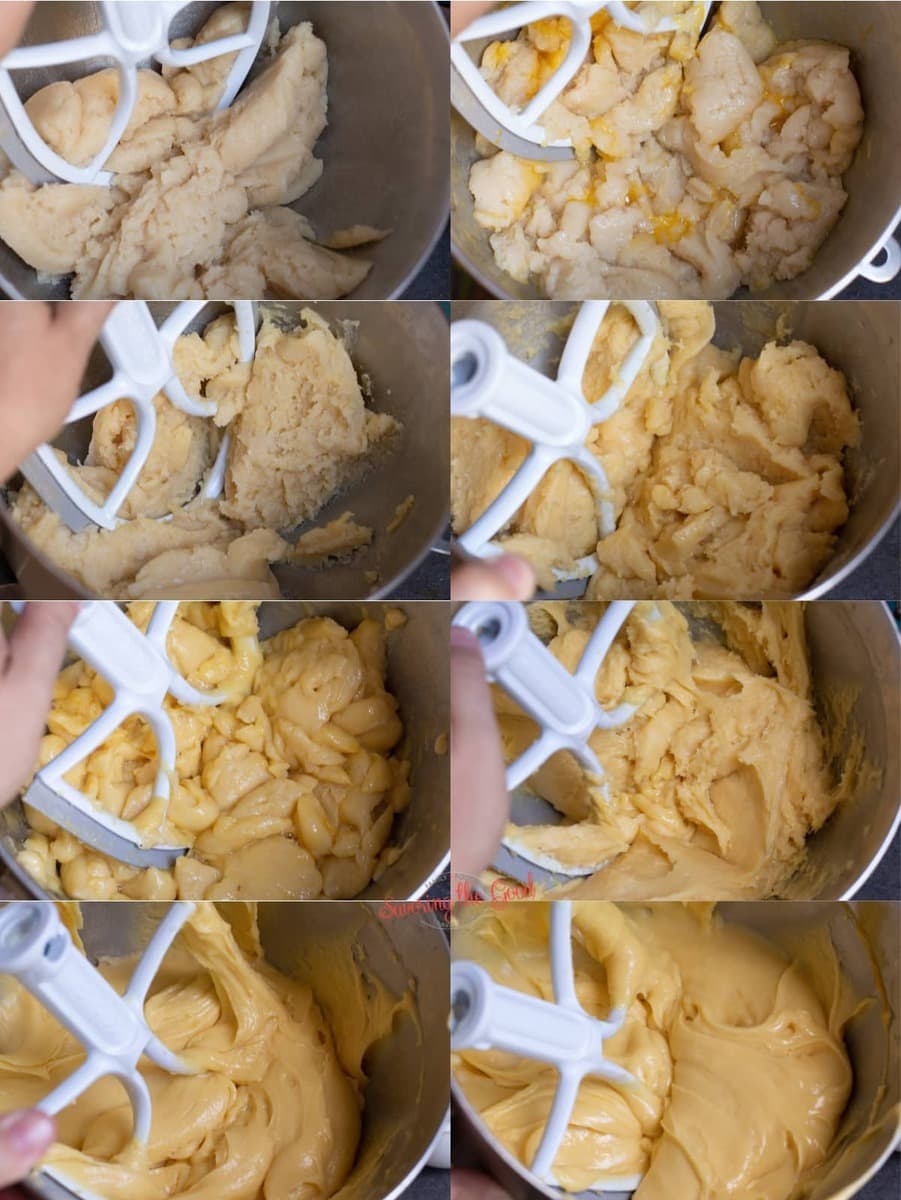
- Transfer the dough to a mixer fitted with a paddle attachment and turn the machine on low. (see all my favorite attachments for kitchenaid mixers)
- With the mixer running allow the dough to release the steam. Continue to stir on low for 5 minutes or until steam can no longer be seen rising from the bowl.
- With the mixer running on low, add a single egg.
- Allow the egg to become incorporated fully before adding the next egg.
- Add all the eggs, one at a time to the batter.
- Once all the eggs are incorporated the dough is ready to be piped or scooped.
How to pipe or scoop choux paste

- Line a baking sheet with a silicone baking sheet or parchment paper.
- Fit a piping bag with your desired tip and fill the bag, ½ full with the dough.
- Pipe rounds of dough about 3 inches in diameter and 1 ½ inches in heights.
- To scoop the choux paste, first, dip the cookie scoop in water and then portion out the dough onto the pan.
- Keep about 2 inches of space between the portions.
Baking Choux Pastry
- Preheat the oven to 425.
- Bake the choux pastry for 20 minutes or until the shells are starting to turn golden brown
- Lower the heat of the oven to 375 and continue to bake for 5-10 minutes or until the shells are crisp and have a hollow sound when tapped. The cracks in the sides of the pastry should not be showing moisture bubbles.
Choux Pastry Troubleshooting and Tips
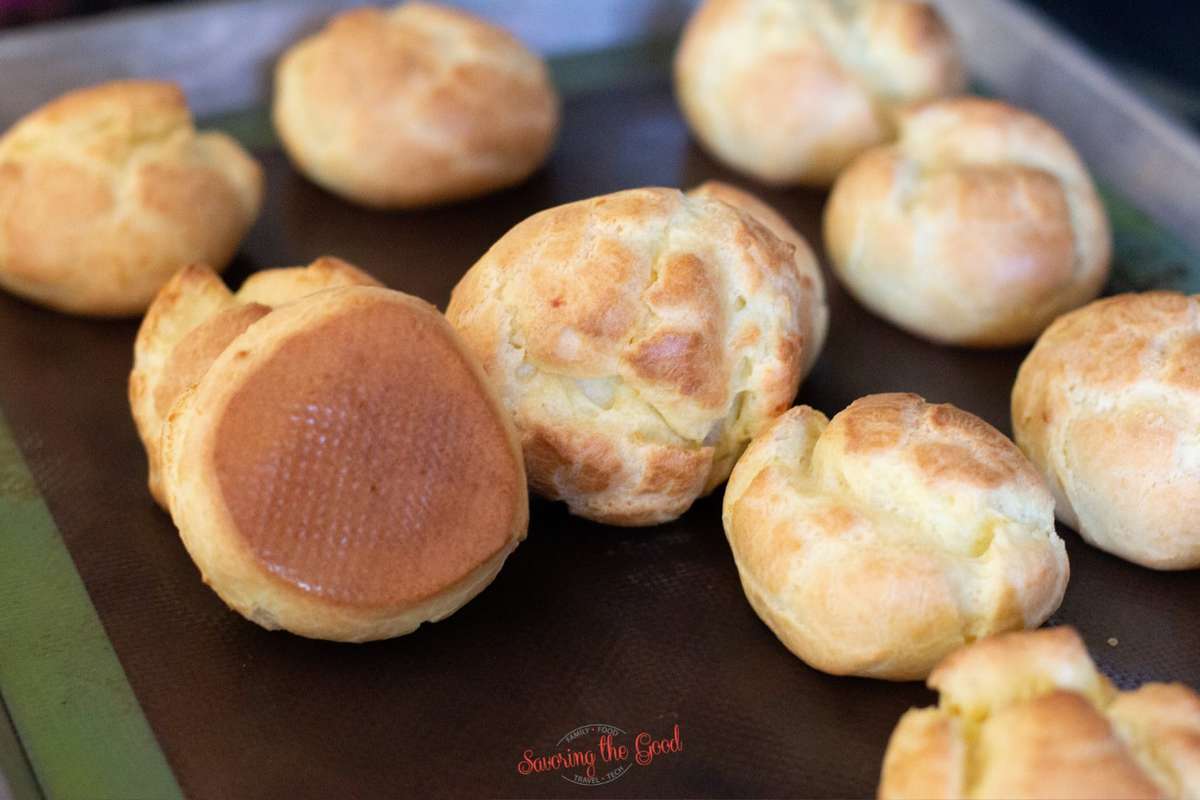
Shells lack volume
- Make sure the liquids come to a simmer to ensure the butter fully melts. This is important in marrying the flour and fats together in this pate choux recipe.
- When adding the flour to the liquids, be sure no lumps of flour form. Stirring constantly will help alleviate flour lumps.
- Add the eggs slowly. If eggs are added to quickly, they will not absorb into the dough and could curdle or separate the dough.
Why are my shells uneven?
- Watch for lumps of flour or egg and fully incorporate them to get a more even product.
- Choose the proper sized tip for the piping the dough. Don't use a small tip for a large tip job. Example: swan necks get a smaller open tip where as eclairs will get a large open, round tip.
- Be sure the puffs are consistent and evenly spaces. This will lead to even baking and a more consistent product.
Frequently asked questions, answers and tips:
Choux pastry and puff pastry are not the same thing. They both puff up, or rise but that is pretty much the only similarity. Choux pastry is made by cooking milk, butter, water and flour together to form a dough and then slowly incorporating eggs into the paste. The steam from eggs, milk and butter will make the pastry rise.
Puff pastry is a laminated dough made up of layers of dough and butter. The dough is rolled out in sheets, folded and repeated multiple times. The steam from the butter will make the pastry rise. Puff pastry is a sheet product whereas chou pastry is a pipped product.
Like most things, nothing is hard if you know what you are doing. Making pate choux paste is no exception. Paying attention to a couple key points in the process will give you cream puff making success. I have lots of tips further down in this post.
An inwardly curved bottom crust on a choux paste shell is probably the result of improper baking. This could be the result of a hot oven causing the crust to rapidly rise and for a crust, making the bottom crust of the shell pull upward and inward. If this happens, lower the temperature of the oven for a more evenly baked product.
Another reason the shells would pull inward would be from a pan treated with pan spray or butter. These non stick agents will form steam under the product, giving the bottom shell a rise, or bump.
Removing the shells from the oven before the cell structure has fully set is the most common factor in choux shells falling after removal from the oven. Be sure the shells are not only golden in color but are not showing any signs of bubbles in the cracks.
Yes, you can pipe the dough onto your lined baking sheet and refrigerate it, uncovered, for up to 24 hours before baking. The shells puff up just as well straight from the fridge; give them an extra minute or two in the oven since they're starting out cold. I don't recommend mixing the dough and holding it unpiped; it stiffens as it sits and gets harder to pipe evenly.
Baked, unfilled shells freeze well for up to 2 months in an airtight container or freezer bag. Let them cool completely first; freezing warm shells traps steam and turns them soft.
To bring them back, thaw at room temperature and crisp them in a 300F oven for 5 to 8 minutes before filling, if a crisp texture is desired.
Enjoy these within 24 hours of filling. The shell starts pulling moisture from the filling right away, and by day two you lose the contrast between crisp shell and soft filling. Keep filled pastries refrigerated the whole time since the filling contains dairy.
Choux pastry has been made long before stand mixers were invented. A stand mixer makes this easier, but you can mix by hand with a wooden spoon and some patience. Beat the eggs in one at a time just like the recipe describes; it takes more effort to fully work each egg in by hand, but the dough gets there. Watch for streaks of unincorporated egg before you add the next one.
For cream puffs, use a large round tip, something like a #806, held straight up and down to build height. For eclairs, use a large round or open star tip to pipe straight lines about 4 to 5 inches long. Swans need a small round tip, like a #3 or #4, since the necks are piped thin and have to hold their curve without spreading.

Sarah's Culinary Insight
- Bread flour in place of all-purpose flour: The higher protein builds more structure, so you get taller puffs with a sturdier interior, better suited for shells you're filling with something heavy like pastry cream.The trade-off is a slightly chewier bite instead of the delicate, eggy crumb all-purpose flour gives you. I'd reach for this swap if your shells have been coming out too fragile to fill; otherwise stick with all-purpose for the classic tender bite.
Chef tip:
- brush the tops of the dough with milk or egg wash to give the shells an added crust
- Don't spray the pan with pan spray or coat with butter because this will result in a spread-out product instead of a well-risen product.

Ingredients
- ½ Cup unsalted butter cut into 8 pieces
- ½ Cup Water
- ½ Cup 2% or whole milk
- ¼ Teaspoon salt
- 2 Teaspoons Sugar
- 1 Cup Flour, All Purpose
- 4 Egg
Instructions
- In a medium-sized pan, over medium-high heat bring the sugar, butter, water, milk and salt to just below a simmer. The surface of the liquid will start to wriggle and bubbles will form at the edges.½ Cup unsalted butter, ½ Cup Water, ½ Cup 2% or whole milk, 2 Teaspoons Sugar, ¼ Teaspoon salt
- Turn off the heat and add the flour to the pan, in a steady stream, and stir with a wooden spoon.1 Cup Flour, All Purpose
- Continue to stir until a ball forms and starts to pull away from the pan.
- Turn the heat back on to medium-high and continue to stir with the wooden spoon for 1 minute. Steam will be escaping.
- Transfer the dough to a mixer fitted with a paddle attachment and turn the machine on low.
- With the mixer running allow the dough to release the steam. Continue to stir on low for 5 minutes or until steam can no longer be seen rising from the bowl.
- With the mixer running on low, add a single egg.
- Allow the egg to become incorporated fully before adding the next egg.
- Add all the eggs, one at a time to the batter.4 Egg
- Once all the eggs are incorporated the dough is ready to be piped or scooped.
How to pipe or scoop choux paste
- Line a baking sheet with a silicone baking sheet or parchment paper.
- Fit a piping bag with your desired tip and fill the bag, ½ full with the dough.
- Pipe rounds of dough about 3 inches in diameter and 1 ½ inches in heights.
- To scoop the choux paste, first, dip the cookie scoop in water and then portion out the dough onto the pan.
- Keep about 2 inches of space between the portions.
Baking Choux Pastry
- Preheat the oven to 425.
- Bake the choux pastry for 20 minutes or until the shells are starting to turn golden brown
- Lower the heat of the oven to 375 and continue to bake for 5-10 minutes or until the shells are crisp and have a hollow sound when tapped. The cracks in the sides of the pastry should not be showing moisture bubbles.
Nutrition
Notes
- brush the tops of the dough with milk or egg wash to give the shells an added crust
- Don't spray the pan with pan spray or coat with butter because this will result in a spread out product instead of a well-risen product.
- shells are done when they are crisp and have a hollow sound when tapped. The cracks in the sides of the pastry should not be showing moisture bubbles.

I am Sarah Mock. Welcome!
Sarah Mock is a classically trained Chef and a graduate of Johnson & Wales University. A culinary blogger for 18 years, Sarah helps the home cook prepare her recipes with professional results.


Comments
No Comments