


Smoked corned beef brisket is a rosy, tender alternative to the classic boiled version, made by coating a store-bought corned beef in mustard and spices, then smoking it low and slow until it slices clean instead of shredding apart. I started making it this way after getting hooked on the smoke ring and bark you never get from a pot of boiling water. Plan on a full day start to finish: a 2-hour to overnight soak, an overnight rest once it is seasoned, and about 3 to 4 ½ hours of smoke time for a 3-pound brisket.

Smoking a corned beef instead of boiling it also opens up more game day recipe ideas, since you get clean slices for a sandwich board instead of the shredded texture you get from the stovetop.
I first made sous vide corned beef when I was new to cooking with sous vide. Next time I get my hands on a beef brisket, I plan to combine that sous vide technique with the smoking method in this recipe.
Leftover corned beef is perfect for my Reuben tater tots, classic Reuben sandwiches, or any of my other beef recipes.
Why You'll Love This Recipe
- Starting with a store-bought corned beef means you skip the multi-day brining and go straight to seasoning and smoking.
- You pick the seasoning blend, so you can build your own smoked brisket flavor instead of relying on the packet that comes with the meat.
- You control the slice thickness at the end, from deli-thin for sandwiches to thick-cut for a plate.
Ingredients needed for this smoked corned beef recipe:
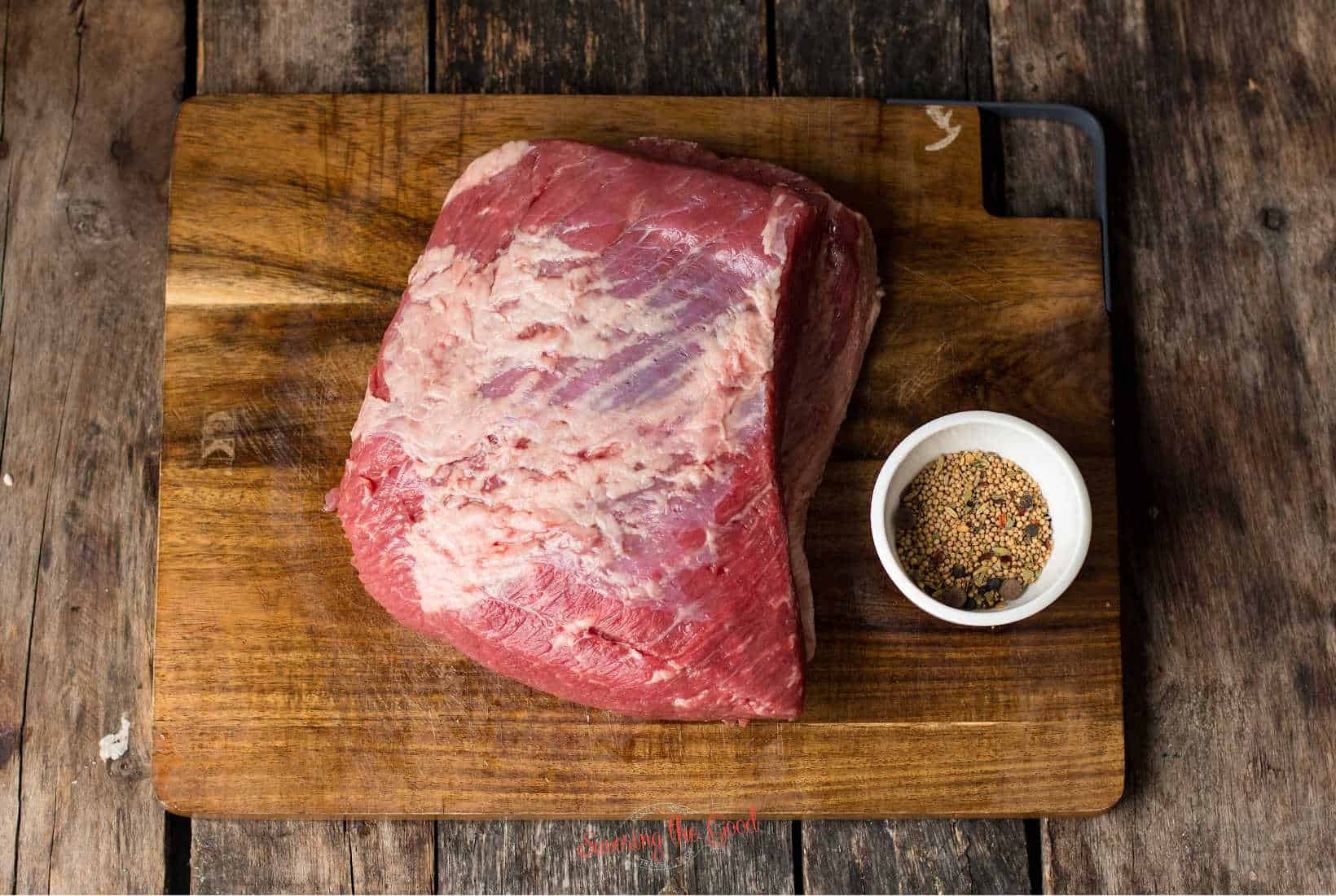
Ingredient notes:
- 3 pound corned beef brisket - Buy the vacuum-sealed corned beef from the grocery store meat case; it comes already brined and ready for seasoning. If you cure your own brisket from scratch, just pick this recipe up at the seasoning step.
- Seasoning packet - This is the packet included with most store-bought corned beef. It works, but it usually leans on pickling spice rather than a true smoked brisket rub; use one of the three rubs below if you want more control over flavor.
- Yellow mustard - The mustard is not just flavor. It is the glue that holds the dry rub onto the meat through hours in the smoker.
Recipe Card?
To find the full printable recipe with specific measurements and directions CLICK HERE to go to the recipe card.
Smoked Corned Beef Brisket Substitutions
If your corned beef did not come with a spice packet, or you would rather build your own flavor from scratch, here are three rub options, plus what you need to know if you swap out the mustard.
Yellow Mustard vs. Other Binders
Yellow mustard brings sharp acidity that cuts the fat and helps the rub form a proper bark. Whole grain or honey mustard swaps in easily and mellows that sharpness into something rounder, though you lose a little of the tang that makes the bark pop.
Brushing on a dark beer instead skips the acidity altogether and leans the flavor toward malt and caramel. It works, but the bark forms thinner since beer does not hold the rub in place the way mustard does. Stick with mustard, yellow or otherwise, if a firm bark matters to you.
Pick Your Rub
All three rubs below work on this cut; the difference is which flavor lane you want to drive down. Rub #1 leans sweeter from the brown sugar, which balances well if you like some caramelization on the bark. Rub #2 keeps whole peppercorns and coriander seeds, giving you a coarser, more traditional pastrami-adjacent bite. Rub #3 is the simplest of the three and leans hardest into black pepper and garlic, good if you want a straightforward, peppery crust without much sweetness.
Corned Beef Rub Recipe #1
- 2 tbsp Brown Sugar
- 2 tbsp Ground Black Pepper
- 2 tbsp Coriander Powder
- 2 tbsp Paprika
- 1 tbsp Garlic Powder
- 1 tbsp Onion Powder
Corned Beef Rub Recipe #2
- 2 tablespoons Black Peppercorns
- ½ tablespoon Coriander Seeds
- ½ tablespoon Onion Powder
- 1 teaspoon Dried Thyme
- 1 teaspoon Paprika
- 1 teaspoon Garlic Powder
Corned Beef Rub Recipe #3
- 3 tablespoons ground Black Pepper
- 2 tablespoons Garlic Powder
- 1 teaspoon Onion Powder
- ½ teaspoon ground Coriander Seeds
- ½ teaspoon ground Mustard Seeds

On sale for you today!
Sarah's Favorite Thermometer
Never question the temperature of your food again!
Smoking a corned beef
Here is that same process broken down in more detail, with photos so you can see what each stage should actually look like.

Unwrap and Drain
Take the corned beef out of its packaging and drain off the liquid brine clinging to the meat. Set the seasoning packet aside; you will use one of the rubs above instead.

Trim the Silver Skin
Run a sharp knife just under the silvery membrane and any thick pockets of hard fat, angling the blade away from the meat as you go. You want the surface smooth enough that the rub can make direct contact with the meat, not the membrane.

Leave the Fat Cap
Leave the thicker fat cap on one side of the brisket intact; it bastes the meat as it renders slowly in the smoker.
Soak Out the Salt
Submerge the trimmed brisket in cold water and refrigerate for a minimum of 2 hours, up to overnight. The longer soak pulls more curing salt out of the meat, so if you are sensitive to salt, go the full overnight.
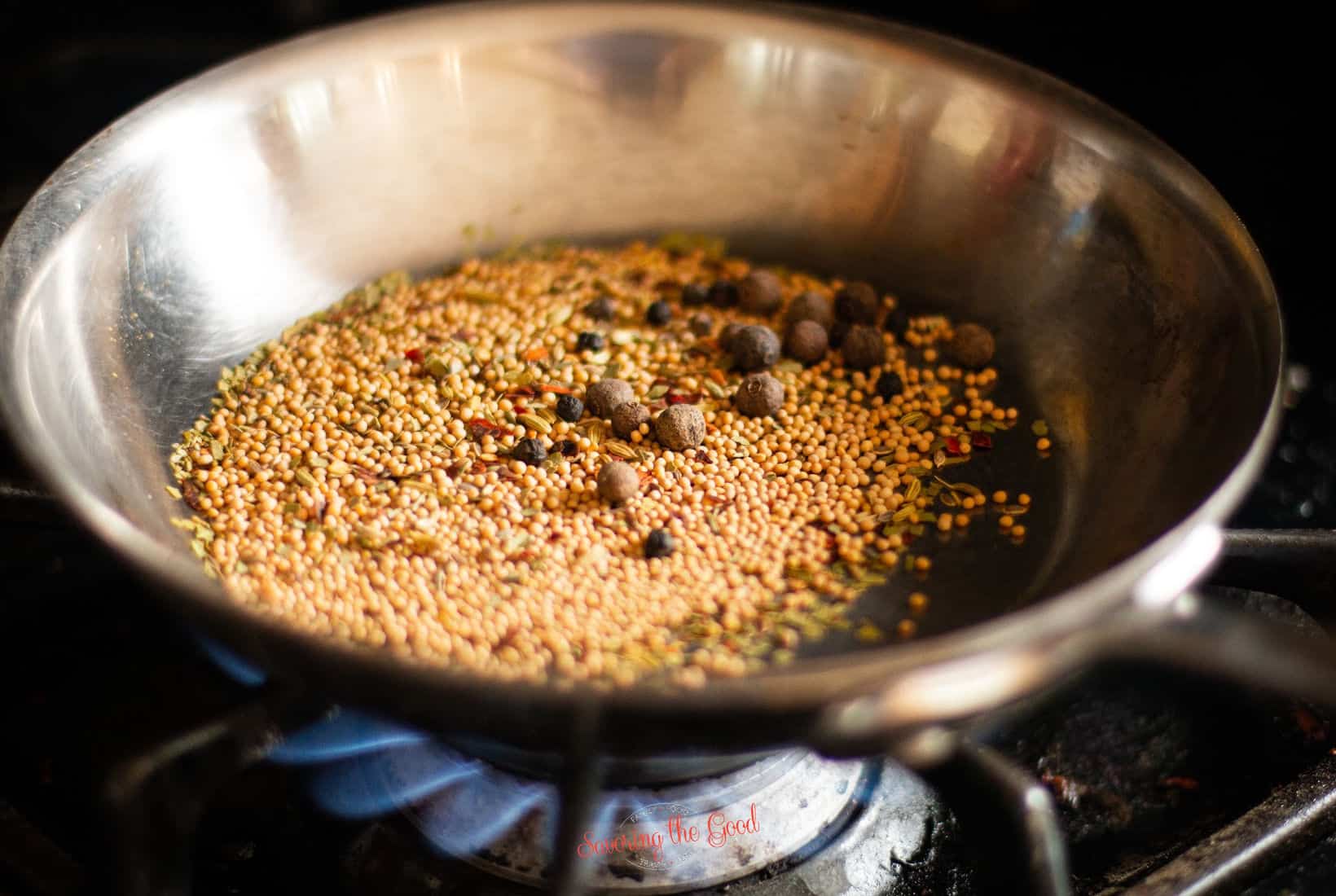
Toast and Grind the Spices
While the meat soaks, toast your chosen spice blend in a dry pan over medium heat, shaking the pan often, until the spices smell nutty and toasted instead of raw and dusty. Pulse the toasted spices in a small food processor until they turn into a coarse powder.
Can I Skip Toasting The Spices?
Skipping the toast is the one shortcut I would not take; the few batches I rushed by not toasting first taste flatter by comparison, since the dry heat wakes up the oils in the spices before the rub ever touches the meat.

Pat the Meat Dry
Drain the water and pat the brisket dry on all sides with paper towels. A dry surface helps the mustard and rub grip instead of sliding off.
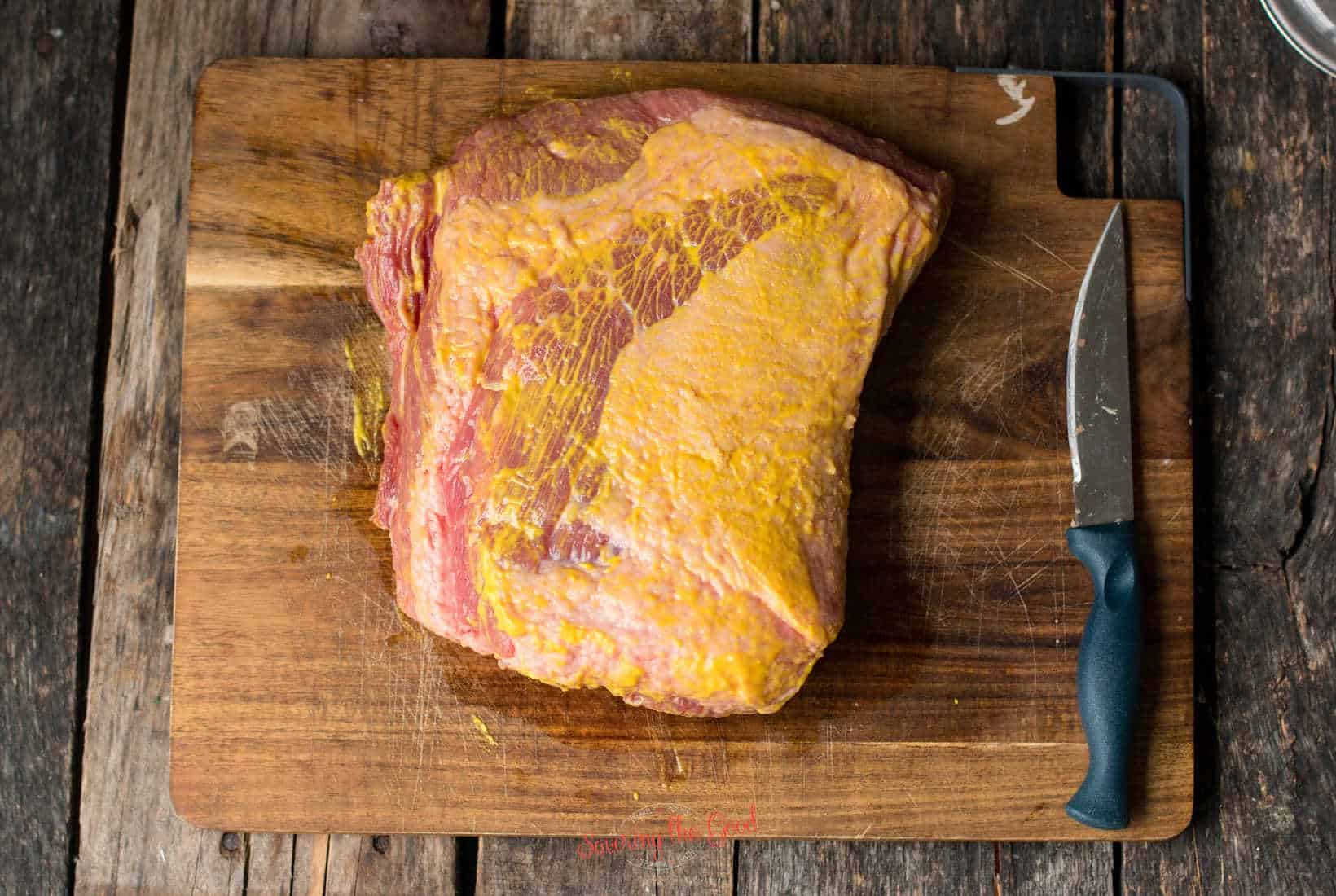
Coat with Mustard
Squeeze yellow mustard over the entire brisket, or brush on your favorite dark beer instead, and spread it into an even, thin layer.
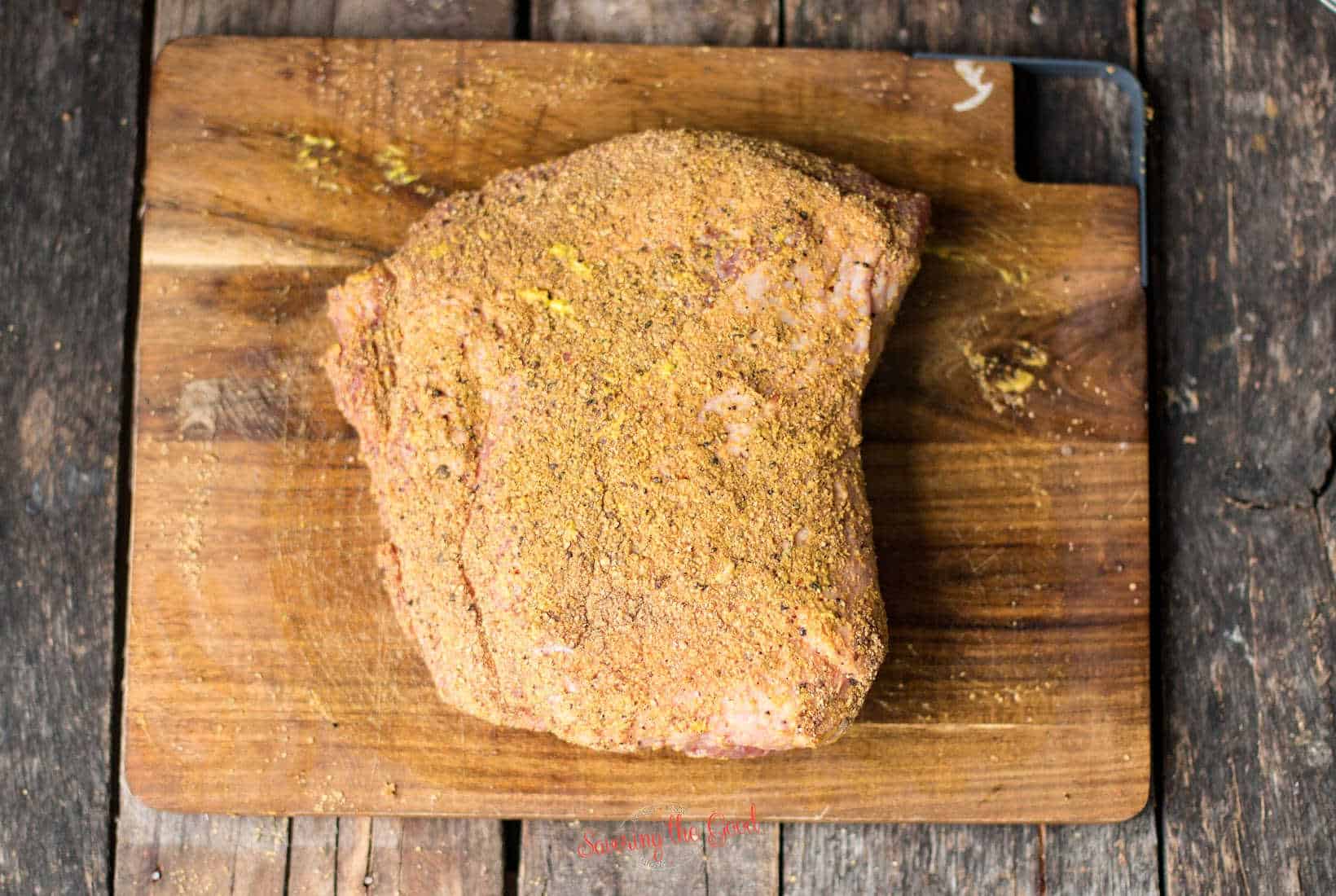
Press In the Rub
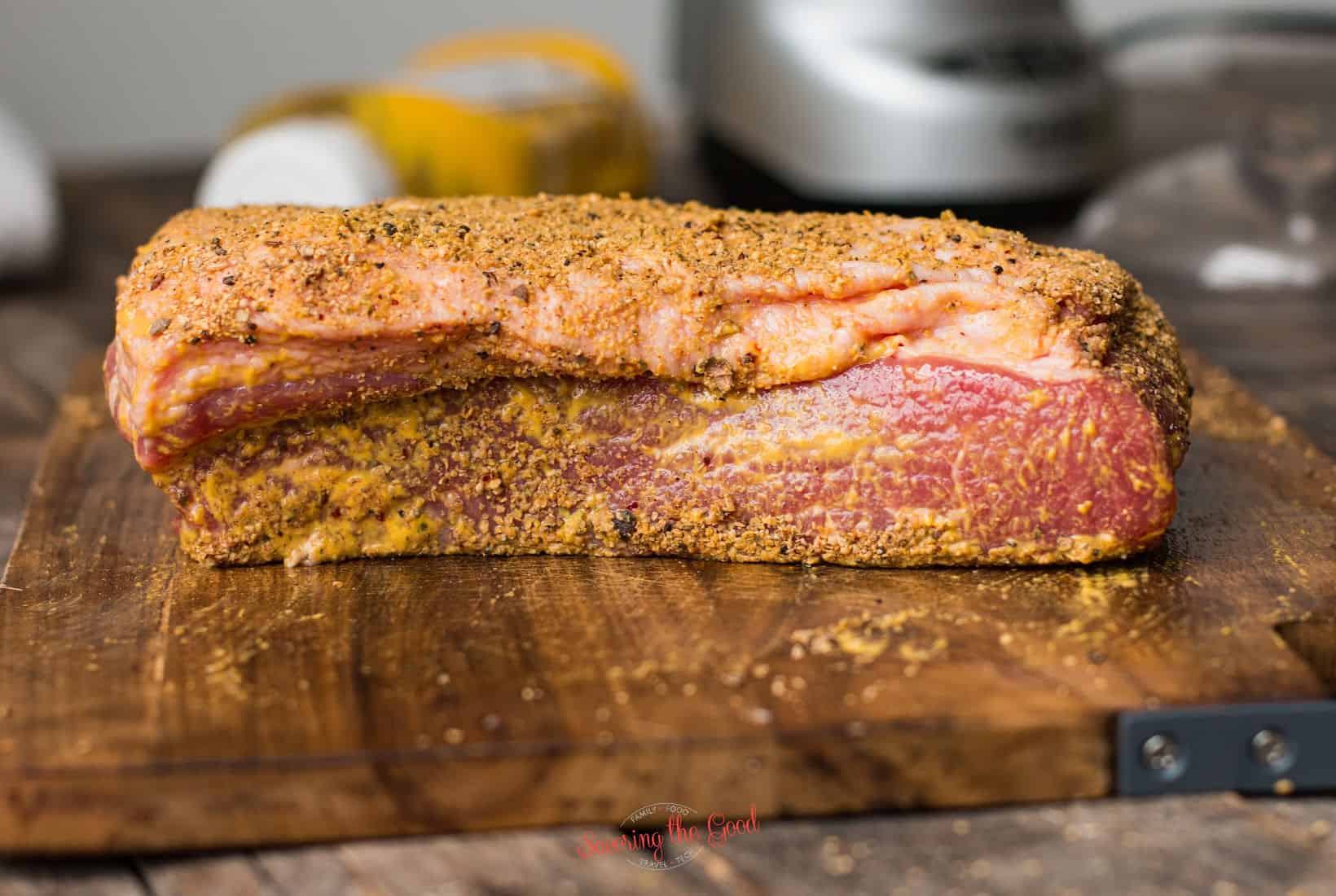
Dust the mustard-coated brisket with your ground spice mixture and press it firmly into the meat with your palm so it holds.
Wrap and Chill
Wrap the seasoned brisket tightly in cling wrap and refrigerate it overnight. This rest gives the rub time to work into the surface of the meat instead of just sitting on top of it.

Preheat the Smoker
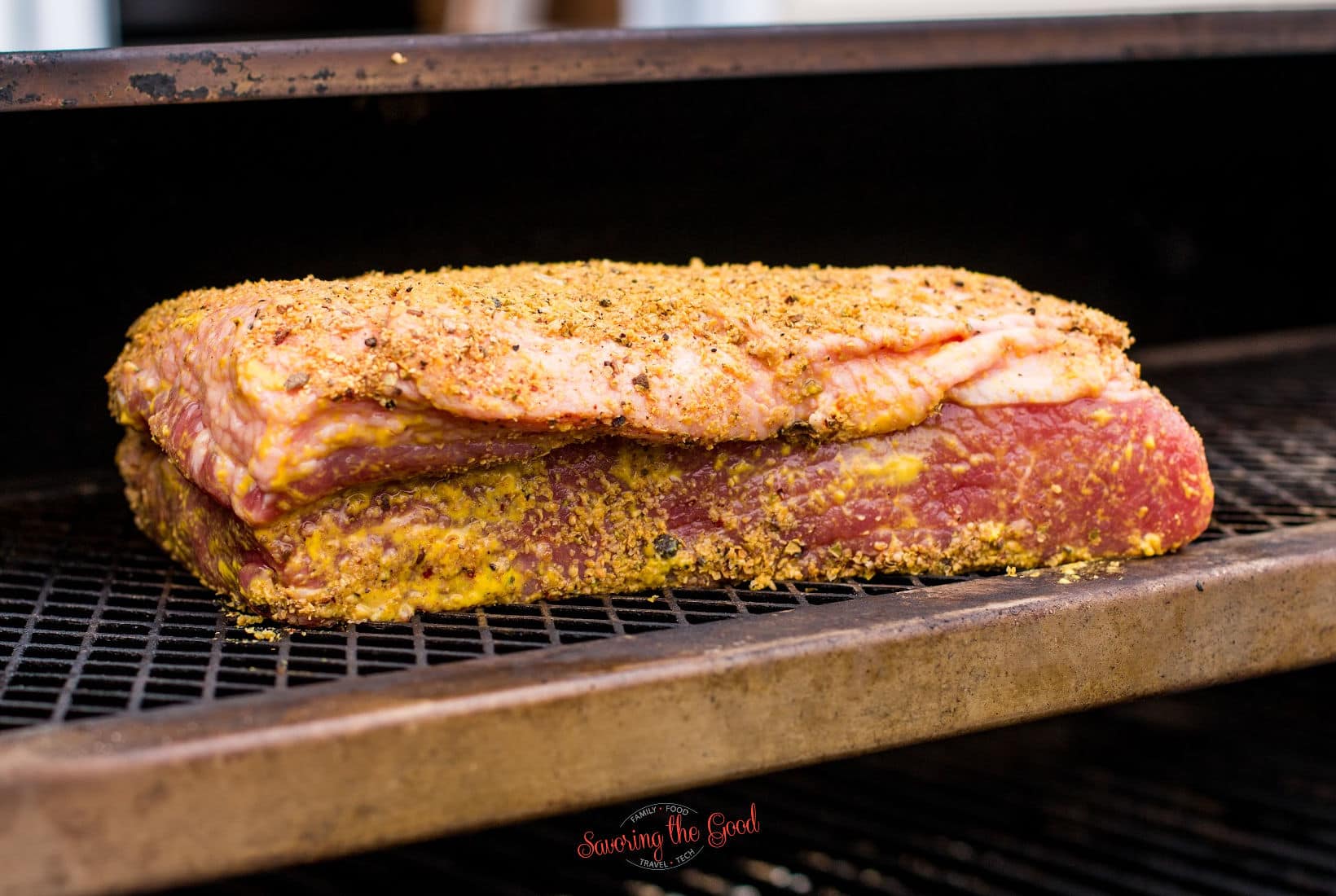
The next day, preheat your smoker to 275F using your favorite wood chips or pellets.
Load the Smoker
Unwrap the brisket and set it fat side up directly on the grill grate so the rendering fat bastes the meat as it cooks.
Smoke to Temperature
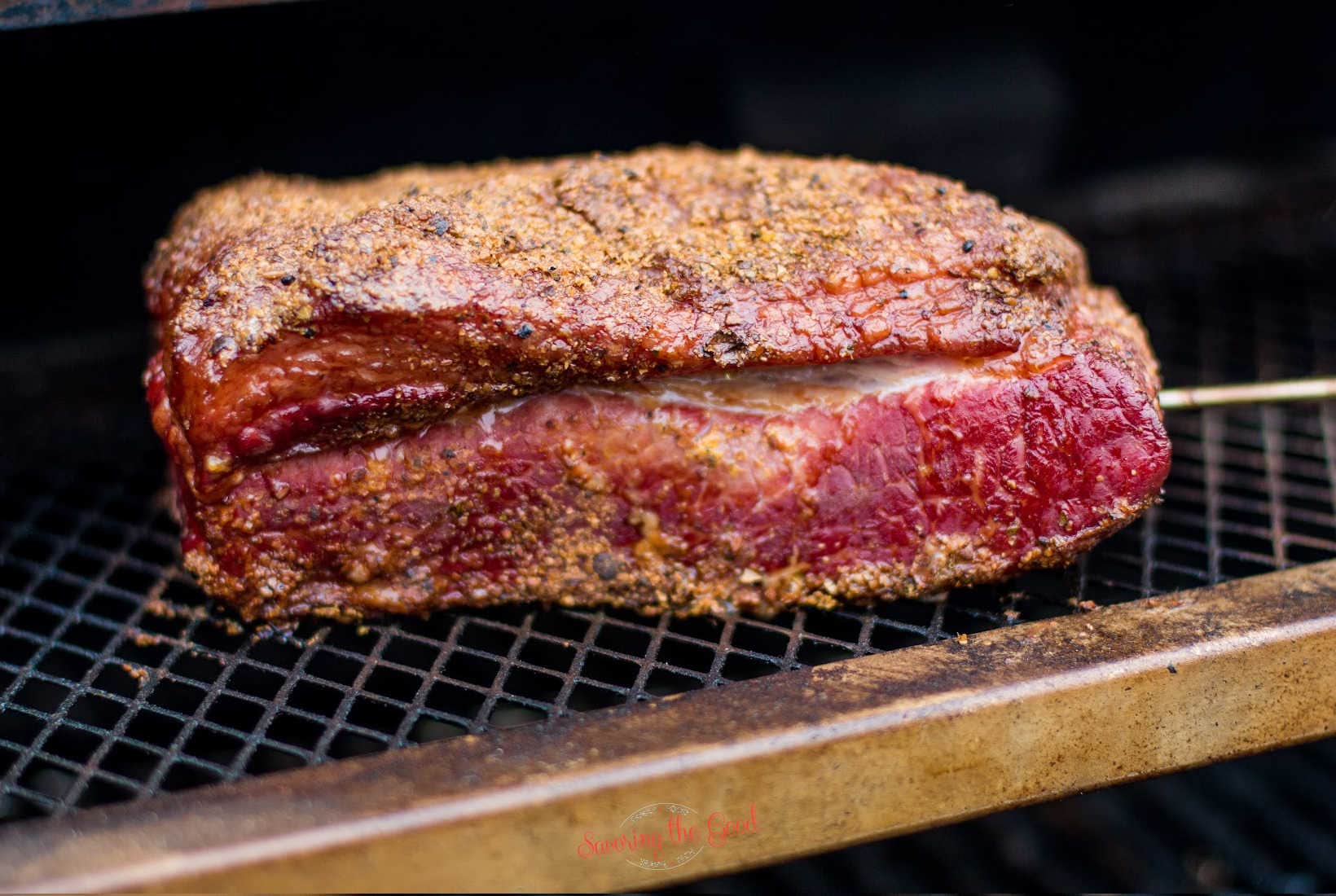
Smoke low and slow until a meat thermometer reads at least 165F, the minimum safe internal temperature for this cut.
Temperature and Texture
I have taken this brisket as high as 185F more than once for a softer, more fall-apart texture, and it has never dried out on me; do not stop at 165F just because it is technically done if that is the texture you want.
Rest Before Slicing
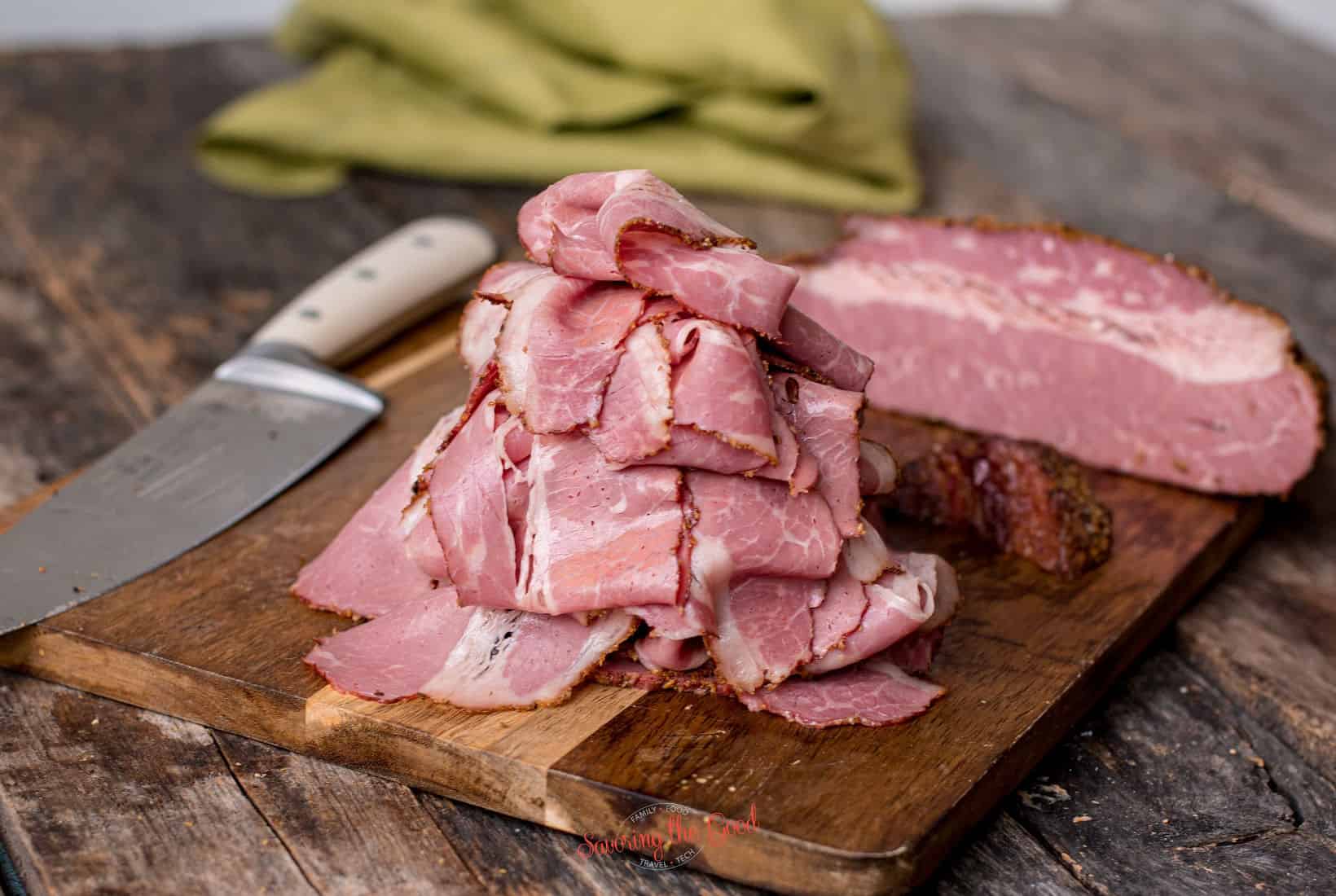
Pull the brisket off the smoker and let it rest for at least 15 minutes so the juices redistribute through the meat instead of running out onto the cutting board when you slice it.
Here is how to keep leftovers at their best
Wrap the sliced or whole brisket tightly in plastic wrap, or seal it in a zip-top bag, and refrigerate for up to 5 days. Slice off only what you need as you go rather than pre-slicing the whole thing.
Reheating Instructions
Steam the meat in a pan with about ½ inch of simmering water, covered, until heated through. Steaming keeps the slices moist instead of drying them out the way a microwave or dry skillet will.

Sarah's Culinary Insight
- Soak time controls saltiness more than anything else in this recipe. Two hours knocks the sharp edge off; a full overnight soak mellows it out almost completely, so match the soak to how sensitive you are to salt.
- Toasting the spices before grinding them is the one step I would never skip. Every batch I have made without toasting first tastes flatter and duller by comparison, since the dry heat wakes up the oils before the rub ever touches the meat.
- 165F is the safety floor here, not the finish line. I have pushed this brisket to 185F more than once for a softer, more shred-friendly texture, and it has never come out dry.
- Mustard is doing more than adding flavor; it is the glue that holds your rub onto the meat through hours in the smoker. Swap in beer instead and expect a thinner bark, since beer does not grip the rub the same way.
- Chill the brisket before you slice it. Warm corned beef shreds under the knife instead of slicing clean, so give it an overnight rest in the fridge if you want deli-style slices.
I will chill the meat over night before slicing the meat very thinly. I use an electric meat slicer to get consistent slices of corner beef. Use a very sharp chef knife in place of the meat slicer.

Crock-pot
Corned Beef and Cabbage
This traditional one-pot meal combines salt-cured beef brisket with fresh vegetables, cooking low and slow until perfectly done.
Frequently asked questions, answers and tips:
While I try to share all the information you need to make this recipe in your home with restaurant-quality results, there still may be a question or two. Or these are questions I have received from the community about this recipe. I do my best to answer them as clearly as I can. I hope this helps.
Yes. Corned beef comes packed in a salty curing brine, and soaking it in cold water for at least 2 hours pulls out the sharpest edge of that salt. If you are especially sensitive to sodium, soak it overnight instead.
165F is the minimum safe internal temperature for this cut, checked with a meat thermometer in the thickest part of the brisket. You can carry it further, up to about 185F, if you want a more tender, fall-apart texture.
Plan on 1 to 1 ½ hours per pound at 275F, so a 3-pound brisket runs roughly 3 to 4 ½ hours. Always cook to temperature, not to the clock, since smoker conditions and brisket thickness both change the timing.
Yes. Any smoker that holds a steady 275F, electric, pellet, or otherwise, will work for this recipe. Follow the same seasoning and temperature steps in the recipe card below regardless of which smoker you use.
Rinsing alone will not do much, since the salt is cured into the meat and not just sitting on the surface. Soaking in cold water, as this recipe calls for, is what actually pulls the excess salt out.
You can, and the soak step works with either version. A lower-sodium corned beef needs less soak time since there is less salt to pull out to begin with, so start checking it closer to the 2-hour mark.

St. Patrick's Day Cupcakes
Leprechaun Irish Cream Buttercream Cupcakes feature a rich and creamy Irish cream buttercream topped with adorable marshmallow leprechaun hats.


Ingredients
- 3 lb (1 ⅓ kg) corned beef
- 3 Tablespoons (45 g) Mustard
- 3 Tablespoon (18 g) ground Black Pepper
- 2 Tablespoon (16 g) Garlic Powder
- 1 Teaspoon (2 g) Onion Powder
- ½ Teaspoon (1 g) ground Coriander Seeds
- ½ Teaspoon (1 g) ground Mustard Seeds

Instructions
- Remove the corned beef from the packaging, draining the excess liquid. Reserve the packet if included.3 lb (1 ⅓ kg) corned beef

- Use a sharp knife to remove the silver skin and excess fat. Leave the thick fat cap intact.
- Submerge the meat in cold water and allow to soak in the refrigerator for a minimum of 2 hours or up to overnight, depending on how much of the salty brine you would like to soak away from the meat.
- While the meat is soaking, toast the spices in a dry pan. Then pulse the toasted spices in a food processor until pulverized.3 Tablespoon (18 g) ground Black Pepper, 2 Tablespoon (16 g) Garlic Powder, 1 Teaspoon (2 g) Onion Powder, ½ Teaspoon (1 g) ground Coriander Seeds, ½ Teaspoon (1 g) ground Mustard Seeds

- Drain the water off the beef and pat the meat dry.
- Cover the meat in mustard or brush on your favorite dark beer. Rub into the meat.3 Tablespoons (45 g) Mustard
- Dust the coated meat with the ground spice mixture and press into the meat.
- Wrap the coated meat with plastic cling wrap and chill in the refrigerator overnight.
- The next day, preheat your smoker to 275 using your favorite smoker chips or smoker pellets.

- Unwrap the corned beef brisket and place it fat side up on the grill grate.
- Smoke the meat until the internal temperature is of at least 165. Some recipes will instruct that the internal temperature should be at least 185. 165 in a minimum.
- Remove the smoked meat from the smoker, rest for at least 15 minutes to allow the juices to redistribute throughout the meat. Slice.

Nutrition
Notes
- 2 tbsp Brown Sugar
- 2 tbsp Ground Black Pepper
- 2 tbsp Coriander Powder
- 2 tbsp Paprika
- 1 tbsp Garlic Powder
- 1 tbsp Onion Powder
- 2 tablespoons Black Peppercorns
- ½ tablespoon Coriander Seeds
- ½ tablespoon Onion Powder
- 1 teaspoon Dried Thyme
- 1 teaspoon Paprika
- 1 teaspoon Garlic Powder
- 3 tablespoons ground Black Pepper
- 2 tablespoons Garlic Powder
- 1 teaspoon Onion Powder
- ½ teaspoon ground Coriander Seeds
- ½ teaspoon ground Mustard Seeds

I am Sarah Mock. Welcome!
Sarah Mock is a classically trained Chef and a graduate of Johnson & Wales University. A culinary blogger for 17 years, Sarah helps the home cook prepare her recipes with professional results.




Comments
No Comments