

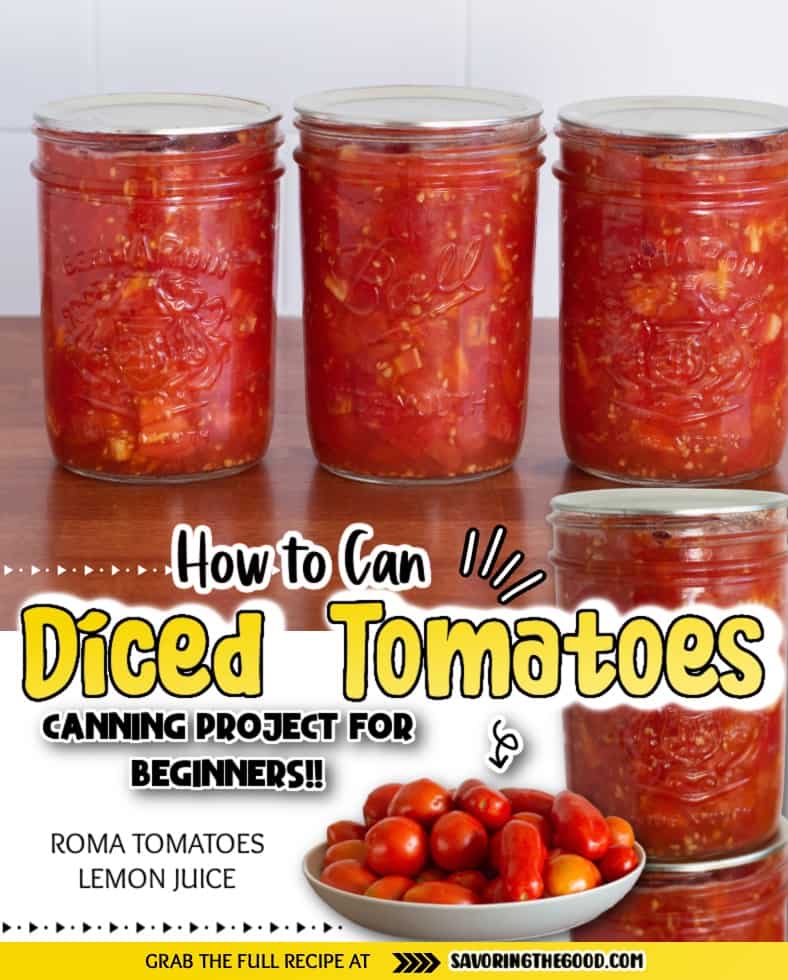
Learning how to can diced tomatoes is an easy canning project for beginners.
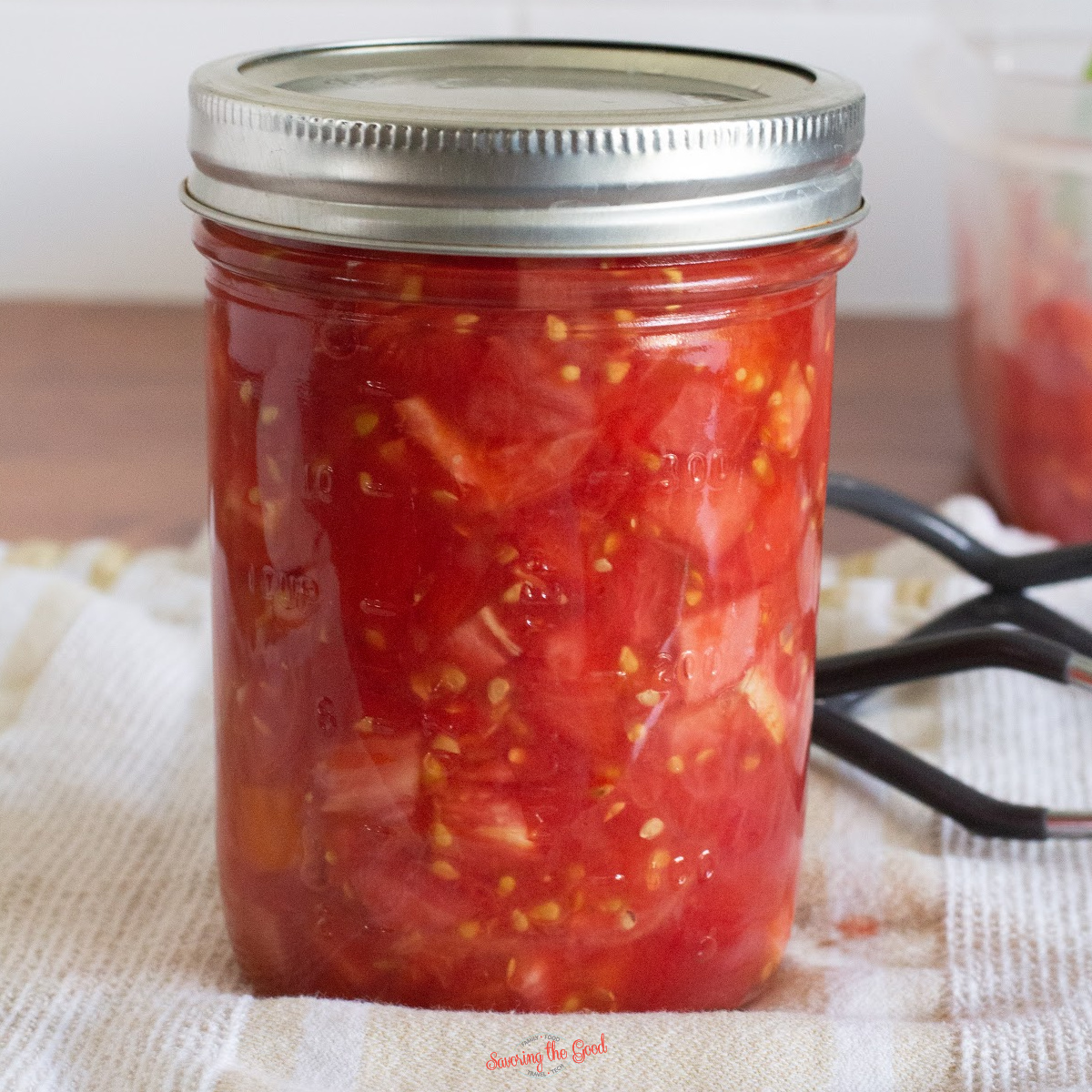
Follow these step-by-step simple instructions, with just 2 ingredients, and you have preserved garden fresh tomatoes to use in a variety of recipes.
Canning diced tomatoes are the perfect beginner project for those who want to start to learn to water bath can. The basic ingredient is ripe tomatoes and you have the option of using lemon juice or citric acid as the additional acid.
There is no vinegar in this recipe so you have to add a bit of acid to make the tomatoes reach an acid level so they will be shelf-stable. I would use a jar of these diced tomatoes for a super mild Velveeta sausage dip.
A Note on Food Safety
Home canning diced tomatoes is a topic worth addressing directly. The USDA and the National Center for Home Food Preservation (NCHFP) do not have a tested, scientifically validated recipe specifically for water bath canning diced tomatoes. The concern is density - diced tomatoes pack more tightly into a jar than whole or halved tomatoes, which can prevent heat from fully reaching the center of the jar during processing.
This post includes acidification and processing times consistent with USDA guidance for whole and halved tomatoes. If you want to follow a fully tested recipe with no gray areas, the safest path is to use the USDA-approved crushed tomato method, which produces a very similar result and is completely shelf-stable. Instructions for that method are included below.
If you choose to proceed with diced tomatoes, always use bottled lemon juice or citric acid as directed, maintain proper headspace, and process for the full time at your altitude.
Approved Alternative: Crushed Tomatoes
If you want a fully tested, USDA-approved method for preserving fresh tomatoes, crushed tomatoes are the way to go. The result is nearly identical in use, they work in soups, stews, sauces, and dips the same way - and the process is just as simple.
To make crushed tomatoes:
- Wash, peel, and core the tomatoes. To peel, score an X in the bottom, blanch in boiling water for 30 to 60 seconds, then transfer to an ice bath and slip the skins off.
- Roughly chop or crush about one quarter of the tomatoes and heat them in a large saucepan over medium heat, stirring frequently to release the juice.
- Add the remaining tomatoes in batches, stirring continuously, and bring to a boil. Boil gently for 5 minutes.
- Add bottled lemon juice or citric acid to each jar before filling: 1 tablespoon bottled lemon juice or ¼ teaspoon citric acid per pint, 2 tablespoons lemon juice or ½ teaspoon citric acid per quart.
- Ladle the hot crushed tomatoes into hot jars, leaving ½ inch headspace. Remove air bubbles, wipe rims, and apply lids.
- Process pints for 35 minutes and quarts for 45 minutes in a boiling water bath canner at elevations under 1,000 feet. Add processing time for altitude as needed.
Ingredients:

Recipe Card?
To find the full printable recipe with specific measurements and directions CLICK HERE to go to the recipe card.
Can you use fresh lemon juice instead?
Bottled lemon juice is preferred over fresh as it has been tested at the manufacturer as to what the proper acidity level is.
Water bath canning: diced tomatoes
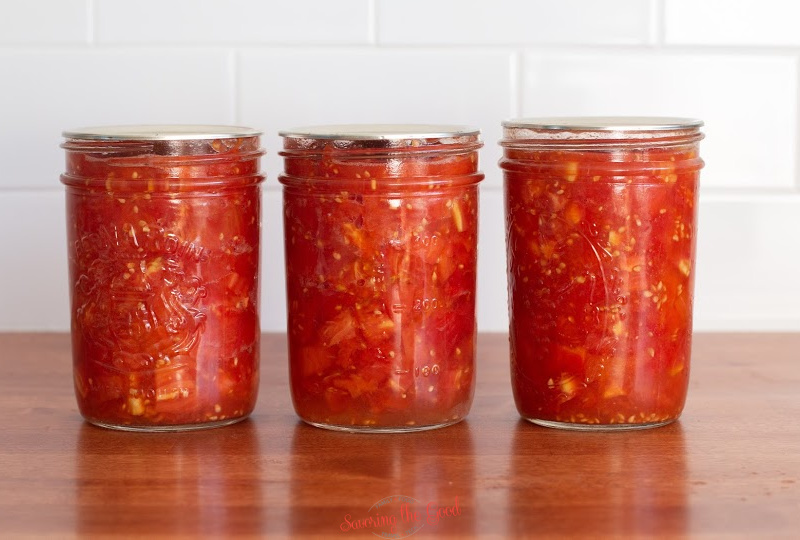
Wash, sterilize, and heat the canning jars.
Check out my canning 101 post if you need more step-by-step instructions.
Heat the water in the large stockpot
Keep the jars in hot water while you prepare the tomatoes for canning.
Sarah's Kitchen Tip
I turn on my exhaust fan to help eliminate some of the heat and humidity that comes with canning.
Wash and inspect the tomatoes
I grow tomatoes in the garden and when I bring them into the house they have dirt on them. Thoroughly wash tomatoes and remove any bad spots or blemishes on them. Remove the stem and core, if desired.

Remove the skin of the tomato
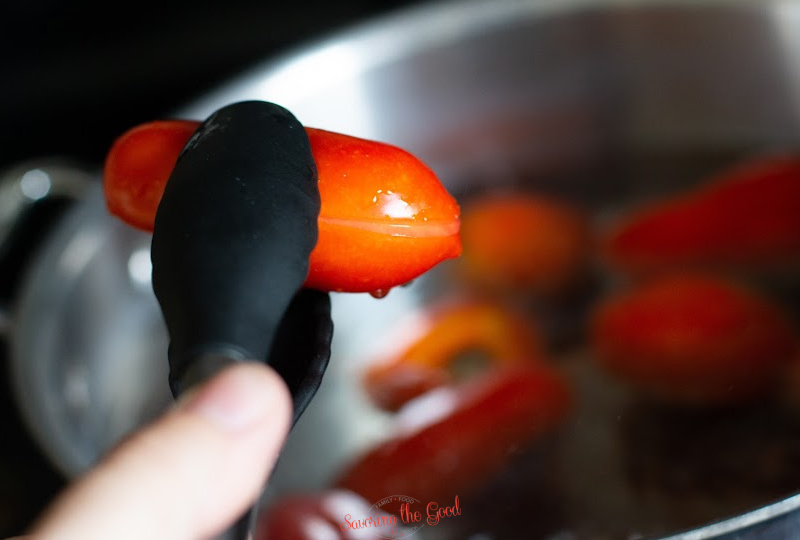
Use a sharp knife to slice and X or score the skin of the tomato, drop the tomato into the simmering water for 30 seconds to a minute.
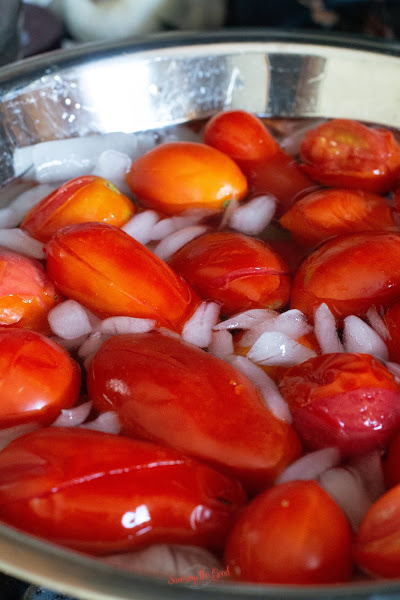
Ice Bath
After the skin of the tomato has further cracked and started to separate from the tomato flesh, remove hot tomatoes from the water with a slotted spoon and plunge the tomato into the ice water bath, stopping the blanching process and allowing the skin to easily pull back.
Peel the tomatoes
Remove them from the ice water bath and remove the skin from the tomato. They should slip right off.
Peeling Tip
If you get stubborn skin, dunk the tomato back in the water for an additional 15-30 seconds and then back into the ice water.

Dice the tomatoes
I do a small to medium dice on my tomatoes as that is what I would normally pick up if I were to buy a can of diced tomatoes at the grocery store. Leave the seeds in the tomato and try and capture as much of the tomato juice in a bowl as you can.
Remove a hot, empty jar from the canner and set it on a towel-lined surface.

Add Acid
Use ½ teaspoon bottled lemon juice or ¼ teaspoon citric acid per quart jar (see notes for other sizes).
Add Tomatoes
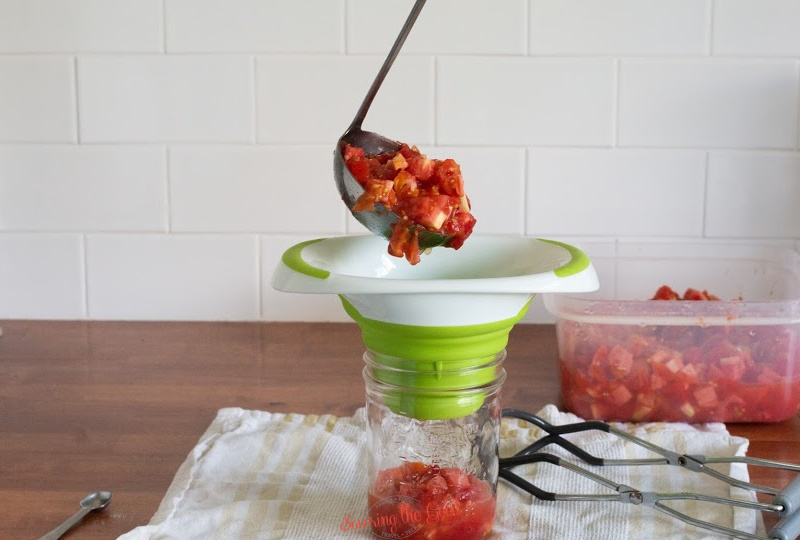
Using a funnel, fill the jar with diced tomatoes, including both solids and juice.
Remove Air Bubbles
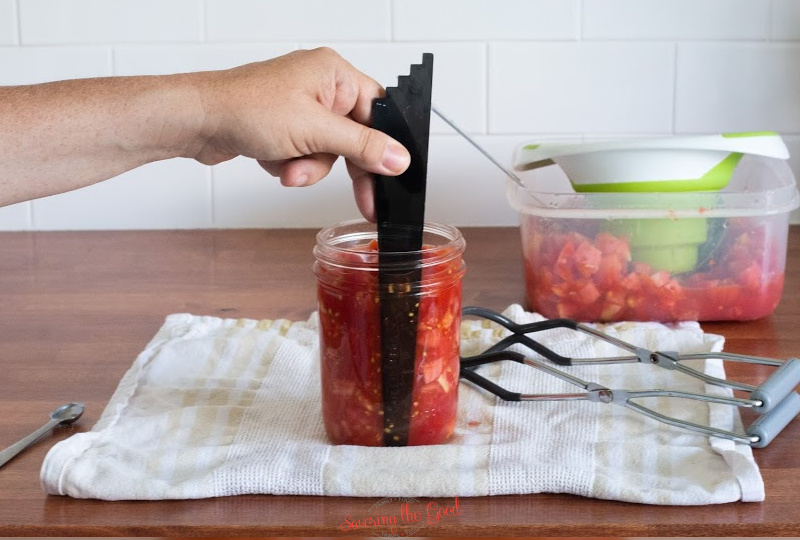
Remove air bubbles with a bubble remover or nonreactive tool (like bamboo or silicone). Re-check for ½-inch headspace.
Wipe the rim clean, apply a new lid, and finger-tighten the ring.
Return the filled jar to the hot water bath using a jar lifter.
Set the timer for 35 minutes for pints and 45 minutes for quarts.
Cool
After processing is complete, carefully remove the jars from the canner with a jar lifter, and place them on a towel or rack and let the jars cool for 12 to 24 hours.
Check Lids
If the jars do not flex the lids have sealed correctly. If there is flex on the lid when it is pressed the lid has not sealed.
5 Days To Canning Confidence
Recipes That Use Diced Tomatoes
Frequently asked questions, answers, and tips: Smart Uses for Diced Tomatoes in the Kitchen
When you first pull the jars from the canner you will notice that the diced tomatoes have floated to the top of the jar and the water has sunk to the bottom. This is normal. Once the jars have fully cooled, just shake the tomatoes to reincorporate the water back into the tomatoes.
Separation can occur when using the cold pack method that I call for in this canning technique. The action of the enzymes in the cut room temperature tomatoes will begin to break down the pectin in the tomatoes. This breakdown results in a yellow red-tinted liquid that can appear in either the top or bottom of the jar. : Iowa State University
To prevent the separations, a hot pack method should be used.
Yes, with a slight adjustment! If your recipe calls for crushed or whole tomatoes, you can use diced in a pinch, just give them a quick pulse in a blender or food processor. I do this when making sauce for pasta or lasagna and don't have crushed on hand.
Yes they are! The tomatoes are blanched and canned at high heat, which makes them safe to eat and perfect for quick recipes like soups, skillet meals, and slow cooker recipes.
Absolutely! I freeze extras in small containers, souper cubes or zip-top bags and toss them into chili or pasta sauce straight from the freezer. No waste, and it saves a step later.
The best tomatoes for canning should be firm, fresh, free of blemishes, and not affected by frost or pests. I am a fan of using a tomato with fewer seeds as I find they are meatier and less watery. I like to can a Roma tomato, San Marzano tomato or paste tomato.

Chef Tip
- Process in a boiling water bath : Pints: 35 minutes Quarts: 45 minutes
- Store unsealed jars in the refrigerator and use up within 7-10 days.
- Do not add thickeners or milk to tomatoes or tomato products before processing. Add the ingredients to make stewed tomatoes or tomato soup when you are ready to serve them. from the Penn State Extension
- Do not add extra peppers, onions, garlic etc. for flavor in this recipe, it will make the acid level be out of balance.
- Tomatoes may also be processed in a pressure canner.
- Tomato products with added vegetables or meat require pressure canning.
- Once your tomatoes are canned, put some aside for my homemade tomato paste recipe, it is a great way to use up the extras.
Seasonal Favorite
This is my award-winning Crisco pie crust recipe; flaky, tender, and made with simple ingredients you already have.


Ingredients
- 4 Pounds Roma Tomatoes
- 2 teaspoons Lemon Juice divided
Instructions
- Wash, sterilize, and heat the canning jars. Check out my canning 101 post if you need more step by step instructions.
- Heat the water in the larges stockpot. I also turn on my exhaust fan to help eliminate some of the heat and humidity that comes with canning. Keep the jars in hot water while you prepare the tomatoes for canning.
- Wash and inspect the tomatoes - I grow tomatoes in the garden and when I bring them into the house they have dirt on them. Thoroughly wash your tomatoes and remove any bad spots or blemishes on them. Remove the stem and core, if desired.4 Pounds Roma Tomatoes
- Remove the skin of the tomato - Use a sharp knife to slice and X or score the skin of the tomato, drop the tomato into the simmering water for 30 seconds to a minute.
- After the skin of the tomato has further cracked and started to separate from the tomato flesh, remove it from the water with a slotted spoon and plunge the tomato into the ice water bath, stopping the blanching process and allowing the skin to easily pull back.
- Once all the tomatoes have been blanched - remove them from the ice water bath and remove the skin from the tomato. They should slip right off. If you get a stubborn skin, dunk the tomato back in the water for an additional 15-30 seconds and then back into the ice water.
- Dice the tomatoes - I do a small to medium dice on my tomatoes as that is what I would normally pick up if I were to buy a can of diced tomatoes at the grocery store. Leave the seeds in the tomato and try and capture as much of the tomato juice in a bowl as you can.
- Remove a jar from the canner - place the empty, hot jar on your work surface, protected with a towel.
- Add lemon juice to the jar - if using lemon juice, add ½ teaspoon of lemon juice to the quart jar OR ¼ teaspoon of citric acid to the quart jar if using citric acid. See notes if you are canning larger portions.2 teaspoons Lemon Juice
- Place the funnel on the jar and fill the jar with your diced tomatoes. Be sure to get a balance of juice and tomatoes in the jar.
- Check for air - use your bubble remover tool or a nonreactive scraper, such as bamboo or silicone, to press the tomatoes and remove the air. Check for ½" headspace with the tool, wipe the rim, add a new lid and finger tighten a ring on the jar.
- Place the jar back in the simmering water - Use the jar lifter to place the filled jar back in the hot water bath.
- Repeat until all jars have been filled and returned to the hot water bath canner.
- Set the timer for 35 minutes for pints and 45 minutes for quarts.
- After processing is complete, carefully remove the jars from the canner with a jar lifter, and place them on a towel or rack to cool for 12 to 24 hours.
- Check the lids for flex. If the jars do not flex the lids have sealed correctly. If there is flex on the lid when it is pressed the lid has not sealed.
Nutrition
Notes
- Process in a boiling water bath : Pints: 35 minutes Quarts: 45 minutes
- Store unsealed jars in the refrigerator and use up within 7-10 days.
- Do not add thickeners or milk to tomatoes or tomato products before processing. Add the ingredients to make stewed tomatoes or tomato soup when you are ready to serve them. from the Penn State Extension
- Do not add extra peppers, onions, garlic etc. for flavor in this recipe, it will make the acid level be out of balance.
- Tomatoes may also be processed in a pressure canner.
- Tomato products with added vegetables or meat require pressure canning.
What supplies are needed for canning tomatoes?

- Pint canning jars - I use Ball canning jars, wide mouth or regular mouth will both work for this project. Quart jars can be used if you want to can quarts of diced tomatoes.
- Canning lids - new lids need to used for each canning project. Be sure to use a wide mouth lid on a wide mouth jar and a regular lid on a regular jar.
- Canning Rings - check to be sure the corresponding rings are not bent, free from rust, and clean. Rings can be reused whereas lids are a one time use for canning.
- Large Stock Pot - I use the deepest pot I have. The pot should be deep enough that water covers the jars by 2" when the jars are submerged in the water.
- Jar lifter, jar funnel, headspace tool - Ball as a canning utensil set that has all three of these in them but they can be purchased separately. PLEASE get a jar lifter. I worked with years without one and it was not safe. Don't be like me.
- A second pan of simmering water & an ice bath - I have a pan of simmering water ready for when I blanch and peel the skins off of the tomatoes. This is the easiest way to skin a tomato. The bowl of ice water is so you can plunge the tomatoes into, stopping the cooking process and allowing the skin to easily peel away.
- Towels, cutting board, colander, knife, bowl - The towels are for placing your hot jars on to protect your counter surface and the other items will help in the tomato chopping process.

I am Sarah Mock. Welcome!
Sarah Mock is a classically trained Chef and a graduate of Johnson & Wales University. A culinary blogger for 18 years, Sarah helps the home cook prepare her recipes with professional results.




Sarah says
Curious hiw much lemon juice for pints? Say 1 tsp for quarts
Emma P says
I followed your directions to the tee. I made 9 pints of diced tomatoes 2 weeks ago. A FB group I belong to says the FDA indicates I should have is 1 tablespoon of lemon juice and since I didn’t, the tomatoes are not safe to consume. I’m getting conflicting info so I’m asking for clarification before I don anything with my batch. They look amazing, are they safe?
Sarah Mock says
Hi Emma,
I am sure they really do look amazing, but let’s make sure they’re safe before using them!
If you followed my recipe exactly, there should already be lemon juice or citric acid added (it’s listed in both the recipe card and post). That acidity step is crucial for safe water bath canning since modern tomato varieties are lower in acid than they used to be.
Your Facebook group is right on this one — tomatoes always need added acid for safe home canning.
The good news is you don’t have to toss your jars! You can reprocess them with the proper amount of lemon juice or citric acid and new lids, or cook them down into pizza sauce or tomato paste.
You did the right thing by asking before using them. Safety always comes first when canning!
Sarah
Terry says
So...first blanching, then cooking again for a hot pack, then 40 minutes processing time. How do I keep the tomatoes from being so overcooked that they disintegrate when I open the jars?
Sarah says
What would the weight and time be in a pressure cooker?
Sarah Mock says
I am not sure. I am not a pressure canner, canner. I will have to do some research on this one.