

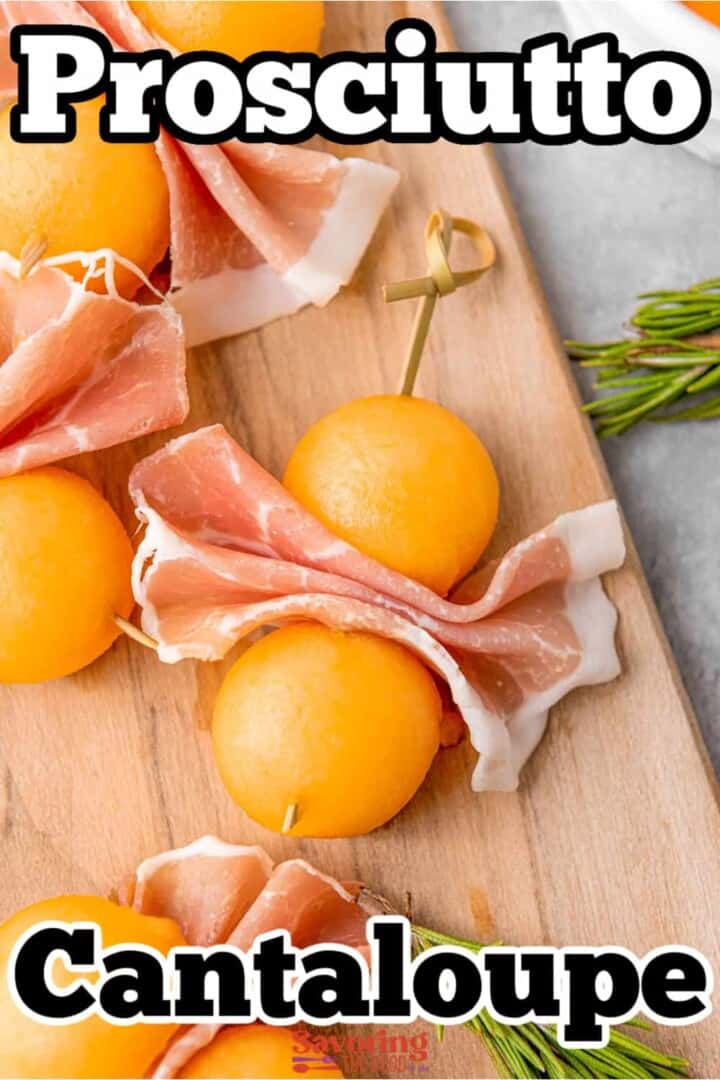
Cantaloupe and prosciutto, a timeless culinary pairing originating from Italian traditions, offer a marriage of sweet and salty, savory flavors.

These melon with prosciutto skewers are a fun alternative to prosciutto wrapped melon. No need for a knife and fork! Be sure to add them to your list of easy appetizers along with cream cheese sausage balls, turkey sliders, and my mom's pineapple cheeseball.
Why You Will Love This Recipe For Cantaloupe Melon and Prosciutto
- Perfect Flavor Harmony: The marriage of sweet, juicy cantaloupe with the savory, salty richness of prosciutto creates an exquisite flavor harmony. The contrasting tastes blend together beautifully, offering a delightful balance of sweet and savory in each bite.
- Simple yet Elegant Appetizer: This easy summer appetizer requires minimal ingredients and effort. Yet, when presented, the visual appeal is stunning. The elegant pairing of prosciutto-wrapped cantaloupe is not only delicious but also makes for an impressive and sophisticated appetizer for any occasion.
- Textural Pleasure: The contrasting textures of the tender, juicy cantaloupe and the delicate, thinly sliced prosciutto provide a delightful sensation in your mouth. The softness of the melon combined with the slightly chewy yet tender prosciutto offers a pleasing textural experience.
- Versatility and Adaptability: While the classic combination involves wrapping prosciutto around cantaloupe balls, this recipe is highly adaptable. You can experiment by varying the presentation-slicing the cantaloupe and layering it with prosciutto, creating skewers, or even incorporating other complementary ingredients to customize the dish to your taste preferences.
Ingredients For Prosciutto e Melone

Recipe Card?
To find the full printable recipe with specific measurements and directions CLICK HERE to go to the recipe card.
How to make Prosciutto and Melon Appetizer
The classic Italian pairing of prosciutto and melon is the perfect summer appetizer is a delicious balance of sweet and salty. Wouldn't marinated mozzarella balls pair so beautifully with this recipe?
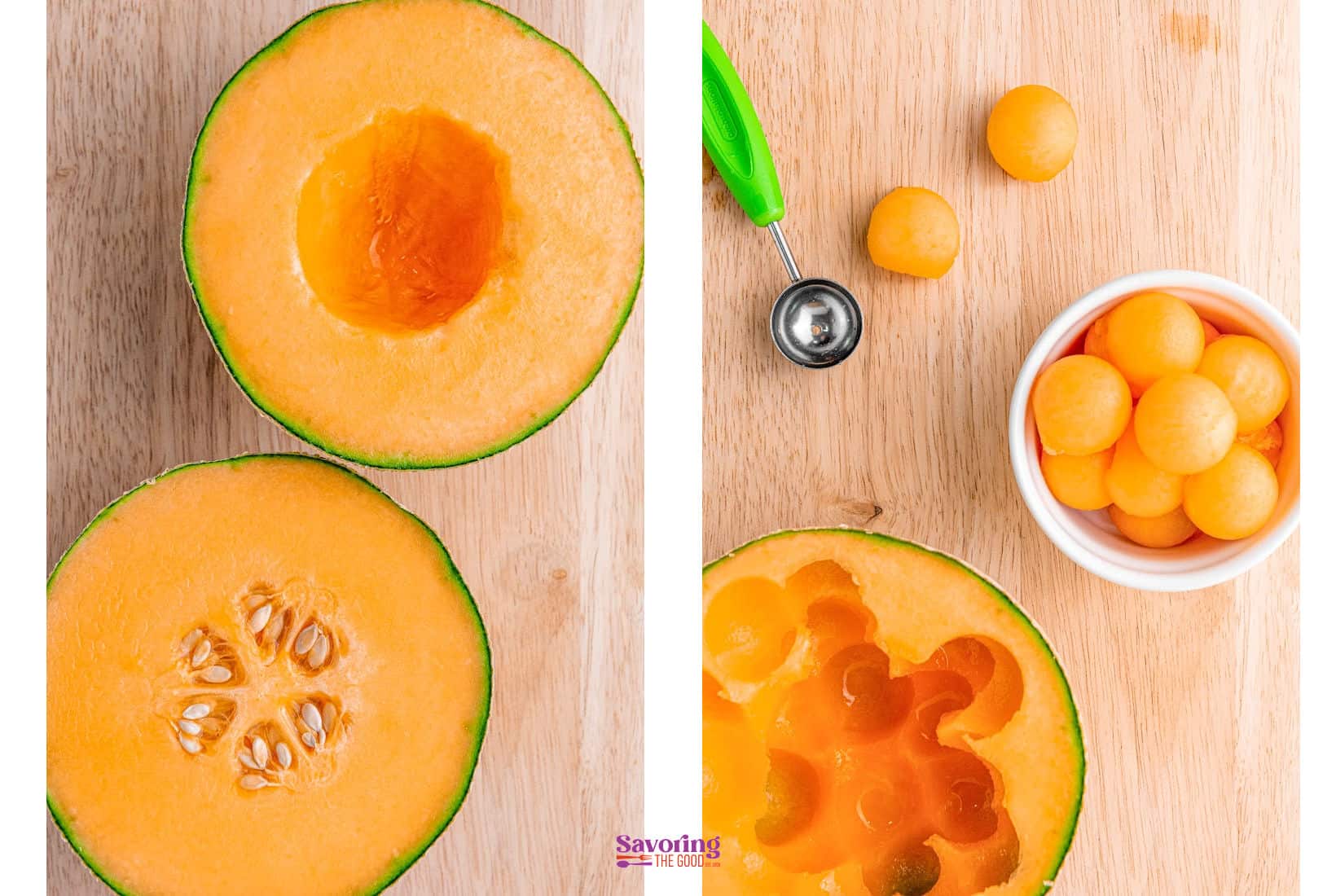
- Prepare the Cantaloupe: Begin by slicing the melon in half and removing the seeds. Use a melon baller to create uniformly sized round balls.

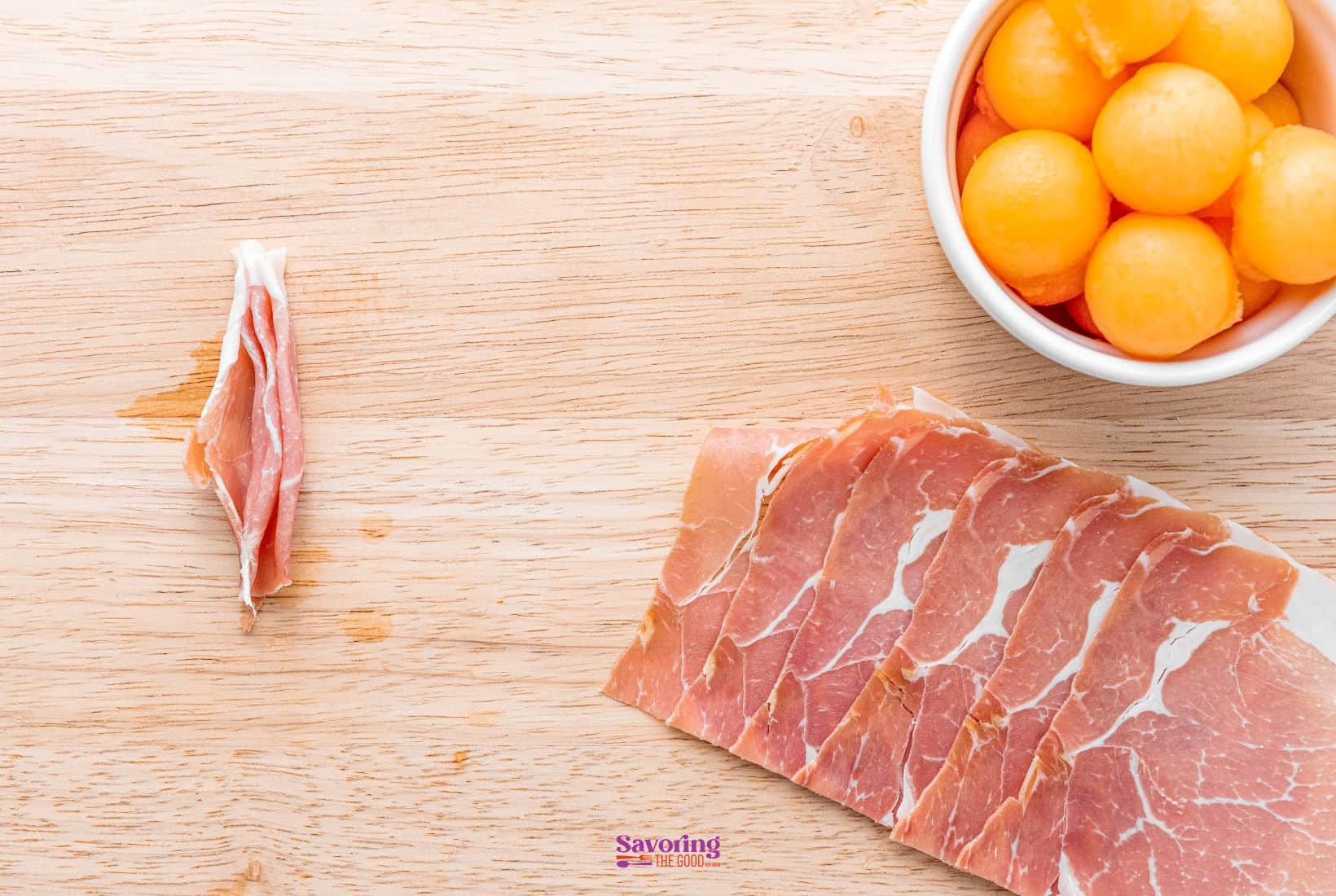
- Slice the Prosciutto: Cut the Prosciutto slices in half. Then, take each piece of prosciutto and fold it accordion-style, forming a decorative bow-like pattern.
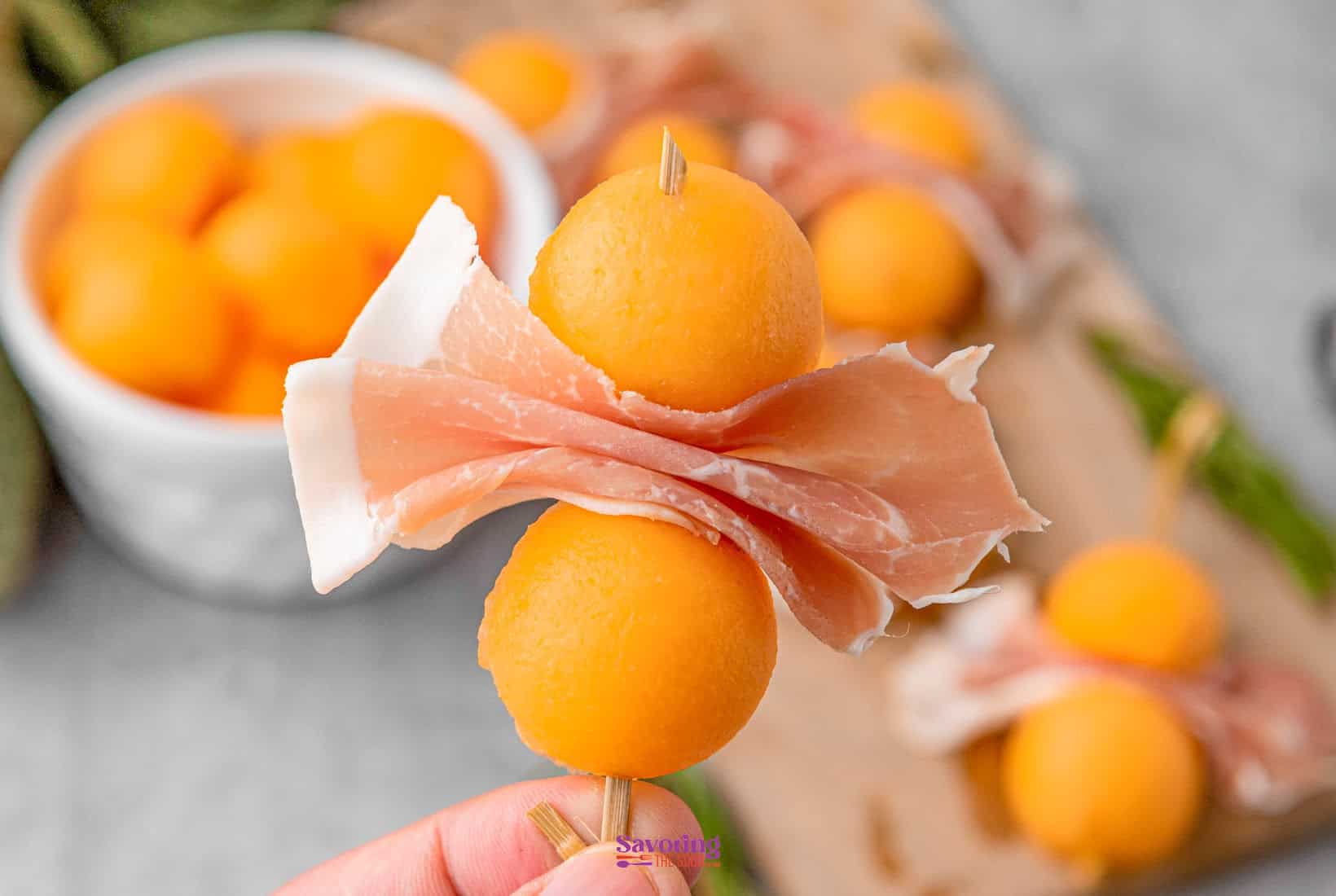
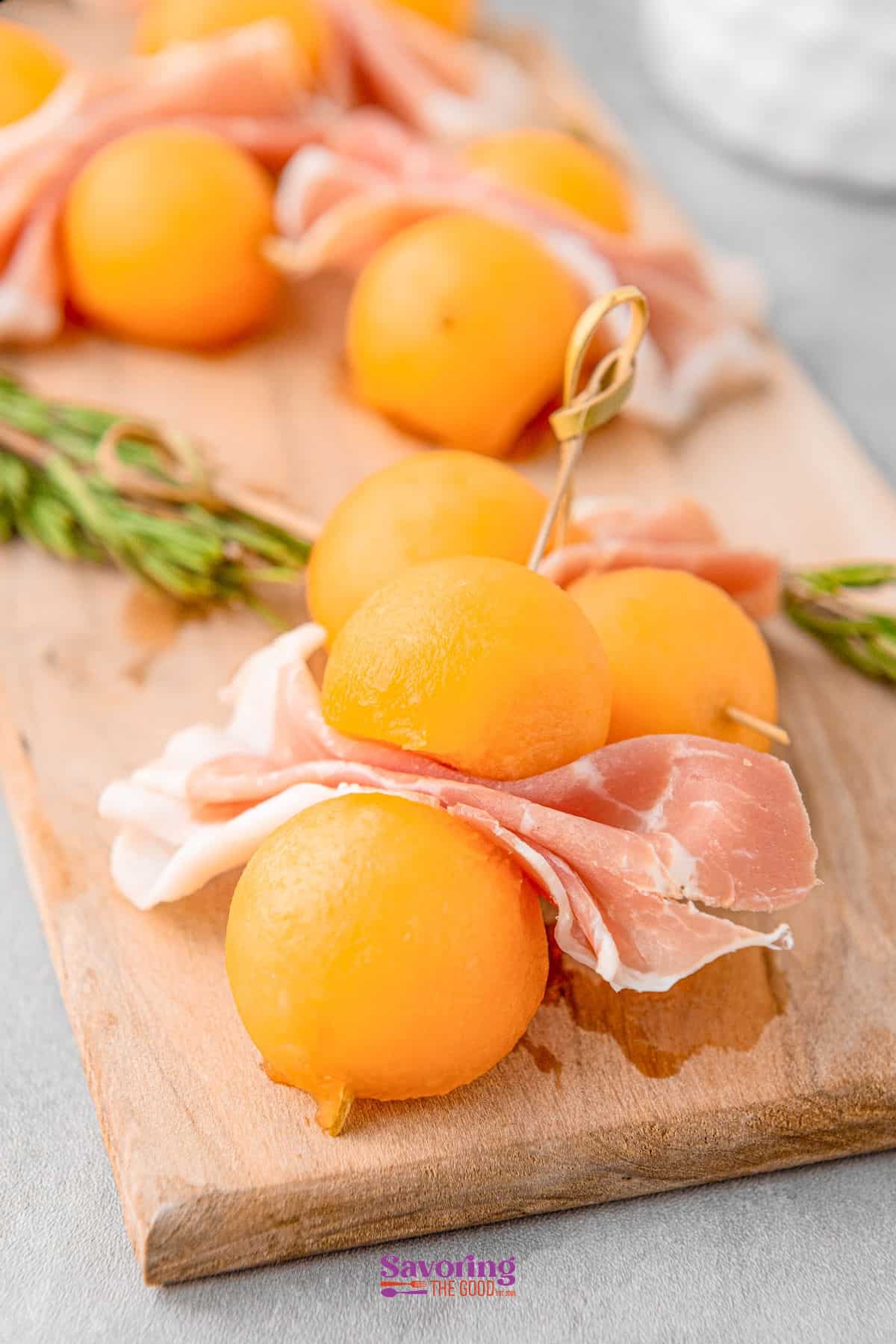
- Assemble the Bites: Start by skewering a cantaloupe ball onto a skewer. Carefully thread the folded prosciutto onto the skewer, positioning it beside the cantaloupe. Add a second cantaloupe ball.

Can I use other types of melon?
While cantaloupe and honeydew are the most commonly used melons when pairing with prosciutto, you can certainly explore other types of melons to create unique flavors.
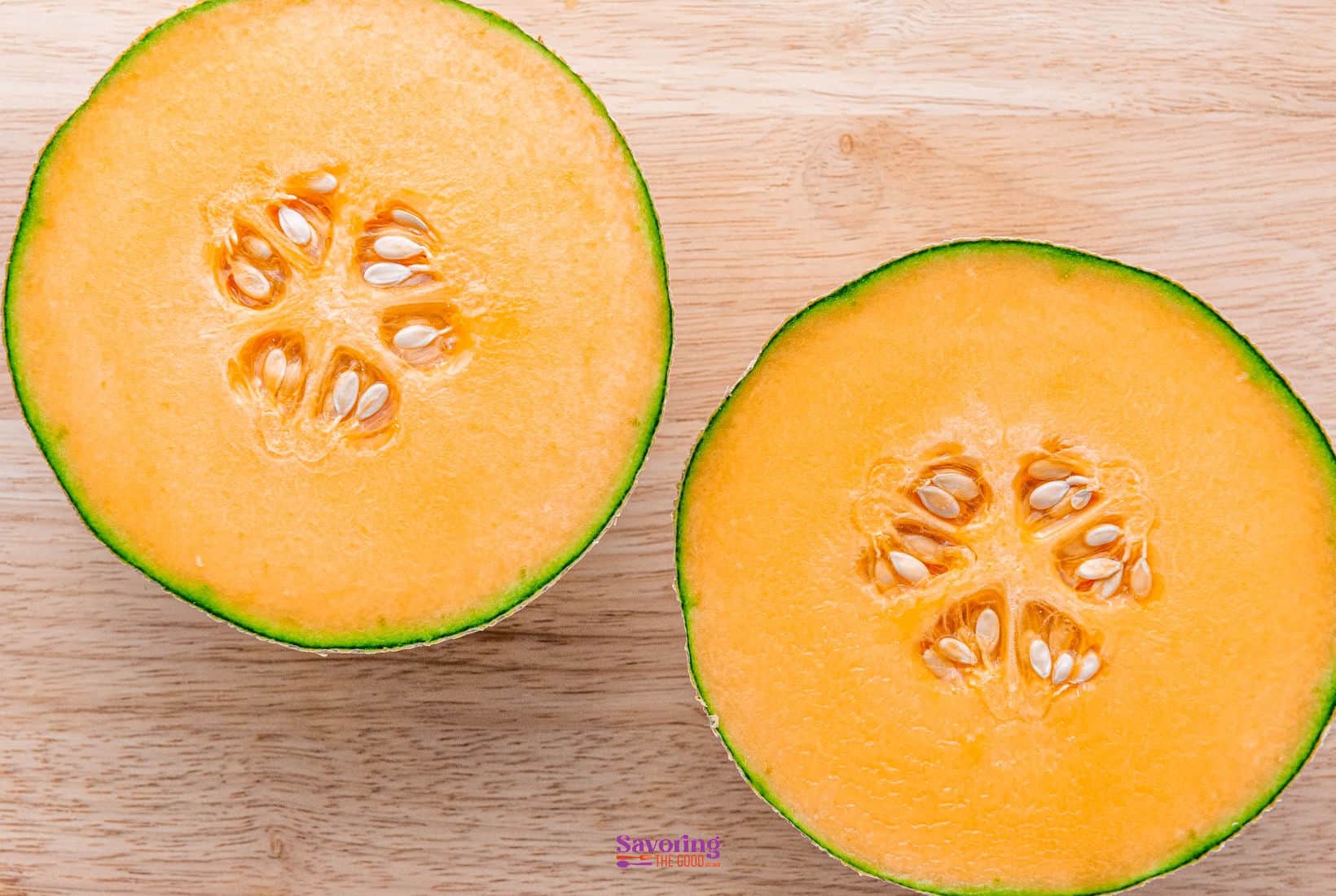
When experimenting with different melon varieties, consider their sweetness, juiciness, and overall flavor profile. The goal is to find a melon that complements the saltiness of the prosciutto and creates a pleasing balance of flavors.
Here are a few other melon varieties you might consider:
- Watermelon: Its sweet, juicy nature contrasts nicely with the saltiness of the ham.
- Crenshaw Melon: This melon has a sweet and slightly spicy flavor. Its smooth, pale flesh can make for an interesting pairing with prosciutto due to its unique taste.
- Galia Melon: Galia melon can offer a slightly different twist to the traditional prosciutto-melon pairing.
- Charentais Melon: Known for its sweet and floral taste, Charentais melon can be an excellent choice to accompany prosciutto. Its vibrant orange flesh and fragrant aroma make it an appealing option.
How thin should the slices of prosciutto be?
When preparing prosciutto for pairing with melon or for other recipes, aim for slices that are almost translucent, about 1 to 2 millimeters thick. When purchasing prosciutto, you can request thin slices from the deli counter if you're not slicing it yourself.
Using a VERY sharp knife or a meat slicer can help achieve the desired thinness. Aim for slices that are thin enough to be easily manipulated but not so thin that they tear or become too fragile to handle.
What can I use in place of prosciutto?
When substituting for Italian prosciutto, consider the flavor profile and texture of the alternative to ensure it complements the other ingredients in your dish.
Each substitute may bring its own unique taste, so it's worth experimenting to find the best fit for your specific recipe or dietary preferences.
If you're looking for alternatives to prosciutto for a dish, there are several options that can provide similar flavors or textures. Here are some alternatives to consider:
- Serrano Ham: a dry-cured Spanish ham with a slightly different flavor profile. It's typically less expensive than prosciutto and has a savory, salty taste. Serrano ham can be sliced thinly and used as a substitute in recipes where prosciutto is called for.
- Coppa (Capicola): also known as capicola, is another cured pork product with a rich flavor. It's made from the neck or shoulder of the pig and offers a slightly different taste compared to prosciutto.
- Bresaola: This air-dried, salted beef offers a leaner option compared to prosciutto. It has a rich, slightly sweet flavor and works well in recipes where a cured meat is required.
- Smoked Salmon: While not similar in taste to prosciutto, smoked salmon offers a flavorful alternative, especially in dishes where a delicate, smoky taste is desired.
- Vegetarian Options: For those seeking vegetarian or vegan alternatives, thinly sliced roasted vegetables (like zucchini or eggplant), marinated tofu, or even strips of nori (seaweed) can be used creatively to mimic the texture and appearance of prosciutto in certain dishes.
Additional Flavors To Add To Prosciutto e Melon

While the classic combination of salty prosciutto and melon is delightful on its own, adding additional flavors can further elevate this appetizer. Here are a few complementary ingredients to consider incorporating with Prosciutto e Melon:
- Balsamic Glaze or Reduction: A drizzle with balsamic glaze or a balsamic reduction over the prosciutto-wrapped melon can introduce a sweet and tangy contrast to the prosciutto and melon recipe.
- Fresh Herbs: Adding a touch of fresh herbs like fresh basil, mint, or thyme can bring a burst of freshness and aromatic notes to the dish. Garnishing with finely chopped herbs or whole leaves can add visual appeal and a hint of herbaceousness.
- Cheese: Pairing prosciutto and melon with a mild, creamy cheese such as mozzarella, burrata, or goat cheese can introduce creaminess and additional depth of flavor to the ensemble.
- Citrus Zest or Segments: Adding a sprinkle of citrus zest (lemon, lime, or orange) or small segments of citrus fruits can provide a zesty and refreshing contrast to the dish.
- Arugula or Greens: Placing a small bed of fresh arugula or other peppery greens underneath the prosciutto-wrapped melon can add a layer of texture and a slightly bitter contrast that complements the dish.
These additional flavors can be used individually or combined creatively to customize the Prosciutto e Melone recipe according to your preferences, adding depth, complexity, and an exciting twist to this classic Italian appetizer.
How To Make a Balsamic Glaze:
This homemade balsamic glaze is versatile and can be drizzled over various dishes, including salads, roasted vegetables, meats, or used as a finishing touch on appetizers like Prosciutto e Melon.
Ingredients:
- 1 cup balsamic vinegar
- 2 tablespoons honey or brown sugar (optional for added sweetness)
- Pour balsamic vinegar into a saucepan over medium heat.
- Stir in honey or brown sugar (if using) until dissolved.
- Bring to a gentle boil, then simmer for 10-15 minutes until reduced by half, stirring occasionally to prevent sticking.
- Remove from heat when it thickens to a syrupy consistency that coats the back of a spoon. Cool slightly before storing or using.
FAQ's and Tips
What fruit goes well with prosciutto?
Prosciutto pairs exceptionally well with various fruits due to its savory, salty flavor profile. When combined, they create a harmonious blend of flavors that elevate the taste of the prosciutto, making it an ideal appetizer or part of a charcuterie board.
Some fruits that complement prosciutto beautifully include:
- Melon: Cantaloupe and honeydew melon are classic choices. Their subtle sweetness contrasts superbly with the saltiness of prosciutto, creating a delightful balance of flavors.
- Fig: Fresh figs or figs drizzled with a bit of honey can bring a sweet and slightly earthy note that complements the richness of prosciutto.
- Pear: Slices of ripe pear offer a juicy and slightly sweet taste that contrasts well with the saltiness of prosciutto. The combination of textures is also appealing.
- Peach: Ripe, juicy peaches provide a lovely sweetness that pairs nicely with prosciutto. The soft texture of the peach contrasts with the cured meat.
- Pineapple: The tangy sweetness of pineapple can balance the saltiness of prosciutto, creating a refreshing and flavorful combination.
- Apple: Crisp apple slices, especially varieties like Granny Smith or Honeycrisp, offer a sweet-tart flavor that complements the savory prosciutto.
Why do people eat prosciutto with melon?
The combination of prosciutto and melon is a traditional Italian pairing that has been enjoyed for generations The classic pairing of prosciutto with melon lies in the delightful interplay between the sweet, juicy fruit and the savory, salty cured ham, creating a delicious and refreshing flavor experience that has stood the test of time.
In Italy, this combination is particularly popular during the summer months when melons are at their peak ripeness. The refreshing nature of the fruit complements the lighter appetite during warmer weather.
It's often served as an antipasto (appetizer) or as part of a larger antipasti spread. The simplicity of this combination allows the quality of the ingredients to shine.
What is prosciutto?
Prosciutto is a type of Italian dry-cured ham that is renowned for its delicate flavor and smooth texture. It's made from the hind leg or thigh of a pig, specifically the pork leg.
The traditional process of making prosciutto involves curing the meat with salt and then air-drying it for an extended period, which can range from several months to a few years depending on the specific variety and producer.
Prosciutto is typically sliced thinly and served uncooked, making it a popular ingredient in antipasti, charcuterie boards, sandwiches, salads, and various appetizers.


Ingredients
- 1 Cantaloupe
- 12 slices Prosciutto paper thin.
Instructions
Prepare the Cantaloupe:
- Cut the cantaloupe in half and remove the seeds. Using a melon baller, scoop out round balls of cantaloupe. Ensure the balls are uniform in size for a pleasing presentation.1 Cantaloupe


Slice the Prosciutto:
- Cut the prosciutto slices in half. Then take a strip of prosciutto and fold it accordion-style, creating a bow-like pattern. This folding technique adds texture and visual appeal to the appetizer.12 slices Prosciutto

Assemble the Bites:
- Skewer a cantaloupe ball with a skewer, then carefully thread the folded prosciutto onto the skewer, placing it next to the cantaloupe. The prosciutto should sit nicely against the cantaloupe ball, showcasing the bow pattern.
- Arrange the skewers on a platter. You can stand them up by sticking the skewers into a half cantaloupe base or lay them down elegantly on a serving tray.


Nutrition
Notes

I am Sarah Mock. Welcome!
Sarah Mock is a classically trained Chef and a graduate of Johnson & Wales University. A culinary blogger for 18 years, Sarah helps the home cook prepare her recipes with professional results.





Comments
No Comments