


Sous vide poached eggs are silky, custard-soft eggs cooked in the shell at a precisely controlled temperature for 60 minutes. You get a warm, runny yolk and a set white every single time without the whirlpool, the vinegar, or the guesswork of a traditional poach. Whether you go with the 60°C or the 63°C method, I will walk you through both so you can decide which texture is right for you.
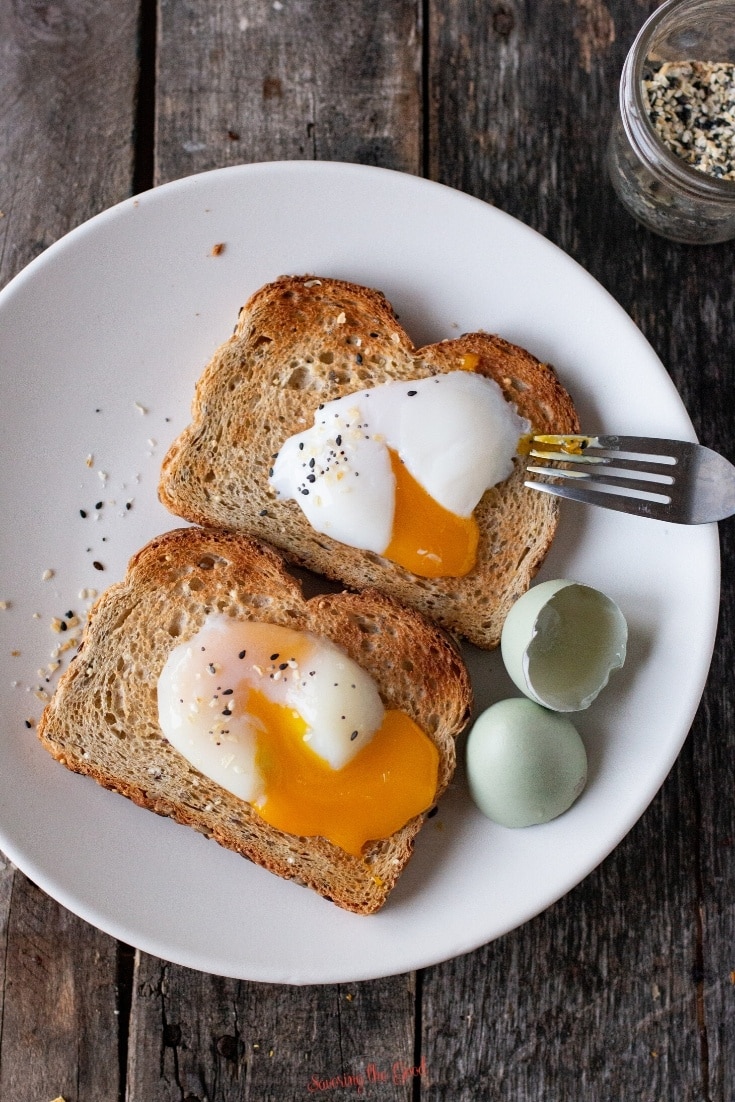
One of the first recipes you should make when you get a sous vide machine is poached eggs. Soft-cooked eggs are the foundation of my sous vide hollandaise, and together they make eggs Benedict a genuinely repeatable weekend project instead of a stressful one.
SEASONING & SERVING NOTE
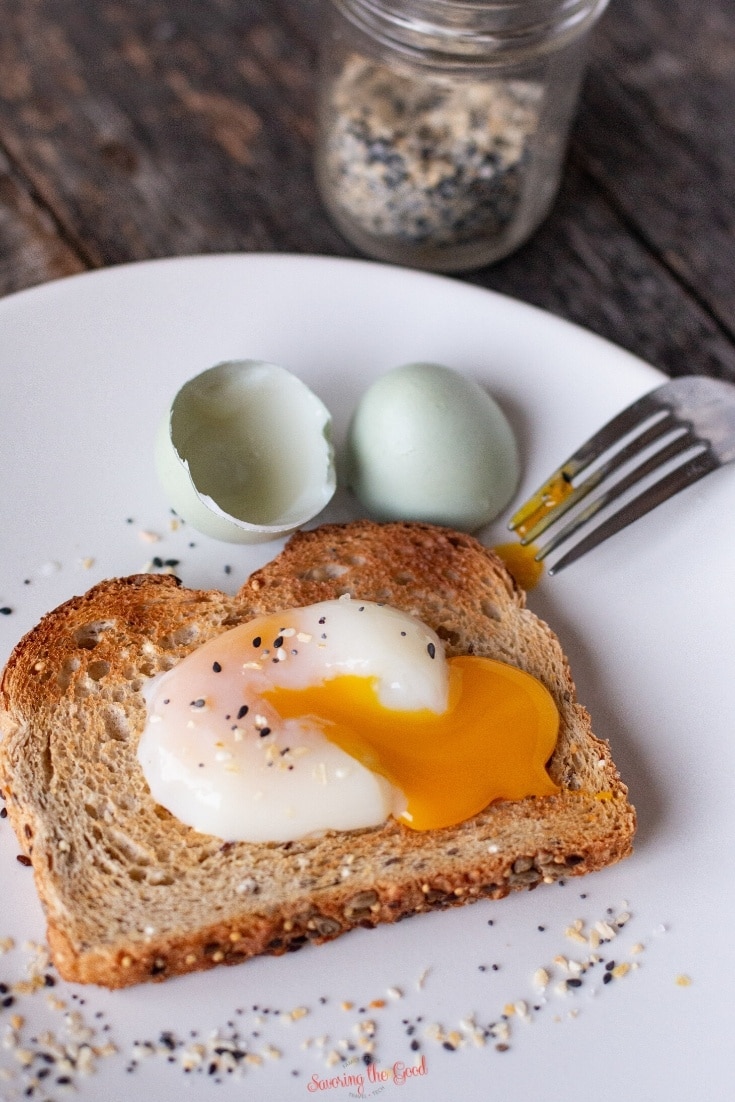
Once your egg is cracked and plated, a pinch of flaky salt and fresh cracked pepper is all it needs. If you are going all the way, pair it with my sous vide hollandaise and you have a brunch that will make people think you went to culinary school.
Sous Vide Poached Egg Instructions
Here is the short version if you already know your temperature and just need the steps. Full detail on timing, temperature, and equipment is below.
- Preheat. Set your sous vide circulator to your target temperature - 60°C (140°F) for a loose, flowing egg, or 63°C (145°F) for the classic soft poach.
- Lower the egg. Use a slotted spoon or tongs to gently lower the whole, uncracked egg into the water. Make sure the water covers at least 1 inch above the top of the shell.
- Set your timer for 60 minutes. Leave it. Do not rush this one.
- Crack and plate. When the timer goes off, tap the egg on a flat surface and pull the shell apart gently. You will see a soft, translucent white surrounding a warm, jiggly yolk. If there is extra watery white you do not want, slide the egg onto a large spoon and let the excess drip away.
- Season and serve. Salt, pepper, everything bagel seasoning - whatever you like. Enjoy immediately.
Why not the whirlpool method?
The traditional whirlpool method works, but it requires practice, a very fresh egg, and a pot of water you have to actively manage. The water temperature drops every time you add an egg, the white still feathers and shreds if your timing is even slightly off, and producing more than two or three poached eggs at once is genuinely stressful.
Sous vide takes longer, but what you trade in time you get back in consistency. Every egg comes out the same. That matters a lot if you are making eggs benedict for a table of four.
How Long Does It Take to Cook Sous Vide Eggs?
The standard cook time is 60 minutes. That is my recommendation and the one I use every time.
You can cook a sous vide egg in as little as 13 to 15 minutes at a higher temperature (75°C / 165°F), but the whites will be firmer and the texture shifts noticeably. I am in the low-and-slow camp because that is what the method was built for; the result at 60 minutes is something you simply cannot replicate with speed.
Does one degree really matter?
Yes. This is one of the things that surprises people most about sous vide cooking, and it is also what makes it worth using.
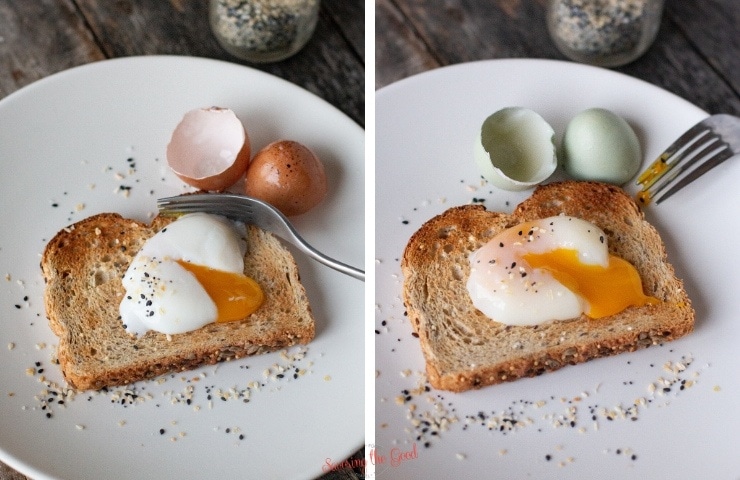
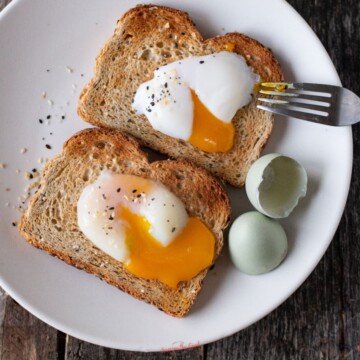
At 60°C, the outer white stays loose and fluid (R in photo above). At 63°C, the white close to the yolk sets enough to hold its shape (L in photo above. That difference is one degree Celsius. It is not a rounding error; it is a texture decision. This is exactly why you want a quality circulator that holds temperature to the tenth of a degree, not something that swings two or three degrees in either direction.
What Is a 60°C Egg?
The 60°C egg, also called a 60-degree egg, is cooked at 60°C (140°F) for 60 minutes. The result: the outer white is watery and fluid, the white directly surrounding the yolk is just starting to set and turning opaque, and the yolk is warm and completely runny.
This is the looser of the two textures. Some people love it; it is almost spoonable. Others find the flowing white off-putting. If you are not sure which camp you are in, make one of each and taste them side by side. You will know immediately.
What Is a 63°C Egg?
The 63°C egg - technically 62.8°C, or 145°F - is cooked for 60 minutes and is what most people would call a perfect soft poach or a soft-boiled egg.

The white close to the yolk is set enough to hold the yolk in place; you can slice into it with the edge of a spoon and the yolk runs warm and soft but does not just spill out the moment you crack the shell. This is the version I reach for when I am making eggs Benedict or serving these on toast. It looks like a restaurant egg because it holds its form on the plate.
Can You Cook It Quicker?
You can bring the bath up to 75°C (165°F) and have a poached egg in about 15 minutes. The tradeoff is texture; the whites are firmer and the whole egg has a slightly different mouthfeel than the low-and-slow version.
If time is genuinely the issue, that method works. But if you have the hour, use it. The 60-minute egg is a completely different result, and once you have made it that way you will understand why sous vide got popular for eggs in the first place.
What Equipment Do You Need?
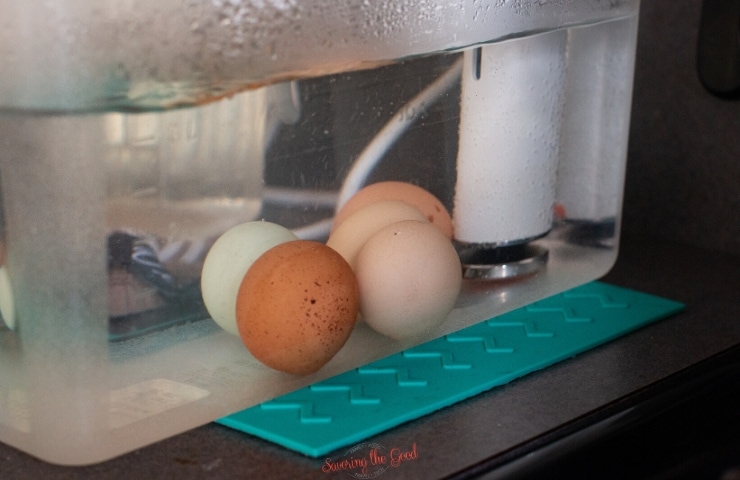
You need two things: a sous vide immersion circulator and a container deep enough to keep the water at least 1 inch above the top of the egg.
A small pot works for one or two eggs. A larger pot or a dedicated sous vide container works when you are cooking for a crowd. I have used Lipavi containers and I have used a basic stockpot; both get the job done. The circulator is where quality matters, not the container. Get a unit that holds temperature precisely; that precision is the whole point.
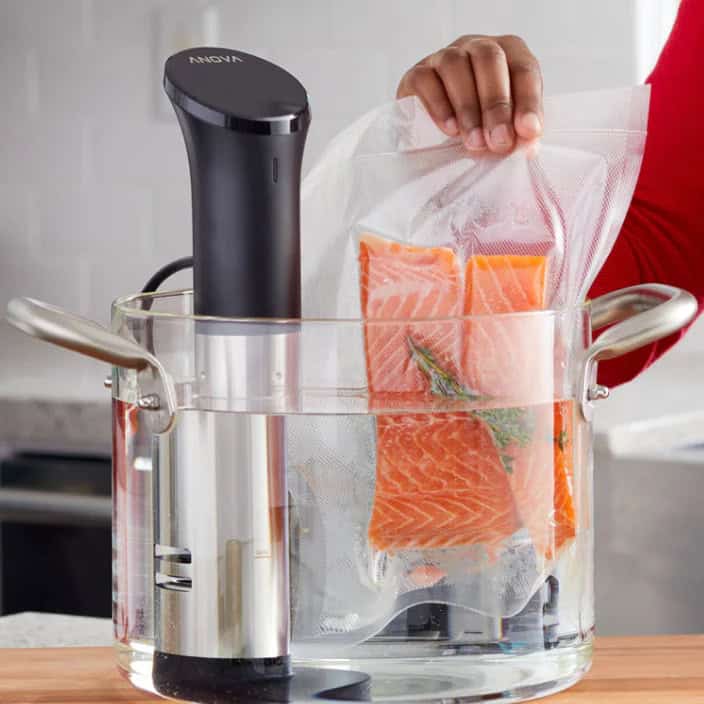
Let's go shopping!
ANOVA
This third generation sous vide circulator includes dual-band WiFi and a two-line touchscreen display.
How Do You Crack Open a Sous Vide Egg?
Tap the egg firmly on a flat surface (not the edge of a bowl - flat surface, so you get a clean crack without pushing shell into the egg). Press both thumbs into the crack at the membrane and pull the shell apart gently.
If you want to remove the extra watery white, slide the egg out onto a large soup spoon and let the loose white fall away naturally. You can also place the egg in an egg cup, tap off the top of the shell, and scoop it out with a spoon if you prefer that method. Either way, work quickly; the egg will cool faster than you think once it is out of the shell.
How Do You Reheat a Sous Vide Poached Egg?
Place the uncracked egg (still in the shell) back into a room-temperature water bath, then bring the water up to 140°F (60°C). Once the water reaches temperature, the egg is ready.
If you are short on time, a pot of simmering water on the stovetop for 60 seconds will warm the cracked egg through without cooking it further. Do not go longer than that or you will start to set the yolk.
Can Sous Vide Poached Eggs Be Made Ahead of Time?
Yes, and this is one of the best reasons to use this method for a big brunch.
Cook the eggs at your target temperature, then transfer them immediately to an ice bath to stop cooking. Leave them in the shell and refrigerate for up to 5 days. When you are ready to serve, reheat using either the warm water bath method or the 60-second stovetop method above. The texture holds well; I have made these two days ahead for a holiday brunch and they were indistinguishable from fresh.
Do You Need Vinegar to Sous Vide Poach an Egg?
No vinegar. No swirling. The egg cooks in the shell in plain water, which means there is nothing to add and nothing to manage.
Just make sure the eggs are crack-free before they go in. A cracked shell in a sous vide bath means egg whites leaching into your water and into your circulator, and no one wants to clean that out.
Should Eggs Be Chilled or at Room Temperature?
It does not make a meaningful difference in the final result at these temperatures and cook times.
I keep backyard chickens, so my eggs tend to be room temperature. Cold eggs from the refrigerator work just as well. What matters more is freshness; a fresh egg will have a tighter, more cohesive white that holds together better than an older egg, regardless of temperature.
Are Sous Vide Eggs and Soft-Boiled Eggs the Same?
They are not the same, though both aim for tender whites and a soft yolk.
A soft-boiled egg is cooked in boiling water for a set number of minutes, then pulled and cooled. The result depends on your pot, your altitude, your egg size, and how fast you moved from water to ice bath. A sous vide egg is cooked at a precise temperature for a precise time, which means the texture is controlled completely. The 63°C sous vide egg and a well-made soft-boiled egg can look similar on a plate, but the sous vide version is more consistent and more repeatable, every single time.

Ingredients
- Egg fresh
Instructions
- Set your sous vide circulator to your target temperature - 60°C (140°F) for a loose, flowing egg, or 63°C (145°F) for the classic soft poach.

- Use a slotted spoon or tongs to gently lower the whole, uncracked egg into the water. Make sure the water covers at least 1 inch above the top of the shell.

- Set your timer for 60 minutes. Leave it. Do not rush this one.
- When the timer goes off, tap the egg on a flat surface and pull the shell apart gently. You will see a soft, translucent white surrounding a warm, jiggly yolk. If there is extra watery white you do not want, slide the egg onto a large spoon and let the excess drip away.
- Salt, pepper, everything bagel seasoning - whatever you like. Enjoy immediately.

Nutrition
Notes

60 degree egg
The 60 degree egg refers to 60 degree celsius/140 fahrenheit for 60 minutes. This is the temperature of the egg throughout. The outer white is watery and fluid, the white connected to the yolk is just starting to set and starting to turn opaque white with a warm runny egg yolk.
63 degree egg
It is an egg cooked at 63 degrees (technically 62.8 C) or 145 fahrenheit for 60 minutes. The 63 degree egg is what most people would consider a poached or soft boiled egg, the holy grail of perfect soft eggs. The white close to the yolk is set enough to keep the warm yet softly creamy yolk contained so you can slice it with the edge of a spoon. It is up to you if you scoop out the watery white and add it to the soft egg.Does it have to take an hour to poach an egg using sous vide?
Technically no, it can take as little as 13 minutes to poach a sous vide egg. But I am in the camp of 'low and slow' as the sous vide method was intended. But if you are in a hurry you can poach an egg in a 75°C (165.2°F) bath for just over 13 minutes. It will take your water more time to heat up and the whites will be more firm but you will have a poached egg in less time.
Sarah's Culinary Insight
- Every time I have made the 60°C egg for someone who has never tried sous vide, the watery outer white is the sticking point. It reads as undercooked even when it is not. If you are serving these to guests, go with 63°C; it looks more like what people expect a poached egg to look like.
- The ice bath step for make-ahead eggs is not optional. I skipped it once, refrigerated the eggs straight from the hot water, and the yolks continued to cook from residual heat. They were still good, but not the same. Ice bath first, then the fridge.
- Shell integrity matters more than you think. I now run my thumb lightly over every egg before it goes in the bath. A hairline crack you can barely see will still let whites seep out over 60 minutes. When in doubt, leave that egg out and crack it into scrambled eggs instead.
- The circulator brand matters less than the temperature stability. I have made these on three different circulators. The one that held the tightest temperature range gave the most consistent whites. If your results are inconsistent, your circulator may be drifting more than you realize.
Frequently asked questions, answers and tips:
While I try to share all the information you need to make this recipe in your home with restaurant-quality results, there still may be a question or two. Or these are questions I have received from the community about this recipe. I do my best to answer them as clearly as I can. I hope this helps.
Yes. At 75°C (165°F), a sous vide egg takes about 13 to 15 minutes. The whites will be firmer and more fully set than the lower-temperature versions. It works in a pinch, but the texture is noticeably different from the 60°C or 63°C result.
That is normal for the 60°C egg. The outer white at 140°F is designed to stay loose and fluid; only the white immediately surrounding the yolk sets. If you want a fully set white, cook at 63°C (145°F) instead. The temperature, not the time, is what sets the white.
Absolutely. You can cook a dozen eggs at once as long as they are fully submerged and the water circulates freely around each one. Do not stack them or let them rest against each other in a way that blocks water flow.
Do not put a cracked egg in the sous vide bath. The whites will escape into the water over 60 minutes and you will end up with cooked egg white floating around your circulator. Set that egg aside for scrambled eggs and use a whole one.
Yes, and honestly this is one of the best uses for it. Cook the eggs in advance, store in the shell in the refrigerator for up to 5 days, then reheat in a 60°C bath for a few minutes before serving. The timing stress of traditional eggs benedict disappears completely.
Temperature variation is usually the answer. If your circulator fluctuates even a couple of degrees during the cook, the white will set differently than expected. It can also be egg freshness; older eggs have more liquid whites that behave differently at both temperatures.
first published November 11, 2019

I am Sarah Mock. Welcome!
Sarah Mock is a classically trained Chef and a graduate of Johnson & Wales University. A culinary blogger for 17 years, Sarah helps the home cook prepare her recipes with professional results.



AP says
We have found if you do the temp at 167, large size eggs for 12 minutes, then put the eggs whole in ice water for a minute so you can crack them, the whites (are not runny) and yolks are perfect.