

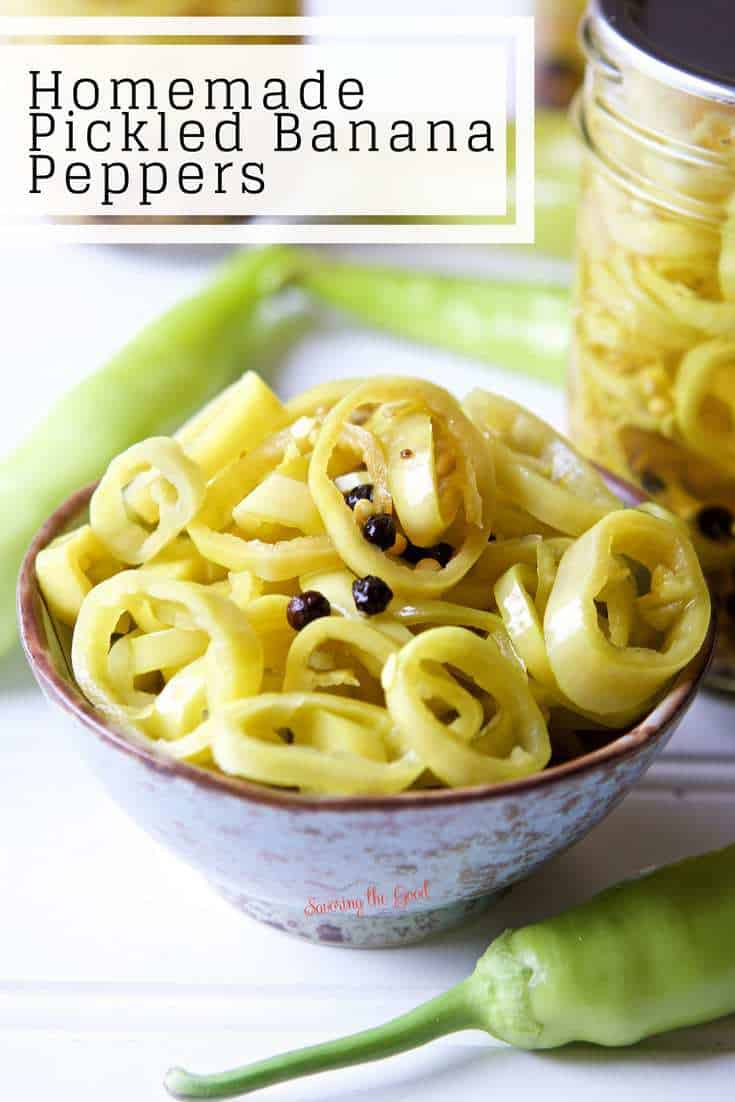
Pickled banana peppers are a tangy, crisp-tender canning recipe made with fresh banana peppers, white vinegar, and a simple blend of pickling spices. I started making big batches every summer once my pepper plants produced more than my family could eat fresh, and canning turned out to be the only way to keep up.
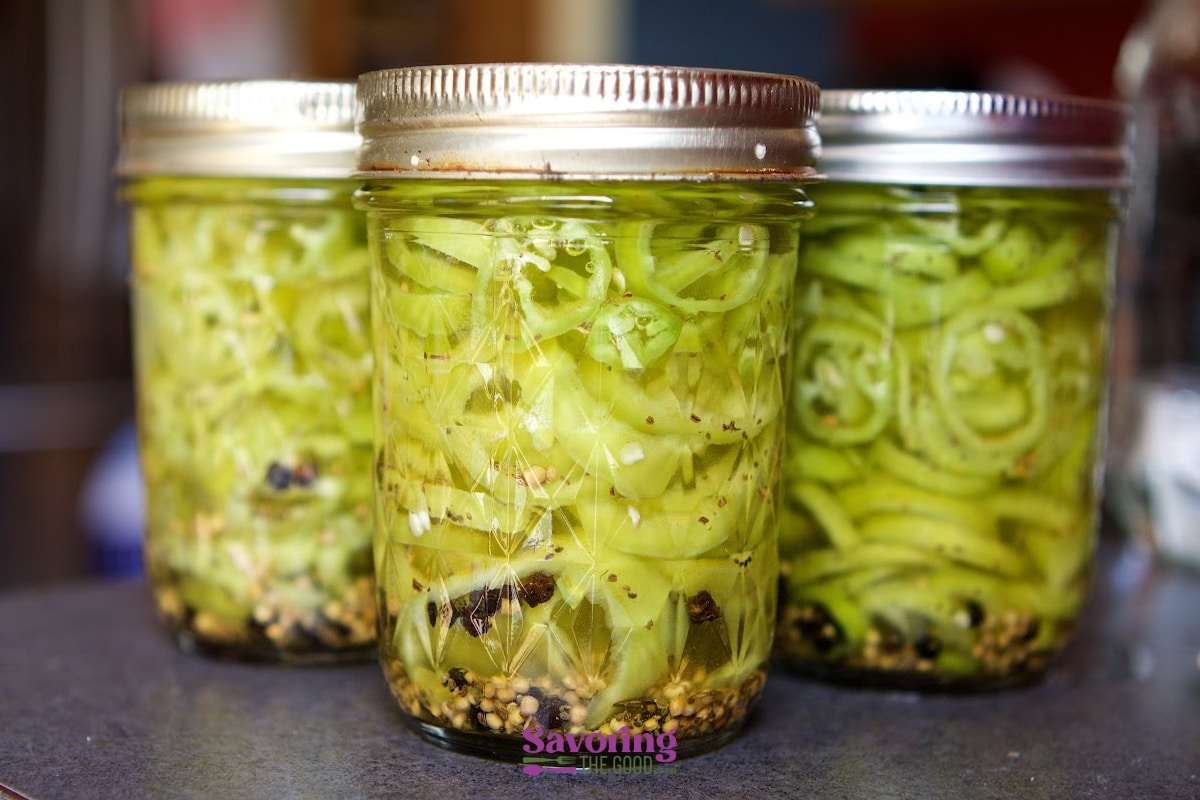
This post covers three ways to make them: a quick refrigerator pickle, traditional water bath canning for shelf-stable jars, and my faster sous vide method. The fridge version is ready in about a week; canned jars keep on the pantry shelf for up to a year.
Quick Look: What's In This Post
- A tested banana pepper canning recipe you can pickle and store safely at home
- The exact ingredients and equipment you need before you start
- My notes from testing this recipe for the best flavor and crunch
- The steps that keep your canned banana peppers fresh and shelf-stable
I love canning because it stretches the life of my favorite garden produce and lets me tuck jars away in the pantry until I need them.
Canning crisp banana peppers used to feel like a project. This method is quick, and the peppers keep their bite instead of turning limp, so pickling a full batch is worth the counter space.
I used regular sweet banana peppers for this batch, but this pickling method also works on hot banana peppers (also called Hungarian wax peppers) or jalapeños if you want more heat.
If you like pickled and brined food, you will want to make my pickled beets and my pickled onions next; both use the same jar-packing method you will learn here.
Sweet vs. Hot Banana Peppers: Which One to Pick
Most banana peppers at the grocery store are the sweet variety; they are mild, with barely any heat, and taste almost tangy-sweet once pickled.
Hot banana peppers, sometimes sold as Hungarian wax peppers, look nearly identical but carry real heat, closer to a jalapeño. Ask at the farmers market if you are not sure which one is in front of you; the two varieties are easy to mix up by sight alone.
This brine works on either one in the same ratios. If you are pickling the hot variety, slice with gloves on and avoid touching your face; the oils linger on your hands longer than you would think.
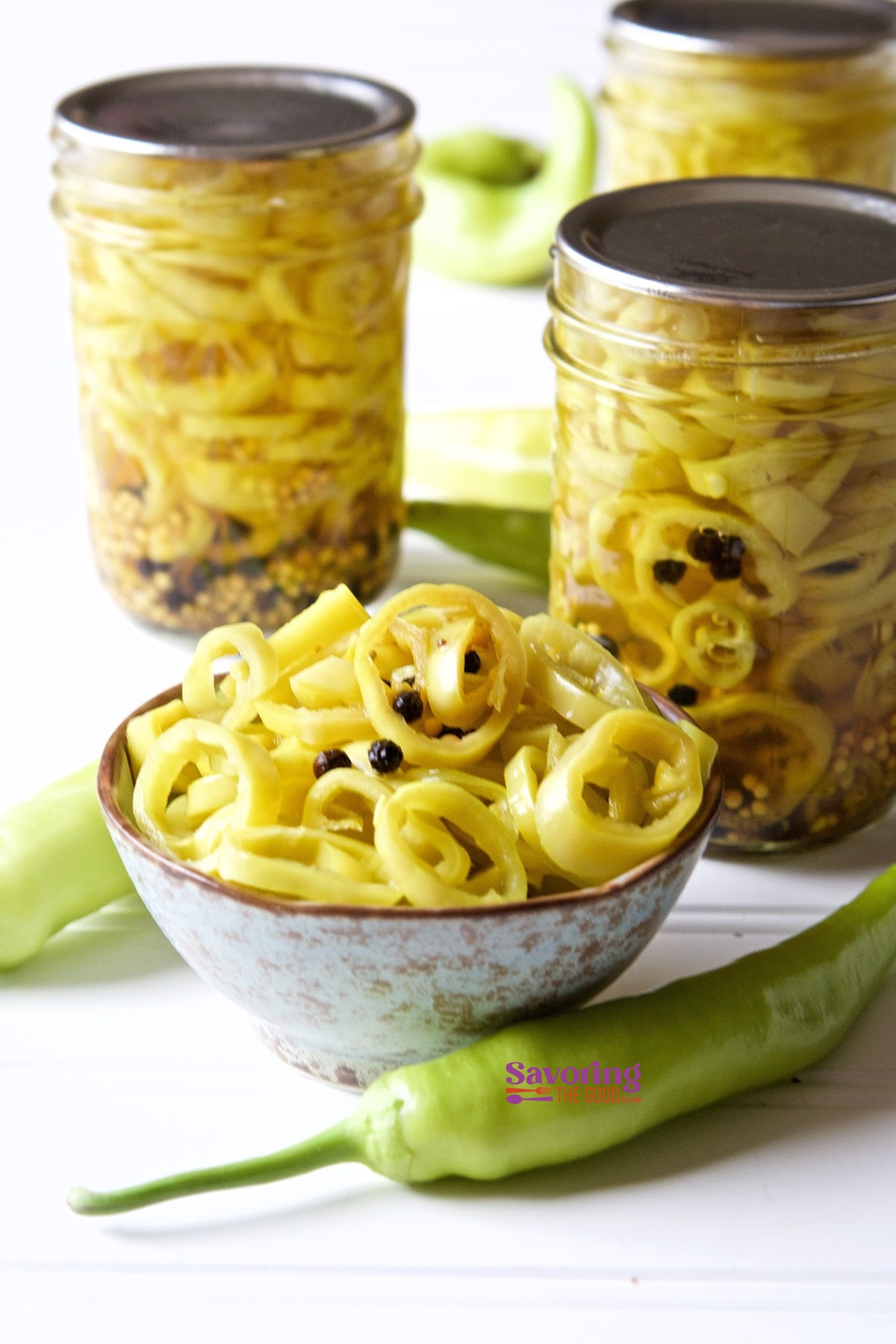
Ingredients Needed for Pickled Banana Peppers
This ingredient list is short on purpose; a good pickling brine does not need much beyond an acid, a bit of sugar, and a handful of spices to round out the flavor.
Why These Ingredients Matter
White vinegar needs to be 5% acidity for the brine to be safe for canning; do not substitute a lower-acid vinegar or dilute it further than the recipe states, since acidity is what keeps these jars shelf-stable.
Canning salt is plain, without iodine or anti-caking agents, both of which cloud the brine and can dull the color of the peppers. Table salt works in a pinch, but expect a slightly cloudier jar.
Celery seed and mustard seed are classic pickling spices; they add a savory backbone that keeps the brine from tasting like straight sugar and vinegar.
Turmeric is in this recipe for color as much as flavor. A pinch turns the brine a warm golden yellow and adds a faint earthy note that plays well with the vinegar.
Recipe Card?
To find the full printable recipe with specific measurements and directions CLICK HERE to go to the recipe card.
When to Pick Banana Peppers
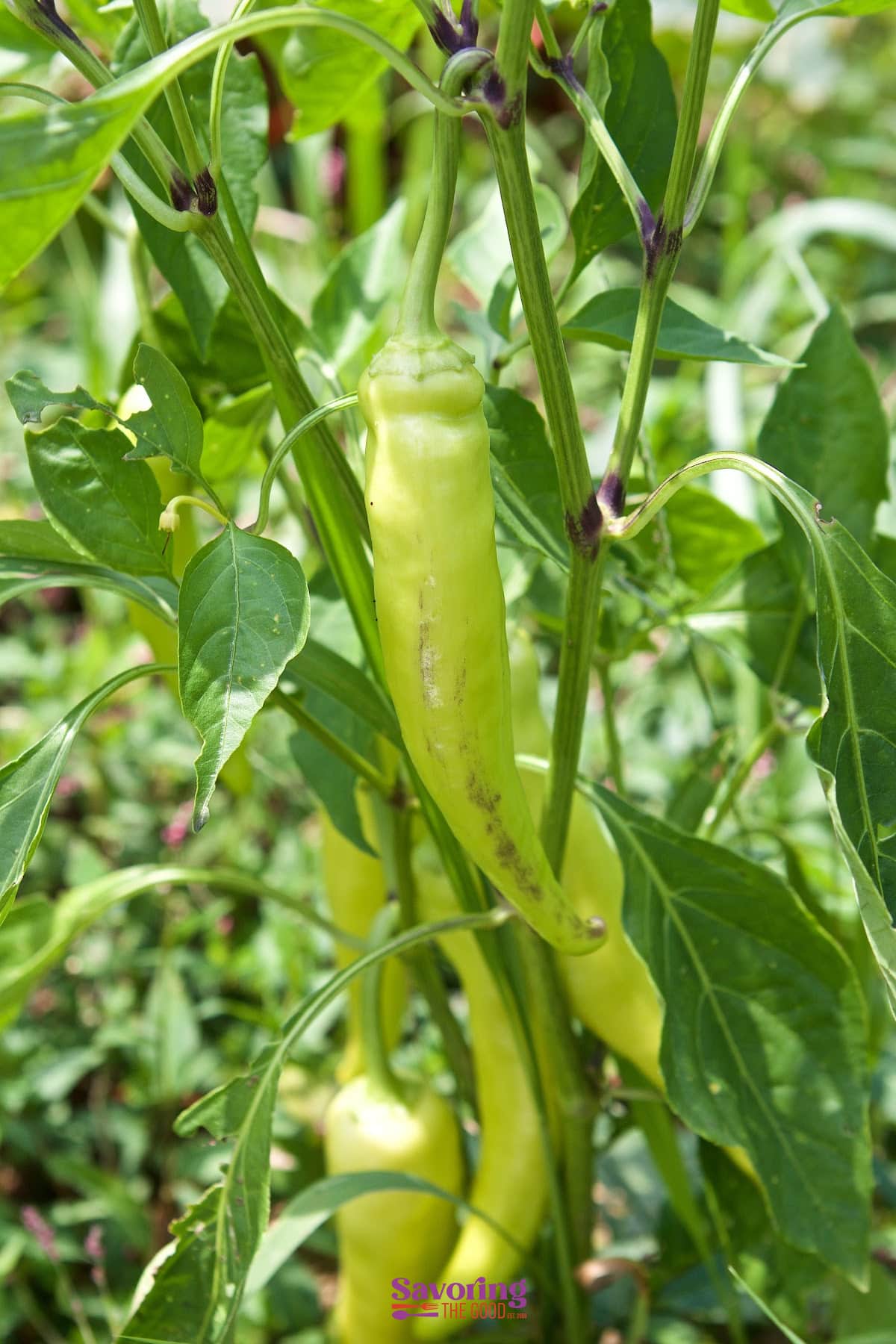
Sweet banana peppers are ready to pick when the long, banana-shaped pod is firm, has richly colored, shiny skin, and feels heavy for its size.
A loaded plant looks like it is struggling to hold its peppers up; that is your cue that more are ready to come off. They keep ripening through the summer, so check back every few days.
Skip any peppers that are limp, shriveled, or have soft, bruised spots; those will not hold their crunch once pickled.
Equipment You'll Need
You do not need anything specialized: standard pint canning jars with new two-piece lids, a large pot for the water bath, and a jar lifter to move hot jars safely.
The USDA recommends pre-sterilizing empty jars by boiling them for 10 minutes only if your process time will be under 10 minutes. This recipe processes for 10 minutes or longer, so you can skip that step; just make sure your jars are clean and hot before filling.
Refrigerator Pickled Banana Peppers
This is the base method for every version of this recipe. Pack the jars, pour the brine, and either stop here for a refrigerator pickle or carry on to the water bath or sous vide steps below for shelf-stable jars.
NOTE: For shelf-stable jars, continue to the water bath canning instructions below.
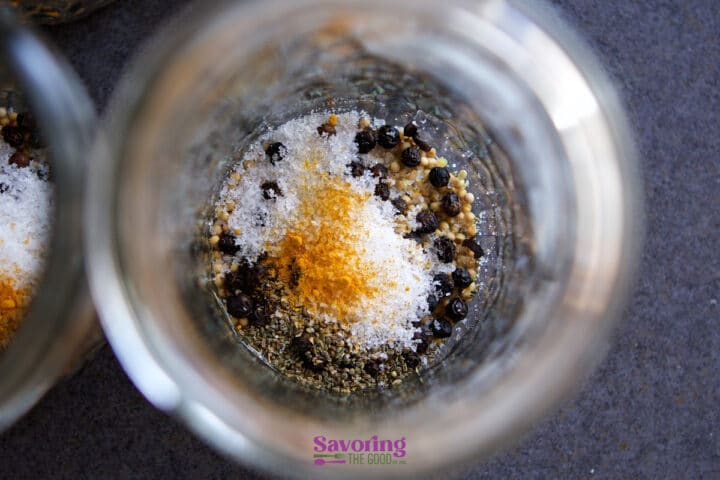
Add the pickling spices
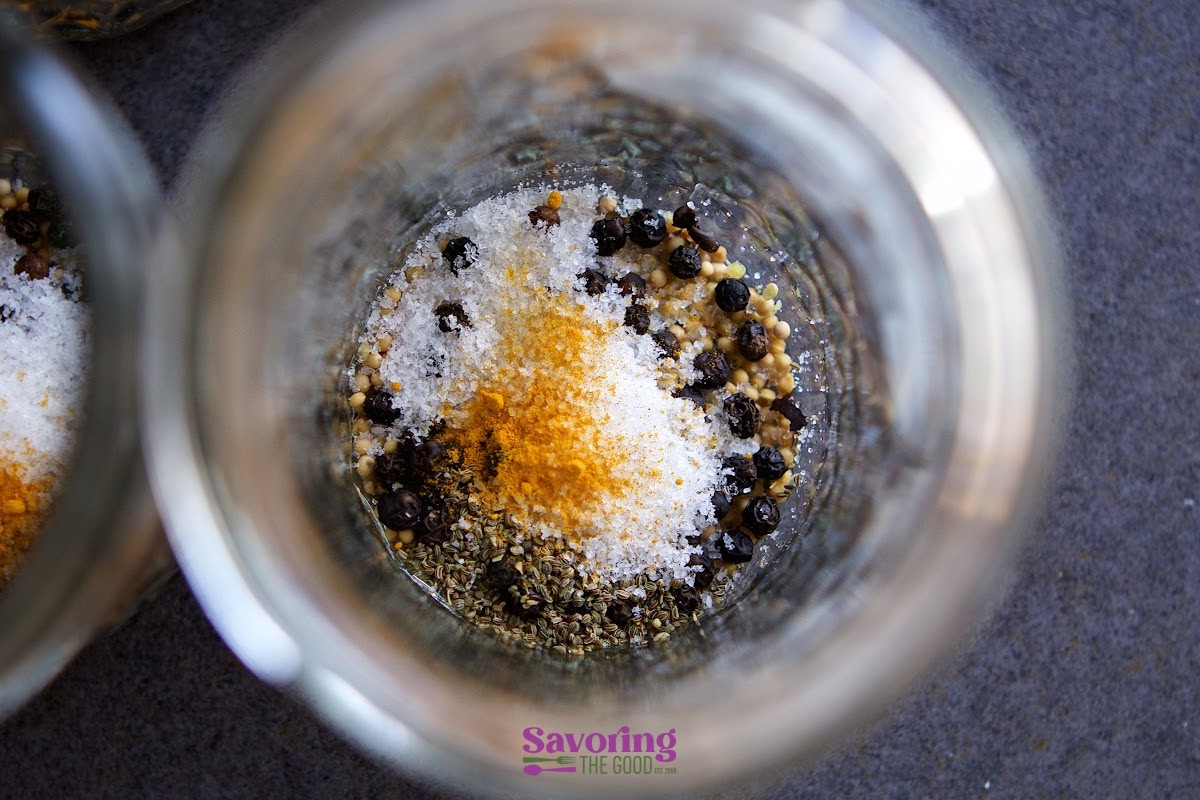
Place the dry spice mix (1 teaspoon canning salt, ½ teaspoon celery seed, ½ teaspoon mustard seed, ½ teaspoon whole peppercorns, and a pinch of turmeric per jar) in the bottom of each jar.
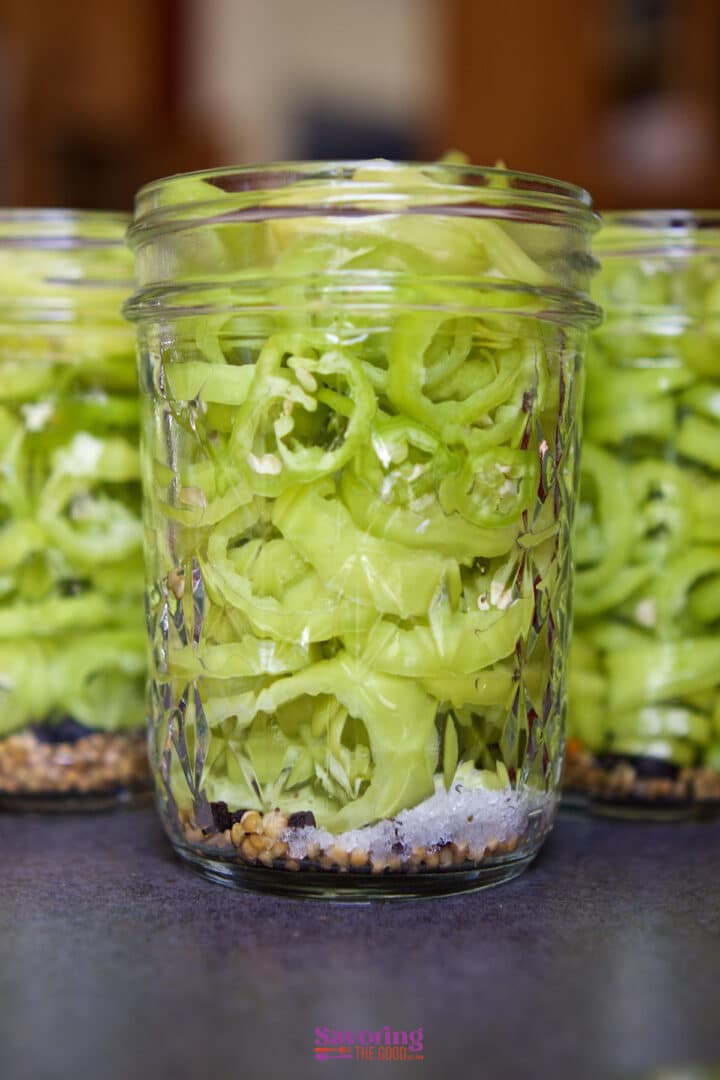
Pack the peppers
Wash the banana pepper rings, whether they came from your garden or the grocery store, then add them to the jar.
Settle the peppers
Jiggle and gently tap the jar on the counter so the rings lay flat and pack in tight; the peppers should sit right at the bottom of the threaded rings. This matters more than it sounds. I have packed jars loosely before and ended up with peppers that float once the brine goes in, which leaves some rings exposed to air and more likely to soften.
Make the brine
In a medium saucepan, bring the water, vinegar, and sugar to a full rolling boil. This only takes a few minutes; you are looking for big, steady bubbles across the whole surface, not just a simmer around the edges.
Pour the brine
Pour the hot brine over the peppers, leaving ½ inch of headspace at the top of the jar.
Remove air bubbles
Slide a plastic or bamboo stick down the inside of the jar in a few spots to release trapped air.
Note: Skipping this step is the most common reason I see cloudy brine or peppers that discolor near the top.
Check your headspace
Top off with more brine if needed so the peppers stay fully covered with that same ½ inch of headspace.
Seal the jar closed
Wipe the rim clean with a damp paper towel; even a small drop of brine on the rim can keep the lid from sealing. Place a new lid on top and finger-tighten the ring so it is snug, not cranked down hard.
Cool and store, or keep going
Let the jars come back to room temperature on the counter. For a refrigerator pickle, move them straight to the fridge and wait at least 24 hours before tasting, though a full week gets you a much better pickle. For shelf-stable jars, continue to the water bath canning instructions below.
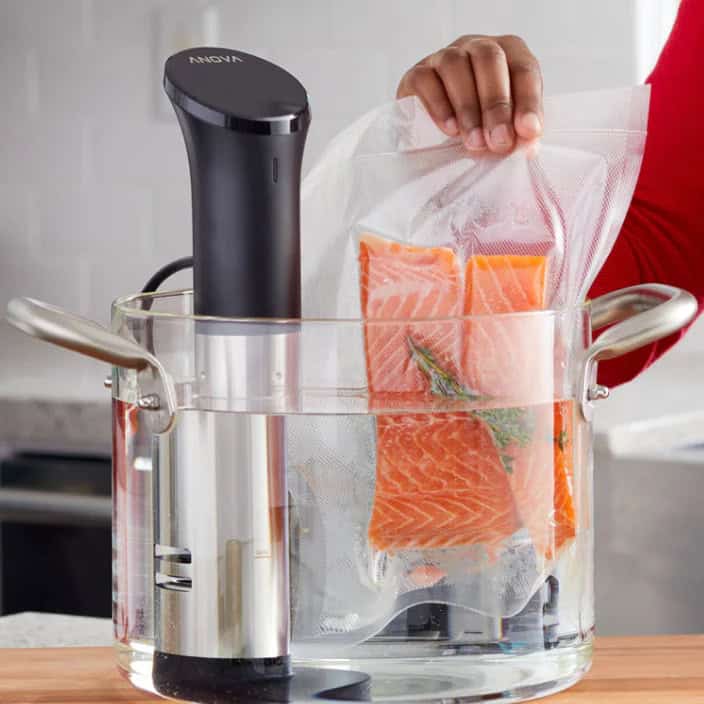
Let's go shopping!
ANOVA
This third generation sous vide circulator includes dual-band WiFi and a two-line touchscreen display.
Water Bath Canning Banana Peppers
Water bath canning is what makes these jars shelf-stable; once they are processed and sealed correctly, you can store them in the pantry instead of the fridge.
- Heat your canning jars in a pot of simmering water before filling; this keeps the glass from cracking when the hot brine hits it.
- Pack the jars and pour the brine using the steps above.
- Wipe the rims, add new lids, and finger-tighten the rings.
- Lower the jars into your water bath canner, making sure they are covered by at least 1 inch of water, and bring it back to a full boil.
- Process pint jars for 10 minutes at sea level to 1,000 feet elevation. See the elevation chart below if you live higher up.
- Turn off the heat, remove the canner lid, and let the jars sit in the water for 5 minutes before lifting them out. This short rest keeps the sudden temperature change from causing a false seal.
- Set the jars on a towel on the counter and let them cool completely, undisturbed, for 12 to 24 hours.
- Once cool, press the center of each lid. If it does not flex up and down, the jar sealed; store it in the pantry. If it flexes, the jar did not seal; refrigerate that one and eat it within a month instead.
Adjusting Water Bath Canning Time for Your Elevation
Water bath canning time changes with your elevation. Water boils at a lower temperature the higher you go, so your jars need extra time in that cooler boil to process safely.
Find your elevation in the chart below, then add that time to the processing time listed in the recipe card. This chart follows current guidelines from the National Center for Home Food Preservation, so you can trust the numbers.
Never reduce a processing time, and if you fall between two ranges, round up to the higher one.
| Elevation | Add to Processing Time |
|---|---|
| 0 to 1,000 feet | No adjustment needed |
| 1,001 to 3,000 feet | Add 5 minutes |
| 3,001 to 6,000 feet | Add 10 minutes |
| 6,001 to 8,000 feet | Add 15 minutes |
| 8,001 to 10,000 feet | Add 20 minutes |
Chef Tip
Not sure of your elevation? Search your city name plus "elevation" and you will have your number in seconds.
Skipping the elevation adjustment is one of the most common reasons home-canned goods fail to process safely at higher elevations, so do not skip this step.
Sous Vide Instructions
I use the sous vide method of cooking to quickly pickle banana peppers. The lower temperature ensures the peppers retain their crunch while having the sweet banana peppers pickled in hours instead of days. I have water bath canning instructions for those of you who do not have a sous vide.
- Set up your sous vide water bath on a heat-safe surface and preheat the water to 140F.
- Place the canning jars or bags in the water. (heat seal bag or use the water displacement method)
- Cook for 2 hours.
- Remove from the bath and place on a heat-safe surface.
- Cool completely and enjoy it!
New to sous vide? I explain in simple terms everything I know about sous vide cooking. Included in my favorite sous vide recipes are my sous vide pork chop recipe and the ever-popular sous vide egg bites. Just like Starbucks! If you love Starbucks as much as I do, you are going to want to make a batch of sous vide cold brew coffee. Say goodbye to the long wait and hello to the smooth taste.

Tips, Variations, and Substitutions
Here is what I know works, and one thing I am not ready to vouch for yet.
- Hot peppers instead of sweet. Swap in hot banana peppers (Hungarian wax) or jalapeños using the same brine ratio. You lose the mellow sweetness and gain real heat; I reach for this version when I am making a batch specifically for pizza night.
- Vinegar swap. I have not tested this recipe with apple cider vinegar in place of white vinegar, so I cannot tell you exactly how the flavor shifts yet. Both are commonly used in pickling as long as the bottle states 5% acidity; expect a slightly sweeter, more amber-colored brine if you try it. I will update this section with a real answer once I run that batch myself.
Storage Tips
How you store these depends on which method you used to make them.
Refrigerator pickles and sous vide jars keep for up to 1 month in the fridge. Water bath canned jars that sealed properly are shelf-stable in the pantry for up to 1 year; once you open a canned jar, refrigerate it and use it within a month, the same as the fridge version.
I do not recommend freezing pickled banana peppers. The high water content in the peppers means they turn soft and watery once thawed; you lose the crunch that makes this recipe worth making in the first place.
Seasonal Favorite
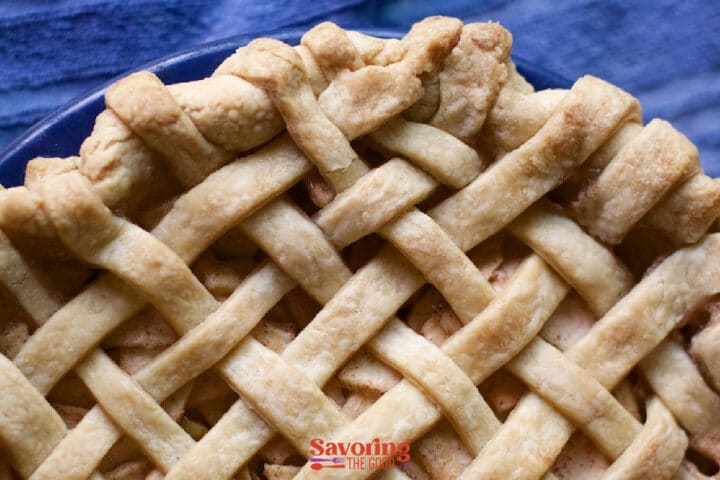
This is my award-winning Crisco pie crust recipe; flaky, tender, and made with simple ingredients you already have.
Frequently asked questions, answers and tips:
Banana peppers do not taste like bananas. They are called banana peppers because of the thin, long, yellow, waxy shape of the pepper, which resembles a banana.
A banana pepper gives either no heat at all or a very mild kick at 500 Scoville Heat Units scale It is typically about 21 times milder than a middle-range jalapeño. Like the pepperoncini pepper, banana peppers have a tang to them, but there's a sweetness there too. It's a hard chili not to love the flavor of, especially when pickled. Source. If you are looking for something with a bit more spice, make a batch of sticky, sweet candied jalapeños, aka cowboy candy.
Turmeric is in this recipe to add natural yellow coloring and a faint earthy layer of flavor that rounds out the brine.
Sous vide pickled banana peppers are refrigerator pickles, not shelf-stable canned goods. The low, steady temperature pickles the peppers in about 2 hours, but it does not create the vacuum seal you get from a proper water bath process. Keep sous vide jars in the fridge and eat them within a month.
The most common cause is skipping the air bubble step, which traps air against the peppers near the top of the jar. Overripe peppers, slices cut too thin, or letting sliced peppers sit out too long before brining can also lead to softer pickles. For the most crunch, use firm peppers, slice them a little thicker, and get them into the brine quickly.
Yes, and it is one of my favorite ways to use a jar. Drain the rings well before adding them so they do not water down the sauce, and add them in the last few minutes of baking so they stay bright and do not shrivel.
Any vinegar you use needs to be labeled 5% acidity for this to be safe for canning; do not use a lower-acidity vinegar or dilute the vinegar called for in the recipe. Apple cider vinegar is commonly used in pickling in place of white vinegar, though I have not tested that specific swap in this recipe yet, so I cannot promise the exact flavor outcome.
No. Banana peppers pickled in a vinegar brine are a high-acid food, so a standard water bath canner is all you need. Pressure canners are for low-acid foods like plain vegetables or meat, which is a different process entirely.
What I Learned Testing This Recipe
I have made this recipe more times than I can count, usually a full canner load at once during the height of pepper season, and these are the things that actually move the needle.
- I do not recommend freezing these. I tried it once out of curiosity and the peppers went limp and watery the moment they thawed.
- Packing the jars tight matters more than any other step. Loose jars mean floating peppers, which means uneven pickling and rings that discolor faster near the top of the jar.
- The sous vide jars genuinely stay crisper than the water bath jars for the first couple of weeks; after about a month in the fridge, I cannot tell much difference between the two anymore.
- Skipping the air bubble step is the single most common reason I have seen cloudy brine, both in my own early batches and in questions from readers.
- A week in the fridge is the shortest I would go before tasting; at 24 hours the peppers taste more like vinegar than pickle, since the spices have not had time to work into the flesh yet.

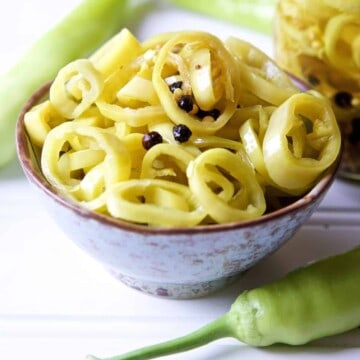
Ingredients
- 16-20 medium sized banana peppers fresh, stem and seeds removed
- 4 teaspoons canning salt
- 1 Teaspoon celery seeds
- 2 teaspoons mustard seeds
- 2 teaspoons peppercorns whole
- pinch turmeric optional for color
- 2 Cups white vinegar 5% acidity
- ¾ Cup Water
- 2 teaspoons Sugar
Instructions
How to prepare banana peppers for canning.
- Use food safe plastic gloves if you are sensitive to hot peppers.
- Wash banana peppers in cool water.
- Slice off the stem end of the banana pepper and discard the stem.
- To remove the seeds and membrane, insert a small, thin sharp knife in the stem end and with a twisting and scraping motion, scrape the membrane and seeds out of the banana pepper.
- Seeds and membranes can also be left in tact if you would like a more spicy pickled banana pepper.
- Using a sharp knife, slice the banana peppers into ¼" rings.
Preparing the pickled banana brine:
- In each jar place ¼ of the dry brine ingredients, excluding the sugar. (each jar gets 1 teaspoon canning salt, ½ teaspoon celery seeds, ½ teaspoon mustard seeds, ½ teaspoon whole peppercorns, pinch of turmeric.
- Combine the vinegar, sugar and water and stir until the sugar dissolves.
How To Pack Banana Peppers for Pickling
- Place the pickling spices in the bottom of the canning jar.
- Add the sliced banana pepper rings to the jar.
- Jiggle, shake and bang the peppers in the jar to ensure they are laying flat and taking up the least amount of space.
- Press the peppers down in the jar and repeat.
- Stop adding peppers when the peppers reach the bottom of the rings on the jar.
- Adding pickling brine to the banana pepper jars.
- Pour the brining liquid over the banana pepper rings.
- Use a plastic or bamboo stick to remove any air bubbles from the jar using a poking motion.
- Pour enough brine that the peppers are covered and there is ½" head space.
- Clean the rim and add a new lid and a clean ring.
- Finger tighten.
Sous Vide Pickled Banana Pepper Instructions
- Set up your sous vide water bath on a heat safe surface and preheat the water to 140F.
- Place the canning jars or bag in the water. (heat seal bag or use water displacement method)
- Cook for 2 hours.
- Remove from water bath and place on a heat safe surface.
- Cool completely and enjoy!
Canning Pickled Banana Pepper Instructions
- Heat canning jars in boiling water.
- Add pickling spices to each jar as instructed above.
- Pack banana peppers as instructed above.
- Bring water, sugar and vinegar to a boil.
- Pour enough brine that the peppers are covered and there is ½" head space.
- Clean the rim and add a new lid and a clean ring.
- Finger tighten.
- Process in hot water bath for 10 minutes.
- Remove from water and cool completely on a heat safe surface.
Nutrition
Notes
published August 11, 2019.

I am Sarah Mock. Welcome!
Sarah Mock is a classically trained Chef and a graduate of Johnson & Wales University. A culinary blogger for 17 years, Sarah helps the home cook prepare her recipes with professional results.




Debbie says
Hi Sarah, just a quick question—your recipe says you use the 4 ounce jars (quarter pint), however, the recipe prints for half pint jars (8 ounces). Should I half the spice amount from the printed recipe if I am using the 4 ounce jars? Thanks so much!
Angela cecchi says
When I pickled banana peppers I do not give hot bath after I stuff my jars. I do heat my jars and viniger. When I put my lids on they seal but my problem is my peppers are soggy. I put a small slice in each pepper I get out the bubbles I wipe the top but they start getting a discolored right away and then you can see that they will be soggy. What am I doing wrong. I have seen all the utube I have also used the hot bath but it still did it. Please help.thanks.
Sarah Mock says
Are the peppers mushy, as in fall apart applesauce texture? Or are they soggy as in partially cooked?
Are you storing your peppers on the shelf after just heating the jars and vinegar but not water bath canning them? Please don't do that because that is a very dangerous food handling practice. You are creating an environment ripe for bacteria to grow.
If you don't want to water bath can them, just add the spices to the jar, payer peppers on top and then pour cold vinegar over everything. Cover with a lid and ring and chill in the fridge for a week or two. These will NOT be shelf-stable.
Let me know if I missed anything.
Sarah
Michael says
this taste yummy and chance you'd have any advice on making pepperoncini sous vide ?
Ellie says
How long should these sit before eating, to let the flavors really marinate? (I did the water bath canning method.)
Sarah says
Ellie,
I believe they are ready as soon as they cool.Thanks for asking. I hope they turned out delicious for you!
Sarah
Heather says
Hi Sarah! This looks awesome, would love to try canning with the sous vide. Do the jars seal at that low temperature? And are they pasteurized/safe for long term storage? Or better kept in the fridge?
Sarah says
Thanks for the question Heather! Yes, the jars seal and they are safe for long term storage. (shelf stable for 6 months to a year) You can find more info at Chef Steps: https://www.chefsteps.com/activities/make-crisp-flavor-packed-pickles-on-the-quick
Dean Hildebrand says
Do these have to be kept in refrigerator or can they be stored in cabinet?
Sarah says
Dean,
Yes. These are shelf stable with the sous vide method.
Mary says
I'm new at this and can not see where it show an amount of water sugar and vinegar to heat up.
What do u do just shoot from the hip?
Looked completely through this recipe and candy not find measurements for those 3
Sarah says
Mary,
Thanks for the note! I had issues with my recipe card the past day. If you scroll to the bottom of the post the card with all the ingredients and instructions will be there. You can print it too!!
Lisa says
Hi Sarah,
I didn’t finger tighten my jars, I tightened them with my hand till they were tight. I didn’t see the description of finger tightening till after they were in the water bath. Will that mess them up?
Thanks,
Lisa
Sarah Mock says
Lisa,
As long as they were 'tight' on the jars you should be ok. Just don't use our Hulk strength to put on the rings and you should be good. Over tightening can result in cracked or busted jars. It is not only a food safety thing but a physical safety thing.
Let me know how things turn out!
Sarah
Frank Elliott says
Should I add pickle crisp to this so the rings stay crisp after water bath
Sarah says
I haven't, although you are welcome to try adding pickle crisp. The controlled heat of the sous vide will help maintain the integrity of the peppers.
Jenn says
We love making these all summer long!
Sarah says
I plant them so I have a bunch to share with friends!
Nellie Tracy says
I love banana peppers and love the idea of pickling them! So yummy!
Sarah says
Yes!!! Great on sandwiches.
Stephanie Simmons says
I appreciate all your tips and tricks to walk me through this process! It wasn't hard at all :)
Jenn says
One of my favorite things do do in the summer is pickle veggies and these are great! I have 3 banana pepper plants ready for action!
Sarah says
3 plants will give you lots of peppers to pickle!
Marsha says
What an interesting recipe, gotta try this!
Bintu Hardy says
My OH is mad keen on pickling and would love to try this.
Sarah says
I hope they love this recipe as much as I do!