

This fig preserves recipe is a naturally thick, no-pectin spread made with ripe figs, sugar, and a whole lemon. I started making it the summer I planted a fig tree in my yard and needed a fast way to use the harvest before it went soft. It's a small-batch recipe ready in about 45 minutes, simple enough for your first time canning or preserving fruit.

This small-batch fig preserves recipe is perfect alongside your favorite charcuterie and cheese board, or spread onto fried goat cheese crostini. It also adds a layer of sweetness to a savory sandwich, grilled pizza, or burger.
Ingredients needed

- Figs - use ripe figs that give slightly when you press them and feel like they are just on the edge of being overripe; that softness is what breaks down easily into a jammy texture.
- Sugar - I use granulated white sugar, though honey works as a one-to-one swap if you want a less refined sweetness. Either way, the sugar also pulls moisture from the figs and helps thicken the preserves as they cook.
- Lemon - use a whole fresh lemon here, since you are using the zest, juice, and pith. The pith carries natural pectin, which is why this fig preserves recipe sets up thick without any added pectin.
- Salt - just a ¼ teaspoon of table salt draws extra moisture out of the figs and rounds out the sweetness of the finished preserves.
Recipe Card?
To find the full printable recipe with specific measurements and directions CLICK HERE to go to the recipe card.
The main fig season runs from August through October, depending on where you live. Figs actually have two harvests: the first, or "breba" crop, comes in during the early weeks of June, from branches that survived the winter.

The second and usually larger harvest, called the "new wood" crop, is the one most of us associate with fig season, and it typically runs from August through October.
This recipe is the easiest way I know to hold onto that fig harvest past its short season. If you want to try a slower method that makes a similar spread, my preserved figs recipe uses the same fruit but takes longer to come together. Extra figs from a big harvest are also perfect for drying into dehydrated figs, which keep even longer than a jar of preserves.
5 Days To Canning Confidence
How to make fig preserves recipe without pectin

Here is the process I use every time I make a batch, from the fig tree to the jar.
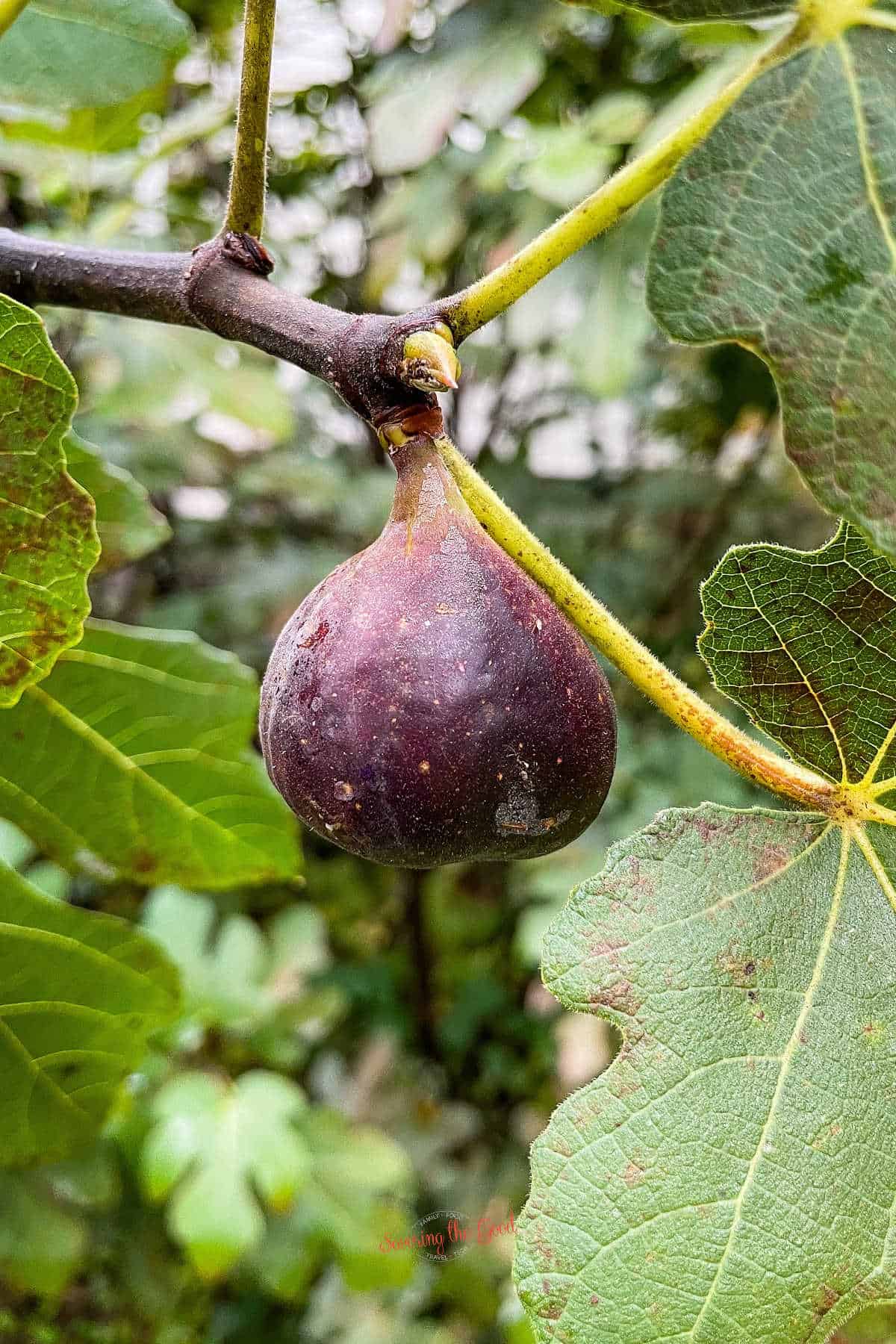
Wash
Wash the whole figs in cool water and trim off the stems, then check each fig for soft spots and cut those away. Ripe figs give slightly under a gentle squeeze; if a fig feels hard, let it sit on the counter another day before you use it.

Slice
Slice each fig in half, then in quarters, and drop the pieces into a large, heavy-bottomed pot. Quartering keeps the pieces small enough to break down as they cook, but big enough that you still get real chunks of fig in the finished preserves.

Macerate
Sprinkle the salt and sugar over the figs and let the mixture sit for 30 minutes before you turn on the stove. This step is not optional; the salt and sugar draw juice out of the figs on their own, and skipping it means starting with a dry pot and a much higher risk of scorching.

Add Lemon
Add the lemon juice, the whole squeezed lemon rind, and the water to the pot. The pith of the lemon carries natural pectin, which is what thickens this recipe without a store-bought pectin packet.
Heat
Set the pot over medium heat and stir constantly until the sugar fully dissolves into the fig juice. You should not feel any grit against the bottom of the pot when you drag your spoon across it.
Reduce
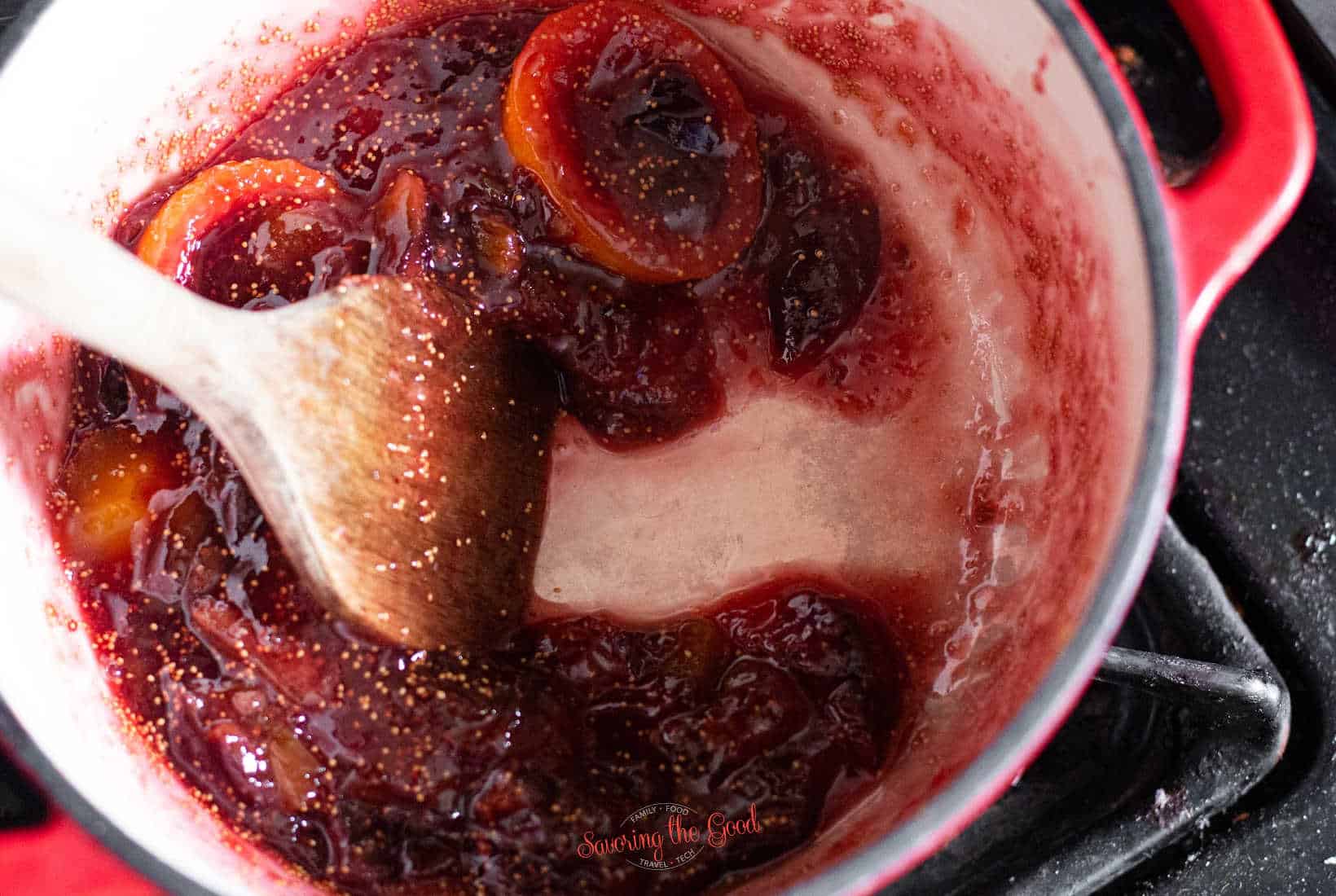
Turn the heat down to low and let the figs cook, stirring occasionally, for 45 minutes to an hour. You will know the preserves are ready when you pull a spoon through the center of the pot and the syrup holds a clear channel for a second before sliding back; if it fills in right away, it needs more time. I use a candy thermometer as a backup and look for 220-225°F.
Remove lemon
Fish out the lemon rind and discard it. It has given up its pectin, so its job here is done.

Mash or Puree
Use a wooden spoon or a potato masher to break apart any large chunks of fig right in the pot. I mash mine by hand because I like finding real pieces of fig in the finished preserves; if you prefer a smoother jam, run an immersion blender through it here, or pulse the figs in a food processor before they ever hit the stove.
Cool
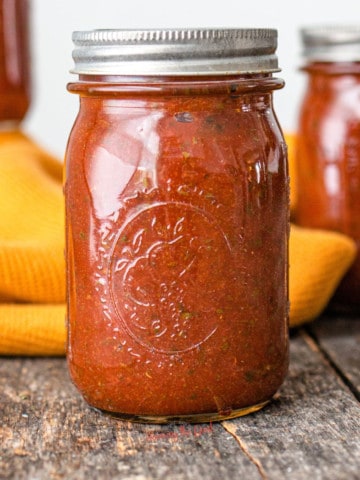
Spoon the preserves into jars, let them cool uncovered on the counter, and then refrigerate. They will continue to thicken slightly as they cool, so do not judge the final texture straight out of the pot.
Fig preserves recipe variations and substitutions
Here is what I have tested if you want to adjust this fig preserves recipe.
- Lower-Sugar Fig Preserves. Cutting the sugar by up to half works, but you need to replace what you remove with equal parts water or apple juice, and let the preserves simmer a little longer to reach the same thick, jammy stage. I have made it this way for a less sweet spread on a cheese board, and it holds up fine; just watch the pot more closely near the end, since there is less sugar to help keep things stable and it can scorch faster.
- Fig Preserves Without Lemon. Leaving out the lemon and its zest is fine for flavor, but you lose the natural pectin that comes from the pith, so the preserves set up looser, closer to a spoonable sauce than a spreadable jam. I still recommend keeping the lemon in if you want preserves that hold their shape on a knife or a cracker.
- Bourbon or Vanilla Fig Preserves. A splash of bourbon, a spoonful of vanilla bean paste or vanilla extract, or both, stirred in during the last few minutes of cooking round out the flavor without changing how the preserves set. I add these most often when I am making a batch as a gift; the vanilla rounds out the fig flavor, and the bourbon adds a little warmth that pairs well with cheese. A sprig of rosemary works the same way; just remove it before you jar the preserves. flavors. Remove the rosemary sprig before processing the figs.
If preserving is your thing, my sweet pickle relish recipe is another one worth adding to the pantry.
How to can this fig preserves recipe at home

- Prepare your hot water bath canner.
- Ladle hot preserves into hot jars, leaving ½-inch headspace at the top of the mason jar.
- Remove air bubbles. Wipe the rims of jars. Center the lid on the jar and adjust the band to fingertip-tight.
- Place the jar on the rack elevated over simmering water in the boiling water bath, and repeat until all jars are filled.
- Lower the rack into the simmering water. Cover with enough water to cover the jars by 1 inch.

- Adjust the heat to medium-high, cover the canner, and bring the water to a full rolling boil.
- Boil for 10 minutes (or 15 minutes if your altitude is above 6,000 feet). Turn off the heat and remove the cover.
- Let the jars cool 5 minutes, then remove them from the canner. Do not retighten the bands if they feel loose.
- Cool for 12 hours, then test the seals. A sealed lid will not flex up and down when you press the center; sealed jars keep air and microorganisms away from your preserves. Label and store in a cool, dark place.

Once your fig preserves are made, here is how to keep them fresh. Refrigerated preserves keep for up to a month. Properly sealed, water-bath canned jars stored in a cool, dark place will keep for up to a year.
Did you make this recipe?
Do you have feedback that would be helpful to others? If so can help this small business owner by leaving a rating and a review in the comments section? Thank you for being part of the Savoring The Good Community. ~ Sarah
Storage Tips
Store the preserves in the refrigerator for up to a month. If you choose to do the water bath canning method of preserving store those jars, once stored in a cool dark place, will have a shelf life of up to a year.
What to eat with homemade fig preserves
A meat and cheese board is my favorite way to serve fig preserves; the savory cured meats and salty cheese play well against the sweet, jammy fig flavor. Try it on the same board as fried goat cheese crostini for an easy, no-cook appetizer everyone can build themselves.
Frequently asked questions, answers and tips:
Black mission figs, Bourjassotte Gris figs, Adriatic figs, Brown Turkey figs, Calimyrna figs will all work for jam. You may have to adjust the amount of sugar you use depending on the sweetness of the fig and the sweetness you like your jam.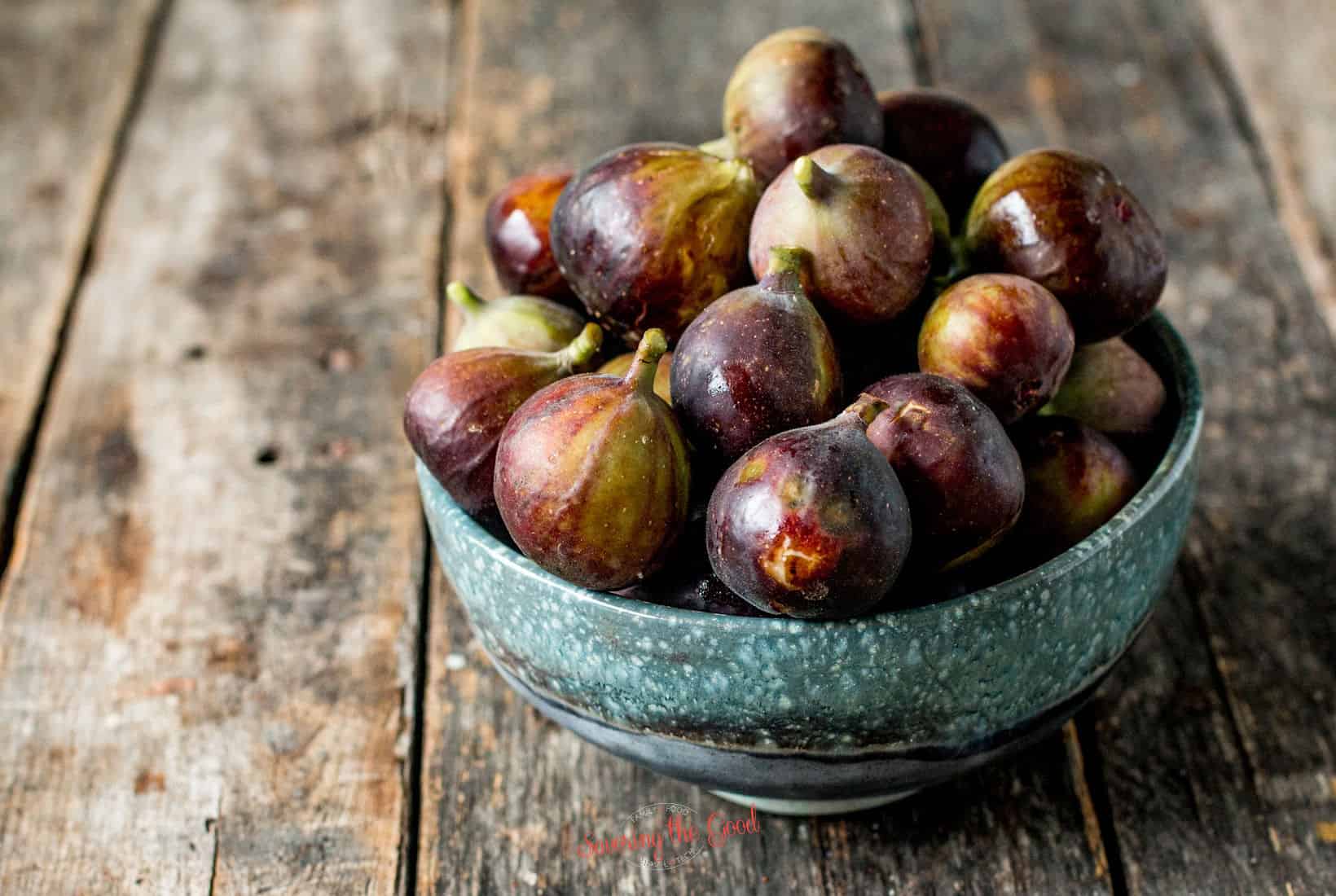
When making jam it is not necessary to remove the skin from the fig, but if you like your fig preserves smoother, feel free to scoop out the fig flesh with a spoon.
No. This recipe uses the pith of a whole lemon as the pectin source, so no store-bought pectin is needed. Figs are naturally low in pectin, which is why the lemon does the thickening work here.
No. This recipe uses the pith of a whole lemon as the pectin source, so no store-bought pectin is needed. Figs are naturally low in pectin, which is why the lemon does the thickening work here.
Preserves are made with whole or large chunks of fruit suspended in a thickened syrup, while jam is cooked down until the fruit breaks apart into a more uniform spread. This recipe sits in between the two, since you can leave the figs chunky for a true preserve or mash them smoother for something closer to jam.
The most common reason is not cooking them long enough; the preserves need to hold a channel when you pull a spoon through them, or read 220-225°F on a candy thermometer, before they are done. Using underripe figs or leaving out the lemon (and its pectin-rich pith) can also leave the preserves looser than expected.

Sarah's Culinary Insight
- I've made this recipe more times than I can count since planting my fig tree, and the window that works every time is 45 minutes to an hour on low heat; pull it too early and it never holds a channel when you draw a spoon through it, go past that window and it turns sticky instead of spreadable.
- A candy thermometer takes the guesswork out. I look for 220-225°F, and it lines up with the spoon test almost every time.
- If you double or triple this recipe, weigh your figs instead of scooping them into a measuring cup. The size of the pieces changes how much fits into a cup, and that throws off your sugar ratio.
- Skip the lemon and the preserves will still taste good, but they set up looser, since the pith is doing double duty as the pectin here.
- This is an old-fashioned, chunky-style preserve; I mash mine with a wooden spoon or potato masher so real pieces of fig stay in every jar. If you crush the figs too early, before they've had their full simmer time, you lose that texture, so wait until step 8 to break them apart.


Ingredients
- 1 Pound (453 ⅗ Gram) figs fresh
- 2 Tablespoon (2 Tablespoon) Lemon Juice plus the rind of the lemon
- ¼ Teaspoon (¼ Teaspoon) salt
- 1 Cup (200 Gram) Sugar
- 1 Cup (236 ⅗ ml) Water
Instructions
- Wash the figs in cold water and trim off the stems. Remove any blemishes from the fruit.1 Pound (453 ⅗ Gram) figs

- Slice the figs in half and then in quarters and place in a large pot.

- Sprinkle the salt and granular sugar over the figs and allow to rest for 30 minutes to get the best results for extracting the juice from the fresh fruit.¼ Teaspoon (¼ Teaspoon) salt, 1 Cup (200 Gram) Sugar

- Add the lemon juice, lemon rind and water to the pot.2 Tablespoon Lemon Juice, 1 Cup (236 ⅗ ml) Water
- Heat the fig preserves ingredients in the pot on the stovetop over medium heat. Stirring constantly, until the sugar dissolves.
- Reduce the heat to low and reduce the jam for about 45 minutes to 1 hour (or until the syrup is thick and holds a channel when a spoon is pulled through it.)
- Remove the lemon rind from the pot.
- If the figs are particularly large, use a wooden spoon or a potato masher to break apart the big chunks of figs.
- Spoon into jars, allow to cool and store in the refrigerator.


Nutrition

I am Sarah Mock. Welcome!
Sarah Mock is a classically trained Chef and a graduate of Johnson & Wales University. A culinary blogger for 18 years, Sarah helps the home cook prepare her recipes with professional results.




Shannon says
62k calories per 2 tbls jesus lmao. Must be worth it. Im making these right now lmao
Sarah Mock says
Got to love a sweet treat! Everything in moderation, am I right!?
~Sarah
ANNIE G. says
Hello,I haven't eaten fig jam since i was 13 yrs. old i'm 56yrs old.Your recipe brought back so many good memories from my childhood. I'm so glad i found your recipe. Recipe for this jam came out perfect.This recipe has the same taste exactly how i remembered ,Thank you for sharing it.Have a blessed day❤
Sharon says
I like the flavor of the jam, but I think the recipe has too much water. It took over 2 1/2 hrs at a low simmer to reduce the jam to the appropriate consistency. Next time I'll try only 1/4-1/2 cup per pound of figs.
Sarah Mock says
Thank you for your feedback Sharon. I do know that different fruits have different moisture content and different people like different consistancies. I am glad you found something that works for you and I appreciate your suggestions for others.
Sarah