


Fermented garlic honey is a tangy, faintly fizzy garlic and honey recipe made from just two ingredients, left to ferment on the counter instead of just steeping. I keep a jar going year-round for cold and flu season, and after making batch after batch, I have picked up the small details that actually change how it turns out. This takes about 10 minutes of hands-on time, then roughly a month of mostly hands-off fermenting on your counter.
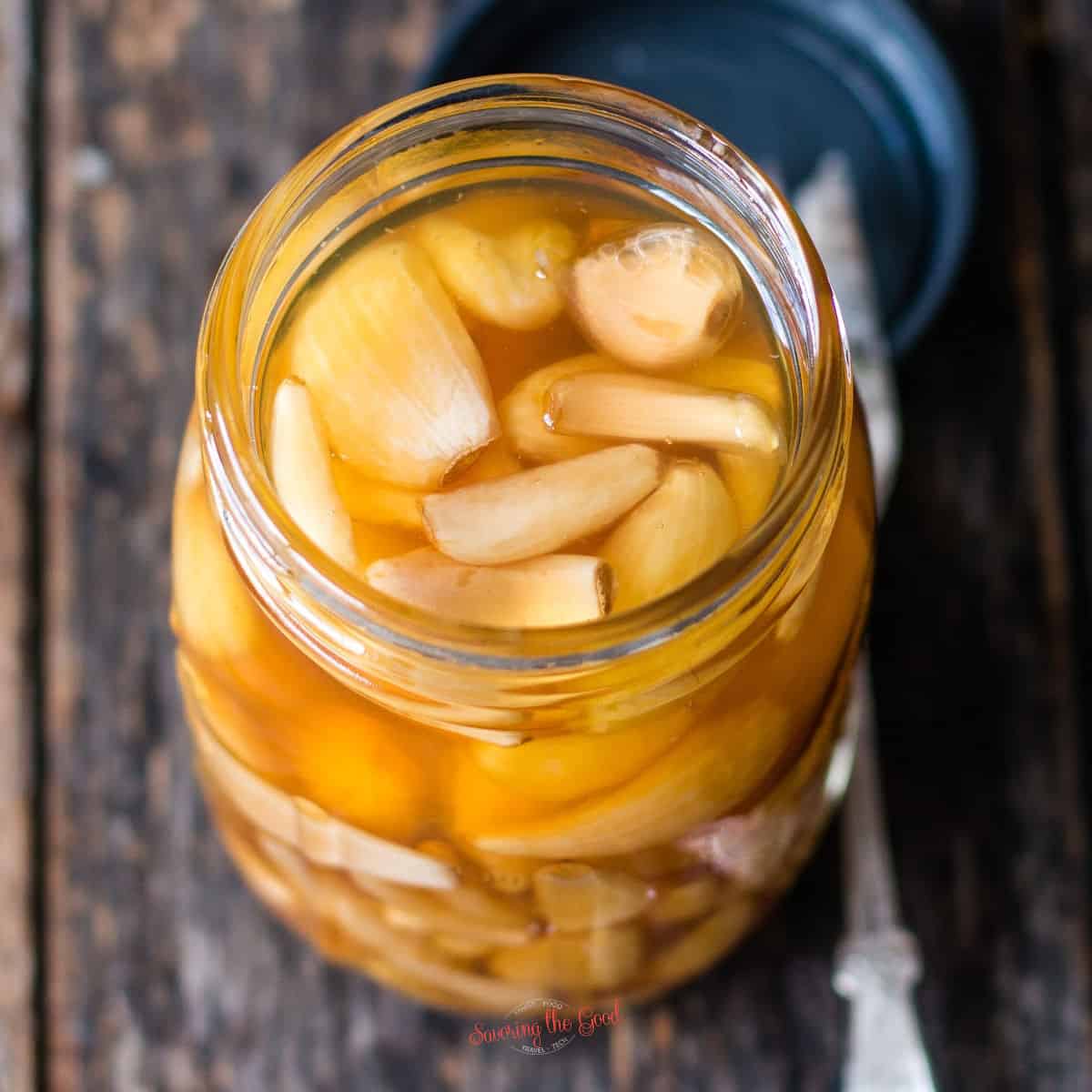
I keep a jar of this recipe on hand for cold and flu season to help boost my immune system and soothe sore throats when the weather turns cold. Check with your doctor to see if this decision is right for you.
I grow garlic in my garden to make this recipe along as well as garlic confit for savory recipes. On a good harvest year, I have several bulbs of garlic leftover to make roasted garlic. Once you spread soft cloves of oven-roasted garlic on toast or slices of baguette, you will never go back!
⚠️ Warning: Honey garlic should not be given to babies under one year of age.
Benefits of fermented garlic honey:
The fermenting process happens at room temperature in a dark spot; you do not need any special equipment to make this.
Beyond the benefits of honey and garlic on their own, the garlic-infused honey works well stirred into a cup of hot tea, whisked into a salad dressing, or drizzled over roasted vegetables.

Honey offers an effective and natural alternative to over-the-counter cough medicine. Though time is the most important healer of a sore throat, a spoonful of honey can help relieve the irritation. Source: National Honey Board
Fermented Garlic Honey vs. a Quick Garlic and Honey Infusion
Once it is fermented, use the honey and the cloves separately or together.
Whisk a spoonful of the honey into a salad dressing in place of plain honey for a garlicky depth. Drizzle it over roasted vegetables in the last few minutes of cooking. Stir it into hot tea at the first sign of a sore throat.
The fermented cloves themselves are softer and milder than raw garlic. Chop one into a marinade, mash it into softened butter, or eat a clove straight off a spoon the way I do!
Ingredient Notes:
- Garlic: I use fresh, firm bulbs with the cloves peeled and separated whole. Whole cloves hold their shape and give you that classic candied-garlic bite once the ferment is finished. If you crush a few cloves instead, expect a faster ferment and a softer, slightly mushier texture; see the Cook's Notes below for what I have found when I do that.
- Honey: Raw, unpasteurized honey is not optional here. It still carries the natural bacteria and wild yeast that pasteurized honey has been heated out of, and that microbial life is what actually drives the fermentation. I use my own raw honey from my hives; if you are buying honey, look for a local beekeeper or a jar labeled raw and unfiltered.
If you are turning garlic into pantry staples, my homemade garlic powder recipe is another one worth trying.
Recipe Card?
To find the full printable recipe with specific measurements and directions CLICK HERE to go to the recipe card.
Substitutions
Here is what you can swap if you need to adjust this recipe.
If your grocery store carries pre-peeled garlic, mine comes in a bag in the produce section, you can use that instead of peeling whole bulbs yourself. It saves time on prep, and I have used both without noticing a difference once the cloves are in the honey.
You can also smash or crush a few cloves before adding them to the jar. I do this from time to time, and that batch ferments noticeably faster because of the extra surface area; the trade-off is that the cloves come out softer and slightly mushier than a whole clove. If you do not care about how the cloves look or feel when you eat them, smashing is fine. If you want the classic whole, golden clove, stick with whole.
How to Make Fermented Garlic Honey
Here is exactly how I make this, step by step, using the same loose-lid method every time.
Fill the jar
Add the peeled garlic cloves to a clean glass jar.
Cover with honey
Pour raw honey over the garlic cloves until they are completely submerged. Run a chopstick or the handle of a spoon through the jar to work out any trapped air pockets.
** add additional honey to the jar if the released air drops the level of honey below the garlic cloves.
Close the lid loosely
Screw the lid on, but leave it loose enough for gas to escape. This part is not optional; a sealed jar has nowhere for the fermentation gas to go, and that is how you end up with a mess or worse!
Shake it daily
Every day or two, tighten the lid, flip the jar over, and shake it to coat every clove in honey. Set it back upright and loosen the lid again before you walk away.
Watch for the signs
Within the first week or two, you will start to see tiny bubbles collecting on the surface of the honey and clinging to the cloves. That is fermentation activity, not spoilage.

Let it finish
The ferment is ready in about a month. The flavor keeps developing after that: the garlic mellows while staying a bit crisp, and the honey turns noticeably runnier.
Store it
Move the finished jar to a cool, dark spot. It will keep for many months, even up to a year.
Storage Tips
- Store the finished ferment in a closed container in a dark, cool place.
- During the first month of fermentation, keep the lid slightly loose so the gasses escaping the garlic can escape the jar instead of building up.
- Set the jar on a plate or paper plate while it ferments; a bit of honey may "burp" out as it works.
Seasonal Favorite
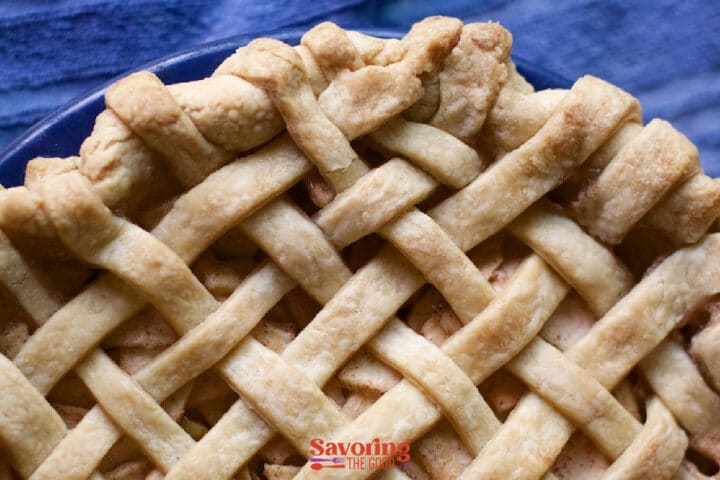
This is my award-winning Crisco pie crust recipe; flaky, tender, and made with simple ingredients you already have.
Frequently asked questions, answers and tips:
While I try to share all the information you need to make this recipe in your home with restaurant-quality results, there still may be a question or two. Or these are questions I have received from the community about this recipe. I do my best to answer them as clearly as I can. I hope this helps.
Honey is naturally acidic. According to the National Honey Board, the acidity of honey ranges from a pH of about 3.4, with an average of 3.9; the exact acidity depends on the floral source. Botulism spores cannot reproduce at a pH under 4.6, which is well below where honey typically sits.
No. A clean glass jar is all you need; no airlock, no weights, no special gear.
No. Fermentation happens at room temperature in a dark spot, like a cabinet or pantry.
It is a normal, harmless reaction between sulfur compounds in the garlic and the acid produced during fermentation. It is not mold and does not mean the batch is bad; see the Chef's Notes below.
Give it more time first; fermentation with honey can be slow. If it still has not started after a couple of weeks, the most common causes are too much honey relative to garlic, garlic that was very dry to begin with, or honey that turned out to be pasteurized rather than raw. Pasteurized honey will not ferment.
Yes. It ferments faster because of the extra surface area, but the texture comes out softer and slightly mushier than a whole clove; see the Substitutions section above.
Stored in a cool, dark place, it holds for many months, even up to a year.
Yes, as long as you are using raw honey and letting it ferment as described above. Raw honey's low pH is what keeps this safe; see the botulism answer above for the specifics.
About a month for a full ferment. You can technically use it sooner, closer to a week, but the flavor is still developing and the garlic will not have mellowed yet.
Most people take a clove or a spoonful of the honey daily during cold and flu season. Check with your doctor before adding this to a daily routine, especially if you are on blood thinners or have a garlic allergy.


Ingredients
- 1 Cup (236 ⅗ ml) Honey Raw, unpasturized
- 1 Cup (136 Gram) Garlic peeled and separated
Instructions
- To a clean jar, add the peeled garlic cloves.1 Cup (136 Gram) Garlic
- Add enough raw honey to completely cover the garlic cloves.1 Cup (236 ⅗ ml) Honey
- Place the lid on the jar and close the lid loosely, allowing the jar to have a bit of room to 'breathe' as the garlic ferments.
- Every day or two, tighten the lid on the jar and shake the jar to coat the garlic cloves with honey.
- Loosen the lid again when you return it to the upright position.
- You will notice tiny bubbles start to form on the surface of the honey and long the surface of the whole garlic cloves.
- The honey garlic will be fermented in about a month. The honey ferment flavor will continue to mature over time, the garlic will mellow in intensity while remaining crisp, and the honey will start to thin out and take on a more runny consistency.
- Store in a cool place for many months or even a year, if not longer.
Nutrition
Notes

Sarah's Culinary Insight
The loose lid is not optional. I have made this both sealed tight and loosely capped with daily burping, and sealed tight is the version I would never recommend; the gas has nowhere to go. Keep the lid loose for the first month, no exceptions.
Blue or green garlic is not a failure. I have seen it show up in more than one batch, usually just a clove or two. It is a normal reaction between sulfur compounds in the garlic and the acid that builds as the ferment develops; it does not mean the batch is bad.
Crushing the cloves speeds things up, but you lose the whole-clove look. When I smash a few cloves before adding them to the jar, that batch ferments noticeably faster because of the extra surface area, and the cloves come out softer and slightly mushier. If mouthfeel does not matter to you, smashing works fine.
I use my own raw honey from my own hives, so I cannot speak firsthand to how a store-bought raw honey or a specialty variety behaves in this ferment. If you are working with a different honey, watch for the same bubbling and thinning; if you do not see either after a couple of weeks, your honey may not be raw enough to ferment.

I am Sarah Mock. Welcome!
Sarah Mock is a classically trained Chef and a graduate of Johnson & Wales University. A culinary blogger for 18 years, Sarah helps the home cook prepare her recipes with professional results.




Mona Eastwood says
In the first section of the recipe, you said to invert the jar and leave it for a month. In the second section, you said to leave the lid, loose and burp it every day, by shaking the jar. Is there a reason for these differing practices?
Tracie says
QUESTION? Can I make this in a quart jar?
Doreen says
Can a diabetic take this?
Sarah Mock says
I am not a physician.Please ask your doctor.