

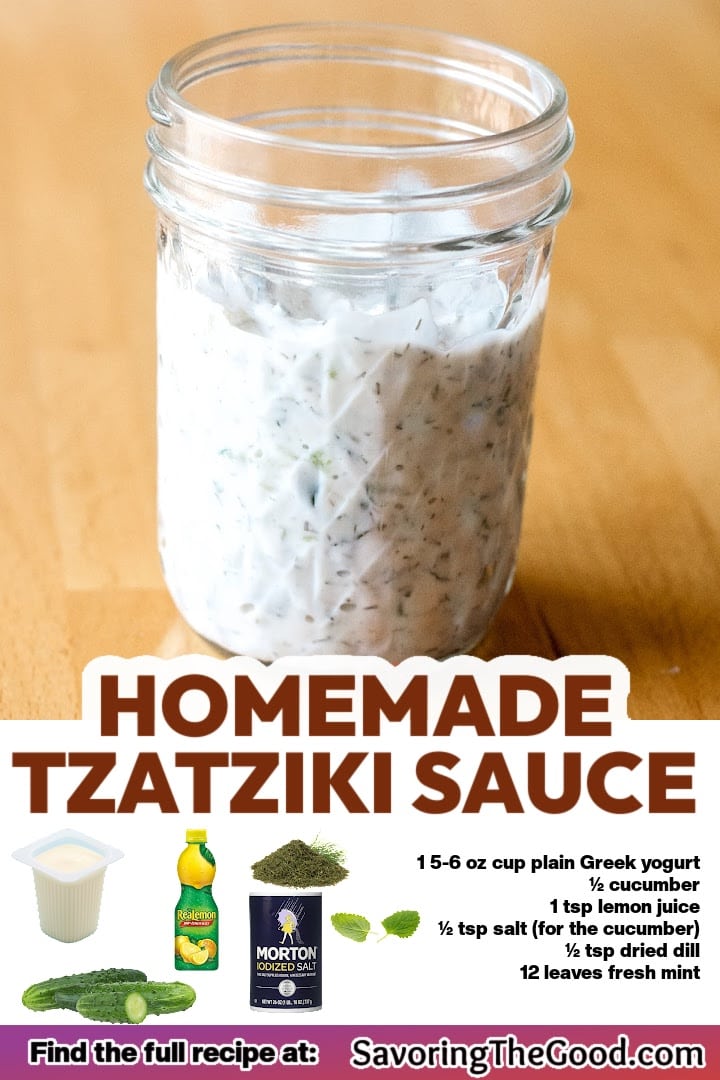
If you've ever ordered a gyro and wondered what that cool, creamy sauce was you've already been introduced to Greek tzatziki sauce. Made with thick Greek yogurt, grated cucumber, garlic, and fresh herbs, this traditional Greek dip is tangy, refreshing, and ridiculously easy to make at home. Whether you're serving it as a dip with warm pita, spooning it over grilled chicken, or slathering it on a gyro, my homemade Greek tzatziki sauce is about to become your new go-to condiment.

My version is a small-batch recipe (just over ¾ cup)because fresh is always better, and nobody wants a giant bowl of sauce going to waste in the back of the fridge. (Though, fair warning ... it disappears fast.)
I think it is delicious with fresh-cut veggies, spooned over a gyro, piled onto gyro pizza, or slathered on a black bean burger.
Sauce Ingredients:
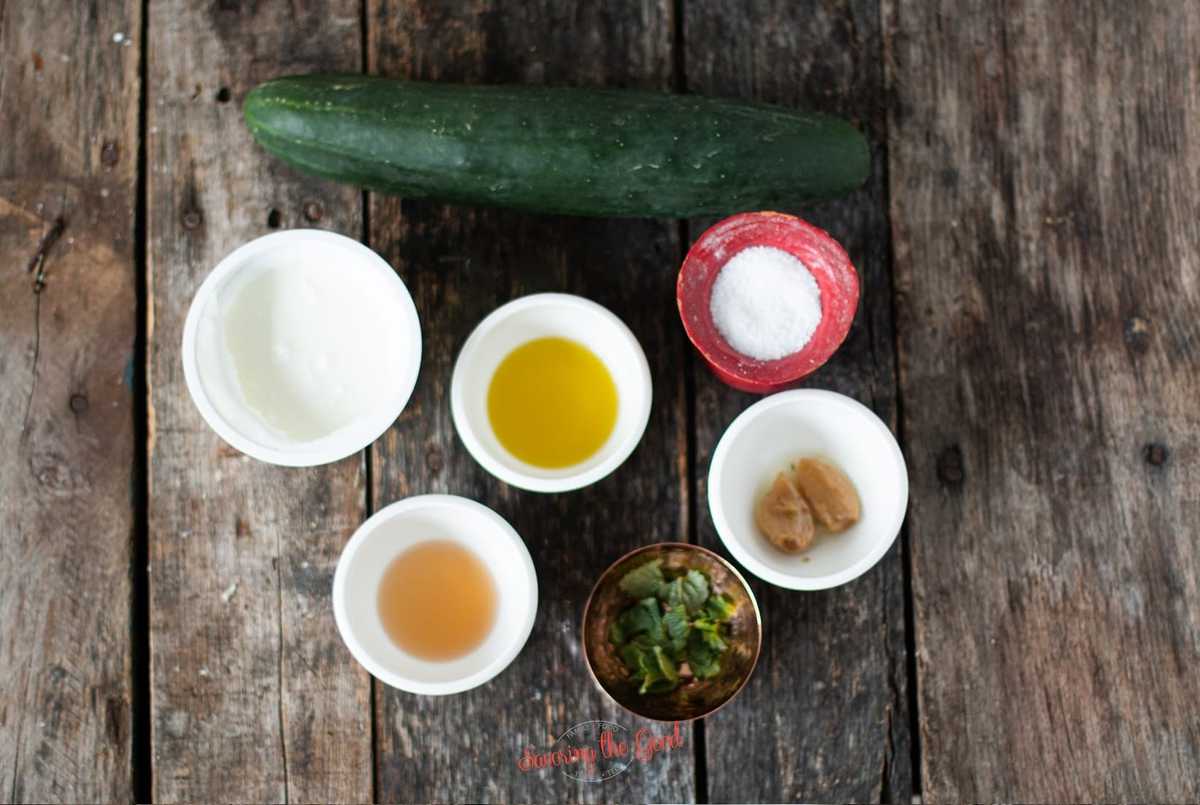
The beauty of Greek tzatziki sauce is that it's made with just a few simple, high-quality ingredients. Full-fat Greek yogurt is non-negotiable here; it gives you that signature thick, creamy texture you expect from an authentic Greek yogurt dip.
Recipe Card?
To find the full printable recipe with specific measurements and directions CLICK HERE to go to the recipe card.
Optional:
- 1 clove roasted garlic (Roasted garlic is mellower than raw; raw garlic is more traditional but can be sharp.)
Substitutions
Don't have everything on hand? No stress - here's how to adapt without losing that classic Greek tzatziki flavor.
| Ingredient | Substitution | Notes |
|---|---|---|
| Full-fat Greek yogurt | Dairy-free Greek-style yogurt or make your own sous vide Greek yogurt | Great vegan swap; texture stays thick |
| Fresh dill | Dried dill | Use ⅓ the amount of dried |
| Fresh mint | Skip it or double the dill | Mint is optional in a traditional Greek version |
| Lemon juice | Red wine vinegar or white wine vinegar | Vinegar is actually more traditional in Greece |
| Roasted garlic | 1-2 raw cloves, finely grated | Raw is more pungent - grate instead of mince for even distribution |
| English cucumber | Persian cucumber | Avoid standard cucumbers unless peeled and well seeded |
| Extra virgin olive oil | Avocado oil | Minor flavor change; EVOO is preferred for authenticity |
How to Make Greek Tzatziki Sauce
Making Greek tzatziki sauce at home is easier than you think. The only "work" is being patient enough to drain the cucumber properly. Rush that step and you'll end up with a watery mess. Take your time, and you'll have the thickest, creamiest Greek yogurt dip you've ever made.

Prep the Cucumber
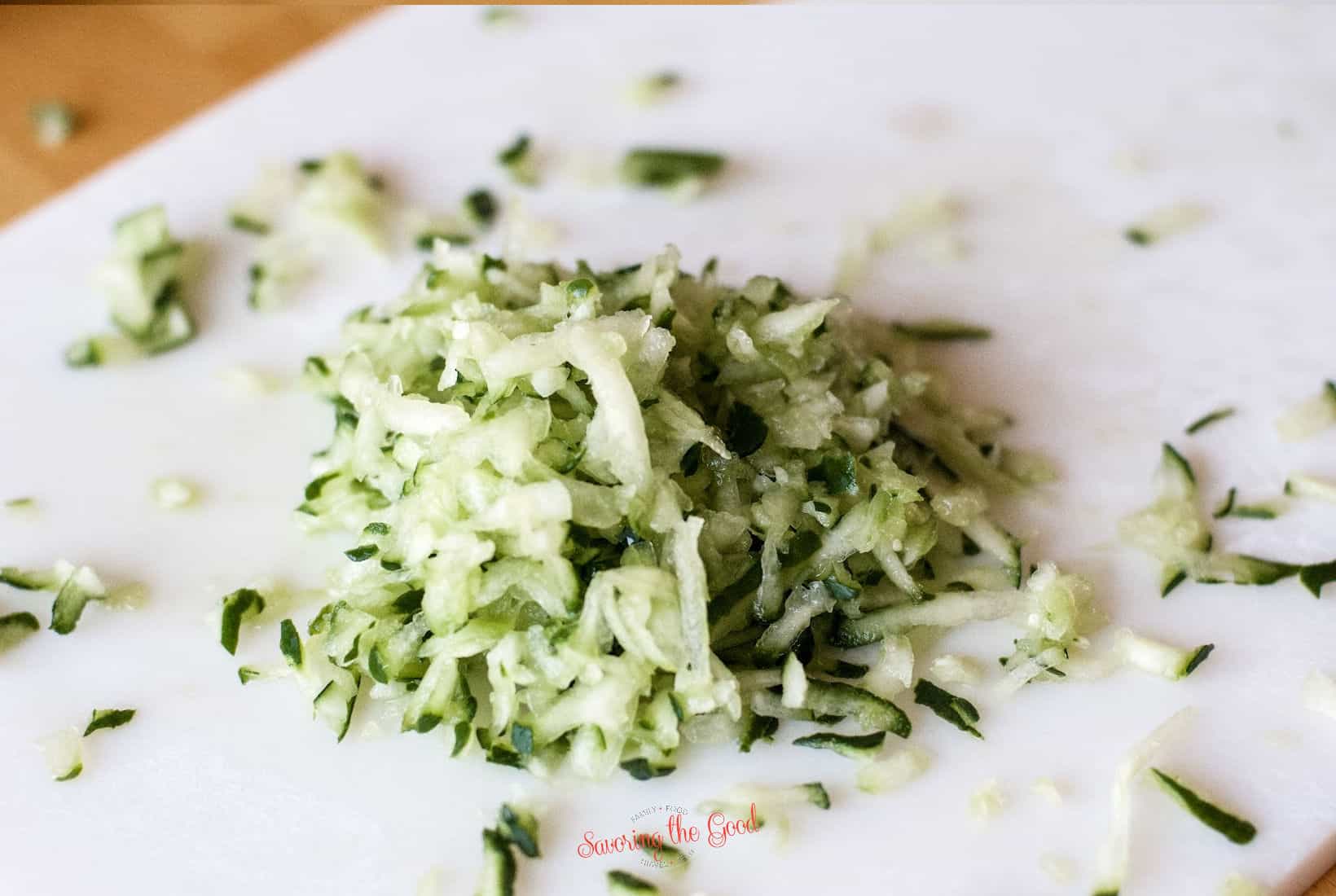
Slice your English cucumber in half lengthwise and use a spoon to scoop out the seeds. This removes a significant amount of moisture before grating even starts. Grate the cucumber using a box grater into a bowl.
Salt and Drain
Sprinkle the grated cucumber generously with salt and wrap tightly in a paper towel or cheesecloth. Set aside for 30 minutes - the salt draws out all that excess water that would make your Greek tzatziki sauce runny.
Prep Your Herbs
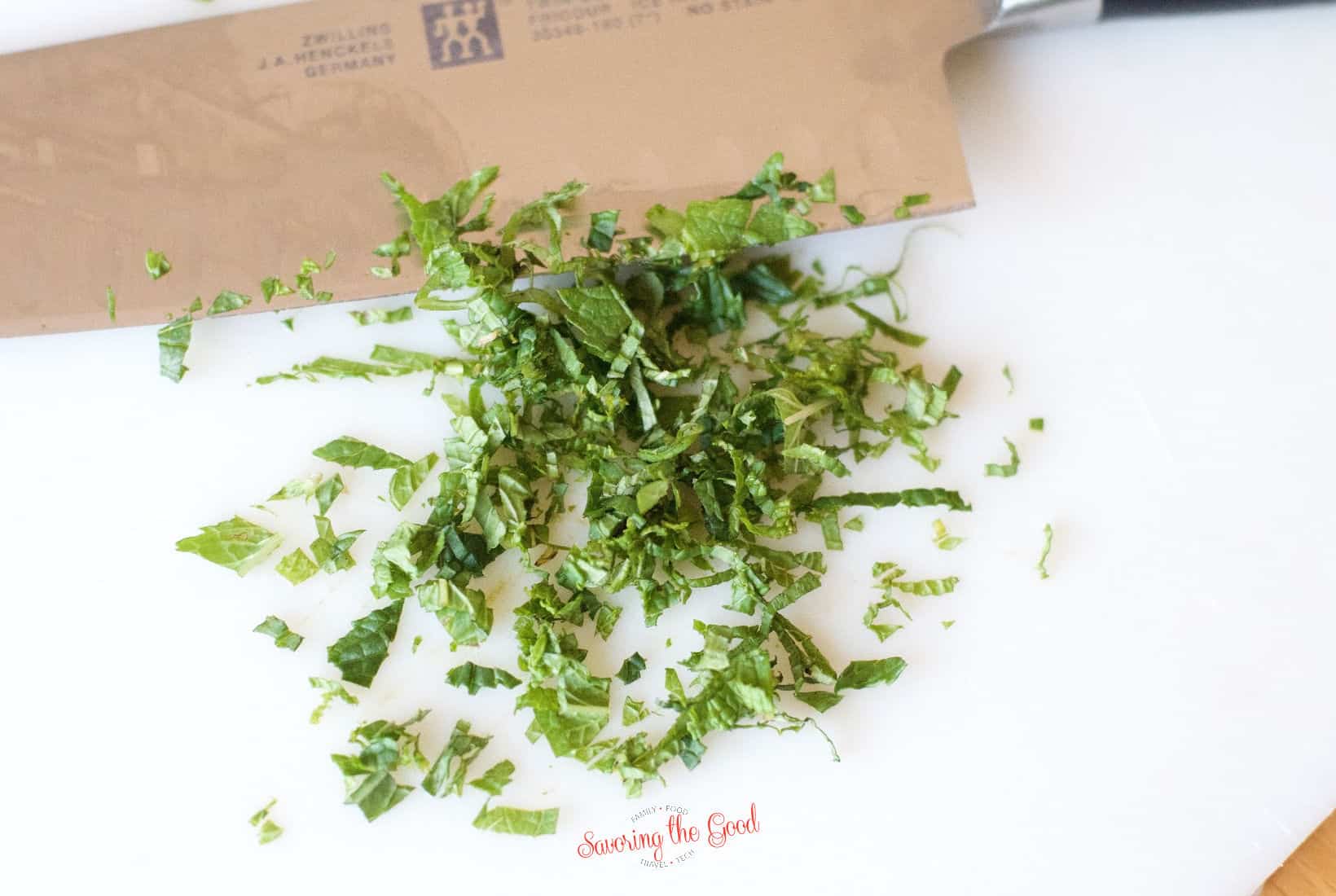
While the cucumber drains, finely mince your fresh dill and mint. If using roasted garlic, mash it into a paste; if using raw garlic, grate it on a microplane for the smoothest incorporation.

Squeeze It Out
After 30 minutes, squeeze the wrapped cucumber firmly over the sink. You'll be amazed how much liquid comes out...this is the secret to thick, creamy Greek tzatziki.
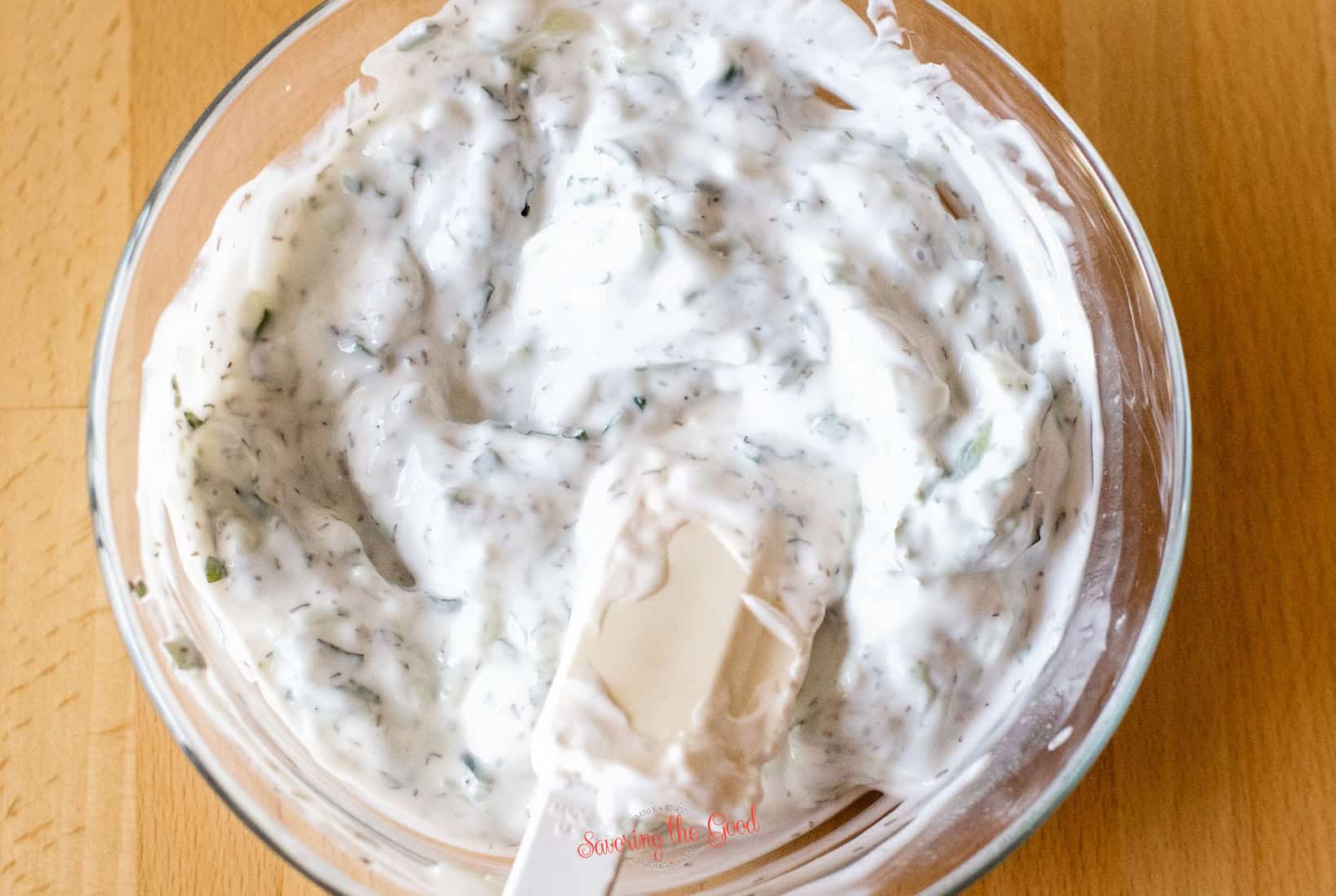
Combine Everything
In a medium bowl, stir together the drained cucumber, Greek yogurt, olive oil, lemon juice (or vinegar), dill, mint, and garlic until fully combined. Taste and adjust salt as needed.
Chill and Rest
Cover and refrigerate for a minimum of 30 minutes before serving - overnight is even better.
Make Ahead Tips
Here's a little secret: Greek grandmothers have known for centuries that tzatziki sauce genuinely gets better with time. Making it ahead isn't just convenient, it's actually the right move.
- Make up to 2 days ahead for the deepest, most developed flavor.
- Store in an airtight glass container in the refrigerator.
- Do not skip the cucumber draining step; excess moisture keeps releasing even after mixing.
- Hold the olive oil drizzle for serving - add a fresh drizzle right before it hits the table for a beautiful presentation.
- If making for a party, prep everything up to Step 5, then taste and re-season just before serving.
Storage Tips
Made a little extra Greek tzatziki? Lucky you! It keeps well and finds its way onto everything in your fridge by day two. Eggs, sandwiches, roasted veggies... we don't judge.
- Refrigerator: Store in an airtight container for up to 5-7 days.
- Stir before serving: Liquid separation is completely normal - just stir it back together.
- Freezer: Not recommended; Greek yogurt breaks down when frozen and the texture becomes grainy.
- Rescue a watery tzatziki: Strain through cheesecloth or a fine mesh sieve overnight - do NOT thin with more yogurt, it dilutes the flavor.
FAQ's and Tips
Store Greek tzatziki sauce in an airtight container in the refrigerator for up to 5-7 days. Give it a stir before serving - a little liquid separation is completely normal.
You do not have to peel the cucumber to make tzatziki sauce. I love having the dark green of the cucumber skin on the cucumber. If you are not a fan of the cucumber peel, you are welcome to peel it. I do recommend removing the seeds from the cucumber to cut down on the moisture content of the sauce.
The salt will draw out the excess moisture from the cucumber. Excess moisture in your tzatziki will make it runny - and nobody wants a runny tzatziki!
The cucumber wasn't drained long enough or squeezed firmly enough. Cucumbers are nearly 96% water - the salt-and-squeeze method is non-negotiable for authentic Greek tzatziki. Fix it by straining the finished sauce through cheesecloth overnight.
Authentic Greek tzatziki uses strained Greek yogurt, garlic, extra virgin olive oil, and dill or no herbs. The addition of lemon juice is an American adaptation - traditional recipes use red or white wine vinegar. Mint is more common in the Cypriot version.
Restaurants typically use full-fat strained yogurt and let the sauce rest overnight. Low-fat yogurt and skipping the rest period are the two biggest culprits for a flat-tasting Greek tzatziki sauce.


Ingredients
- ½ medium English Cucumber
- ½ Teaspoon Salt for the cucumber
- ½ Teaspoon Dried Dill Fresh is better if you have it 1 ½ tsp.
- 12 leaves Fresh Mint Optional More if you love the mint flavor, less if you don't
- 1 clove Roasted Garlic optional
- 1 5-6 ounce container Greek Yogurt Full fat, plain
- 1 Tablespoons Lemon Juice or substitute 1 teaspoon red wine vinegar for a more Greek flavor.
- 1 Tablespoons Olive Oil Extra Virgin, plus more for drizzling

Instructions
- Slice the cucumber in half lengthwise and scoop out the seeds with a spoon. Grate the cucumber using a box grater into a bowl.½ medium English Cucumber
- Sprinkle the grated cucumber with salt, wrap tightly in a paper towel or cheesecloth, and let sit for 30 minutes. The salt draws out excess moisture that would make your tzatziki runny.½ Teaspoon Salt
- While the cucumber drains, finely mince the fresh dill and mint. If using roasted garlic, mash into a paste. If using raw garlic, grate on a microplane.½ Teaspoon Dried Dill, 12 leaves Fresh Mint, 1 clove Roasted Garlic
- After 30 minutes, squeeze the wrapped cucumber firmly over the sink to release all remaining moisture.
- In a medium bowl, combine the drained cucumber, Greek yogurt, olive oil, lemon juice (or red wine vinegar), dill, mint, and garlic. Stir until fully combined. Taste and adjust salt as needed.1 5-6 ounce container Greek Yogurt, 1 Tablespoons Lemon Juice, 1 Tablespoons Olive Oil
- Cover and refrigerate for at least 30 minutes before serving - overnight is even better.
Nutrition
Notes
- 1 clove roasted garlic (You can mince a clove of fresh garlic but I like the roasted in the recipe better. In my opinion, the fresh is too strong. But do what YOU like.)
Originally published June 2015.

I am Sarah Mock. Welcome!
Sarah Mock is a classically trained Chef and a graduate of Johnson & Wales University. A culinary blogger for 17 years, Sarah helps the home cook prepare her recipes with professional results.


Comments
No Comments