


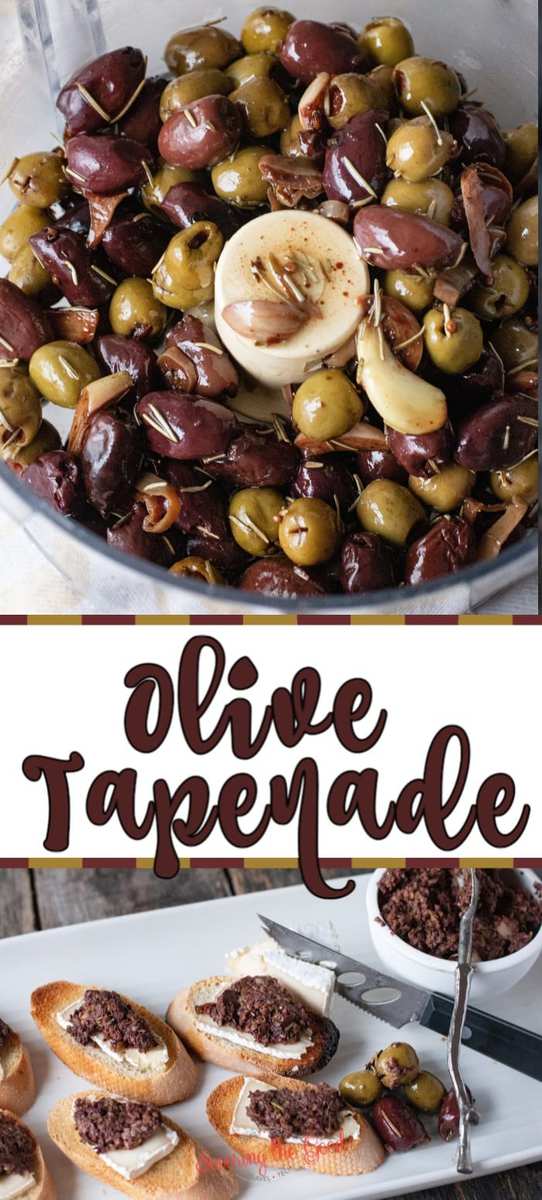
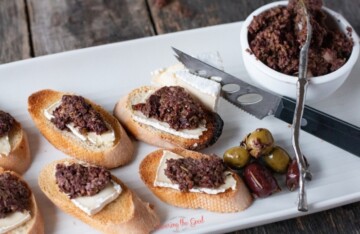
Homemade olive tapenade is a delicious blend of a variety of olives and aromatics and is one of my favorite additions to a cheese board or when we have appetizers for dinner. Just dump the olives in a food processor and you have tapenade in less than 3 minutes!

I will use leftover warm olives to make a quick tapenade but you can make this recipe without warming them. But I think the olives take on more flavors if you warm the olives before you blend them. Another quick and easy olive appetizer is my recipe for an olive dip! Serve it warm or chilled, it is good both ways!
Ingredients:
Use your favorite mix of olives and adjust the texture from chunky to spreadable to match how you're serving it.
Recipe Card?
To find the full printable recipe with specific measurements and directions CLICK HERE to go to the recipe card.
Instructions:
If you can push buttons on a food processor, you can make this olive tapenade. Follow the photos and steps, and you'll have a restaurant-level appetizer in minutes with zero stress.
Prep the olives
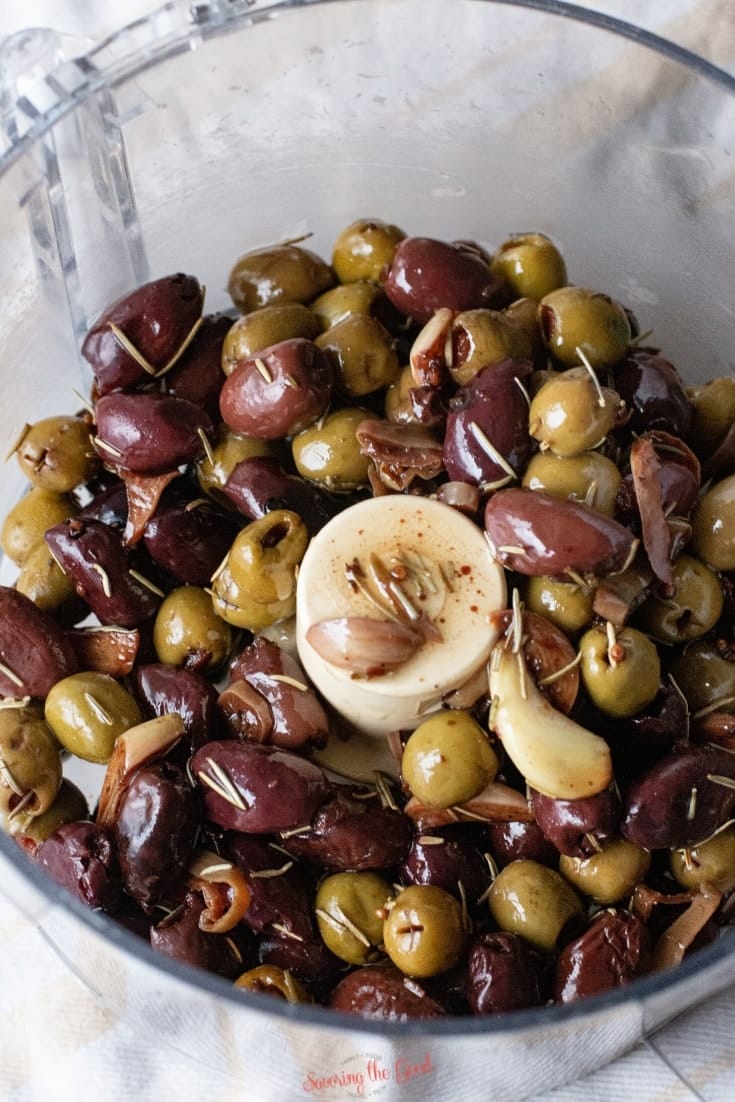
Drain the olives well and add them to the bowl of a food processor fitted with the blade attachment.
Wet Olives?
Pat them dry with a paper towel if they seem very wet; this keeps the tapenade from becoming watery.
Add aromatics and seasonings
Add the garlic, red pepper flakes, pickled banana peppers (if using), rosemary, balsamic vinegar, and a few grinds of black pepper to the food processor with the olives.
Pulse to chop
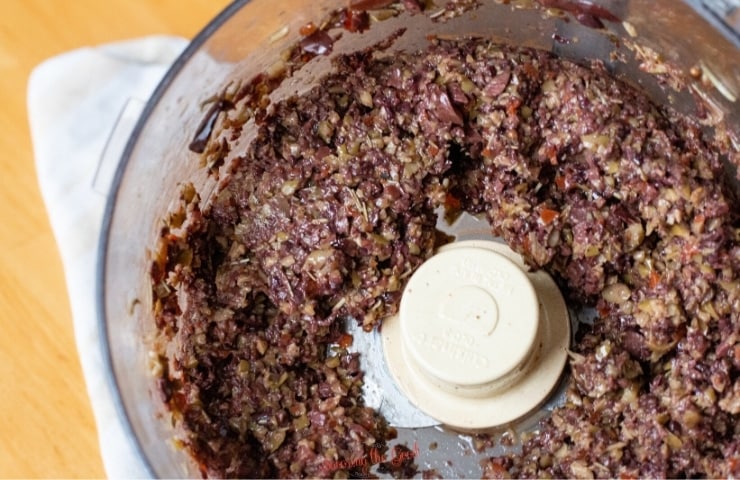
Pulse the mixture in quick bursts until the olives are finely chopped but still have some texture. Scrape down the sides of the bowl once or twice so everything processes evenly.
Stream in olive oil
With the processor pulsing, drizzle in the olive oil until the tapenade looks glossy and holds together but is not a smooth puree.
Taste and adjust
Taste and adjust with more vinegar or lemon juice for brightness, extra olive oil for richness, and additional pepper or red pepper flakes for heat.
Serve
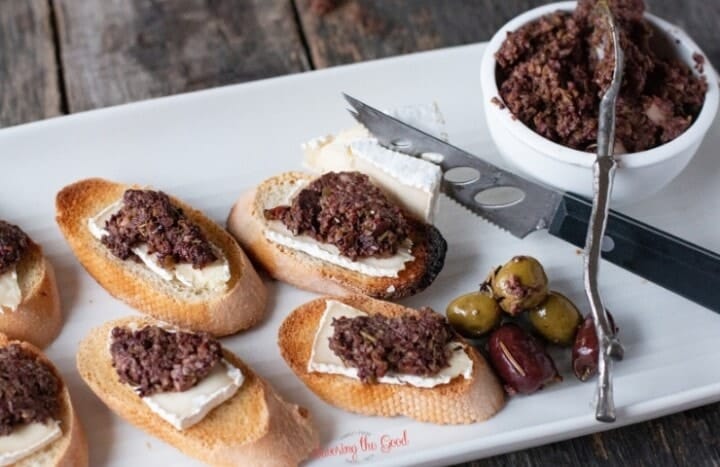
Transfer to a serving bowl or jar, and let it rest at least 15 minutes so the flavors meld and then serve with any accompaniments.

Ingredients
- 3 jars olives 10 ounces
- 6 cloves Garlic
- ¼ Teaspoon red pepper flakes
- 1 ½ Teaspoon pickled banana pappers
- 1 Tablespoon Rosemary
- ⅓ Cup olive oil
- 2 Tablespoon balsamic vinegar
- fresh cracked pepper
Instructions
- Drain the olives and place them in the bowl of the food processor with a blade attachment.3 jars olives
- Add the rest of the ingredients to the bowl and pulse until the texture you desire.6 cloves Garlic, ¼ Teaspoon red pepper flakes, 1 ½ Teaspoon pickled banana pappers, 1 Tablespoon Rosemary, ⅓ Cup olive oil, 2 Tablespoon balsamic vinegar, fresh cracked pepper
- Scrape down the sides of the bowl and pulse again.
Nutrition
Notes
Ingredient Substitutions
This recipe is very forgiving, which makes it perfect for cleaning out the olive jars. Use my swaps to make your tapenade tailored to what you already have.
- Olives - Use any mix of black olives, Kalamata, Niçoise, or Castelvetrano; combining buttery green olives with more briny black olives keeps the flavor balanced.
- Herbs - Swap rosemary for fresh parsley or basil, or use a pinch of dried oregano or herbs de Provence if that is what you have.
- Acid - Replace balsamic vinegar with lemon juice for a brighter, more traditional tapenade profile.
- Heat- Use a pinch of cayenne, a bit of minced fresh chili, or omit the heat completely for a milder spread.
- Pickled banana peppers - Swap in capers, pickled pepperoncini, or finely chopped cornichons for a similar tangy bite.
Make-ahead tips
A little planning gives you a deeper flavor profile and less last-minute stress.
- Prep 1-3 days ahead - Make the tapenade up to 3 days in advance and store it in an airtight container in the refrigerator; the flavors continue to meld and develop.
- Refresh before serving - Before serving, let it sit at room temperature for 20-30 minutes, then stir in a drizzle of fresh olive oil and adjust seasoning if needed.
Storage Tips
I believe that leftover olive tapenade is liquid gold for quick snacks and weeknight dinners, and it keeps well with just a little care. Store it properly once and you can use it all week on crostini, sandwiches, and pasta.
- Refrigeration - Store tapenade in an airtight container in the refrigerator for up to 5 days.
- Olive oil "seal" - Completely optional but also a good practice is to smooth the paste and cover with a thin layer of olive oil before sealing the container; this helps protect the surface from air and oxidation.
- Freezing - For longer storage, freeze tapenade in small airtight containers or ice cube trays for up to 3 months; thaw overnight in the fridge, then stir in a little fresh olive oil before serving.
5 delicious ways to use leftover olive tapenade
I love leftover olive tapenade because it turns simple pantry meals into "how did you make this?" moments. Here are a few of my favorites:
- Toss with hot pasta - toss with warm pasta, Parmesan, and fresh herbs for a quick Mediterranean pasta dinner.
- Spoon over chicken - Use it as a punchy topping for roasted or grilled chicken breasts or thighs; the briny olive spread acts like a built-in pan sauce.
- Add to grain bowls - Swirl tapenade into warm quinoa, farro, or brown rice with roasted vegetables and chickpeas for easy Mediterranean grain bowls.
- Sandwiches and wraps - Spread olive tapenade on sandwiches, wraps, or panini instead of mayo.
- Simple salad dressing - Whisk a spoonful with extra olive oil and a splash of lemon to make a quick tapenade vinaigrette for pasta salad, tomato salad, or mixed greens.
Frequently asked questions, answers and tips:
While I try to share all the information you need to make this recipe in your home with restaurant-quality results, there still may be a question or two. Or these are questions I have received from the community about this recipe. I do my best to answer them as clearly as I can. I hope this helps.
I would say that you are missing garlic, herbs, and acid; those aromatics transform olives into a cohesive dip.
That is oxidation from air exposure. Next time, be sure to store in a shallow container, smoothing the top, and cover with a thin layer of olive oil.

I am Sarah Mock. Welcome!
Sarah Mock is a classically trained Chef and a graduate of Johnson & Wales University. A culinary blogger for 17 years, Sarah helps the home cook prepare her recipes with professional results.


Comments
No Comments