


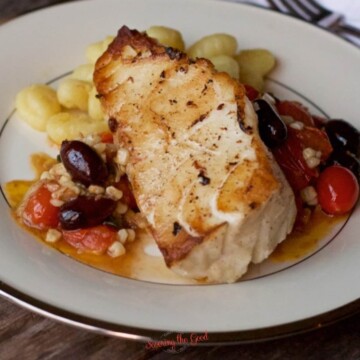
Sous vide sea bass is a buttery, tender, flaky fish dinner made with Chilean sea bass, a pat of butter, and a fast sear in a ripping hot skillet. Sea bass is too pricey to guess with, and the water bath takes the guessing away; the fish comes out the same doneness from edge to edge every time.

The whole dinner, including a blistered tomato, olive, and caper relish, is on the table in about an hour.
If you are new to cooking in a water bath, start with how sous vide works; I explain it in plain terms. Once you are hooked, my full collection of sous vide recipes runs from weeknight dinners to dessert.
Why sous vide is the best way to cook sea bass
In a hot pan or oven, the outside of a thick piece of fish is overcooked by the time the center is done. In a water bath set to 130F, the fish can never get hotter than 130F, so the center and the edges finish at the same doneness.
The sealed bag holds in the butter and the natural juices, too. All the sear has to do at the end is add color and crust.
Ingredients for sous vide sea bass
The fish needs almost nothing; butter and salt are it. The flavor comes from the relish, which is salty, briny, and a little spicy to cut through the richness of the fish. Here is what is worth knowing before you shop; the exact amounts are in the recipe card below.
- Chilean sea bass: Its real name is Patagonian toothfish, and it is one of the richest, fattiest white fish you can buy. That fat is why it stays moist and forgiving in the water bath. Look for center-cut portions 1 to 1 ½ inches thick; most stores call them fillets, and they work the same as the "steaks" in my recipe card.
- Butter: A pat goes in the bag with each piece of fish to baste it while it cooks, and more goes in the skillet for the sear.
- Anchovy paste: It melts into the olive oil and disappears; you get savory depth, not fishiness. Two anchovy fillets, minced, do the same job.
- Kalamata olives and capers: Both are salty, so go light when you salt the fish. Taste the relish before you add any extra salt to it.
Time and temperature for sous vide sea bass
This is the chart I use. 130F is my go-to for Chilean sea bass; it is opaque, firm, and flakes apart with a fork, but it still feels moist.
| Doneness | F | C |
|---|---|---|
| Slightly Warmed | 104° | 40° |
| Slightly Firm | 110° | 43.3° |
| Tender and Firm | 120° | 48.9° |
| Firm | 130° | 55.5° |
| Chewy | 140° | 60° |
Measure the thickest piece, not the average. Past 60 minutes the texture of the fish starts to go soft and mushy, even though it is not overcooking.
Food safety for sous vide fish
The USDA recommends cooking fish to 145F. Every temperature in my chart is below that, which means the fish is cooked to your liking, but it is not pasteurized.
Buy your sea bass from a fish counter you trust, keep it cold until it goes in the bag, and serve it as soon as it is seared. If you are cooking for anyone pregnant, elderly, very young, or with a weakened immune system, cook it at 140F or higher.
Most Chilean sea bass is frozen at sea, and freezing is the step that takes care of parasites in fish served below 145F. If you are using fish that was never frozen, ask your fishmonger before you cook it at the lower temperatures.
How to make sous vide sea bass
There are three parts here: the water bath, the relish, and the sear. The relish comes together while the fish is in the bath, so nothing sits around waiting.

Heat the water bath
Set your sous vide circulator to 130F, or your choice from the chart. Let the water reach temperature before the fish goes in; dropping it into cooler water throws off your timing.

Dry and season the fish
Pat the sea bass completely dry with paper towels and season it lightly with salt. Remember the olives and capers are bringing plenty of salt to the plate.

Bag the fish with butter
Place each piece in a vacuum bag with a pat of butter on top and seal it.
No vacuum sealer?
A heavy zip-top freezer bag works; lower it slowly into the water with the top open so the water pushes the air out, then zip it closed.
Keep the bag fully under the water; any part floating above the surface will not cook evenly.

Cook the fish
Submerge the bag and cook 30 to 45 minutes per inch of thickness, no longer than 60 minutes. When it is ready, the flesh looks solid white through the bag instead of glassy.
Make the relish
While the fish cooks, heat the olive oil in a skillet over medium-high heat and add the anchovy paste, garlic, and onion. Stir until the onion is soft and the anchovy has melted into the oil, about 2 minutes.
Blister the tomatoes
Add the capers, corn, olives, and tomatoes and let it bubble. When most of the tomatoes have split and started to slump, stir in the chili flake and pull the pan off the heat.
Dry the fish again
Lift the fish out of the bag with a wide spatula and blot it dry; it will be wet with butter and juices. This is the step people skip, and it is the reason the fish steams and sticks instead of searing.
Butter burning?
If the butter goes dark brown before the fish even hits the pan, take the pan off the heat for a few seconds.

Serve
Slide a wide fish spatula under the fish and lift it out crust side up. It should release from the pan on its own; if it sticks, give it another 30 seconds.
What to serve with sous vide sea bass
The tomato and olive relish is a side and a sauce in one, so a starch is all you need to round out the plate. Sous vide potatoes with rosemary can share the water bath ahead of time, and simple roasted asparagus is ready in the time it takes to sear the fish.
For more ideas, I rounded up 30 of my favorite sides for sea bass.
Sous vide sea bass FAQ
While I try to share all the information you need to make this recipe in your home with restaurant-quality results, there still may be a question or two. Or these are questions I have received from the community about this recipe. I do my best to answer them as clearly as I can. I hope this helps.
Why did my sea bass fall apart in the pan?
Sous vide sea bass is fully cooked and very tender when it comes out of the bag, so it breaks easily. Use a wide fish spatula, sear only one side, and do not flip it.
Can you sous vide frozen sea bass?
Yes. If it was frozen in a vacuum-sealed bag, it can go straight into the water bath; add about 15 to 20 minutes to the cook time. Pat it dry and season it after cooking, right before it goes into the skillet.
Is branzino the same as sea bass?
Branzino is European sea bass, a different fish from Chilean sea bass. It is much thinner and leaner, so it cooks in less time and has less fat to keep it moist. Go by the thickness of the fillet using the chart above.
If you love the sous vide method, my 24-hour sous vide brisket is a longer project worth the wait.

Ingredients
For the sea bass
- 2 Chilean sea bass fillets 4 to 6 ounces each, 1 to 1 ½ inches thick
- 4 Tablespoon Butter divided, 1 per fillet, 2 for searing
- kosher salt to taste
For the relish
- ¼ Cup Olive Oil
- 1 Teaspoon anchovy paste or 2 anchovy fillets
- 2 cloves Garlic minced
- 2 Tablespoon Onion minced
- 1 pint Grape Tomatoes
- ½ Cup corn kernels fresh or thawed frozen
- ¼ Cup kalamata olives pitted
- 1 Tablespoon capers drained
- ¼ Teaspoon chili flake
Instructions
Sous vide the sea bass
- Set your sous vide circulator to 130F, or your chosen doneness, and let the water come to temperature.
- Pat the sea bass completely dry with paper towels and season lightly with salt.2 Chilean sea bass fillets, kosher salt
- Place each fillet in a vacuum bag with 1 tablespoon of butter on top and seal. A zip-top freezer bag works too; lower it into the water to push the air out, then zip it closed.2 Tablespoons Butter
- Submerge the bag and cook 30 to 45 minutes per inch of thickness, no longer than 60 minutes. The fish looks solid white through the bag when it is ready.
Make the relish (while the fish cooks)
- Heat the olive oil in a skillet over medium-high heat. Add the anchovy paste, garlic, and onion and stir until the onion is soft and the anchovy melts into the oil, about 2 minutes.¼ Cup Olive Oil, 1 Teaspoon anchovy paste, 2 cloves Garlic, 2 Tablespoon Onion
- Add the tomatoes, corn, olives, and capers. Cook until most of the tomatoes split and slump, then stir in the red pepper flakes and take the pan off the heat.1 pint Grape Tomatoes, ½ Cup corn kernels, ¼ Cup kalamata olives, 1 Tablespoon capers, ¼ Teaspoon chili flake
Sear and serve
- Lift the fish from the bag and blot it dry with paper towels.
- Heat a cast iron skillet over high heat until almost smoking, then add 2 tablespoons of butter; it will foam right away.4 Tablespoon Butter
- Lay the fish in the butter and leave it alone for 1 to 2 minutes, until the bottom edge is golden brown. Do not flip.
- Lift the fish out with a wide fish spatula, crust side up, and spoon the relish alongside.
Nutrition
Notes

Sarah's Culinary Insight
A few things I have learned while making this sous vide fish recipe that are not obvious from the steps alone.
- Dry it twice. Once before it goes in the bag and once after it comes out. Skip the second time and the butter in the pan sputters, the fish steams, and you never get a crust.
- Sear one side, not two. The water bath already cooked the fish through. Every second it spends in the skillet after the first side is golden takes it past the doneness you picked.
- Sixty minutes is the ceiling. Unlike beef or pork, fish does not get more tender with extra time in the bath. Past an hour the texture starts to turn soft and pasty.

I am Sarah Mock. Welcome!
Sarah Mock is a classically trained Chef and a graduate of Johnson & Wales University. A culinary blogger for 18 years, Sarah helps the home cook prepare her recipes with professional results.



Carol says
Excellent! I had a 2“ thick piece of sea bass. Cooked 50 minutes at 130 then seared. I served my portion over mixed spinach& arugula salad. It was perfect! Thanks for the great recipe.
Sarah Mock says
You are welcome Carol! That sounds amazing. It has been a minute since I have made this recipe. sigh.... I need to make sea bass soon! Thanks for the comment. It warms my heart to hear from readers.
Sarah
S Loyd says
The Sea Bass with this combination is fantastic cooking for dinner parties and always get raves of praise on taste. Thanks
Sarah Mock says
Thank you! I appreciate the praise. Have you tried sous vide shrimp?