


Every Easter, our family makes Paska - the traditional Ukrainian Easter bread that has been part of this celebration for generations. Rich with eggs, butter, and sugar, this slightly sweet yeast bread has a tender, golden crumb that pulls apart beautifully and tastes like the holiday itself.
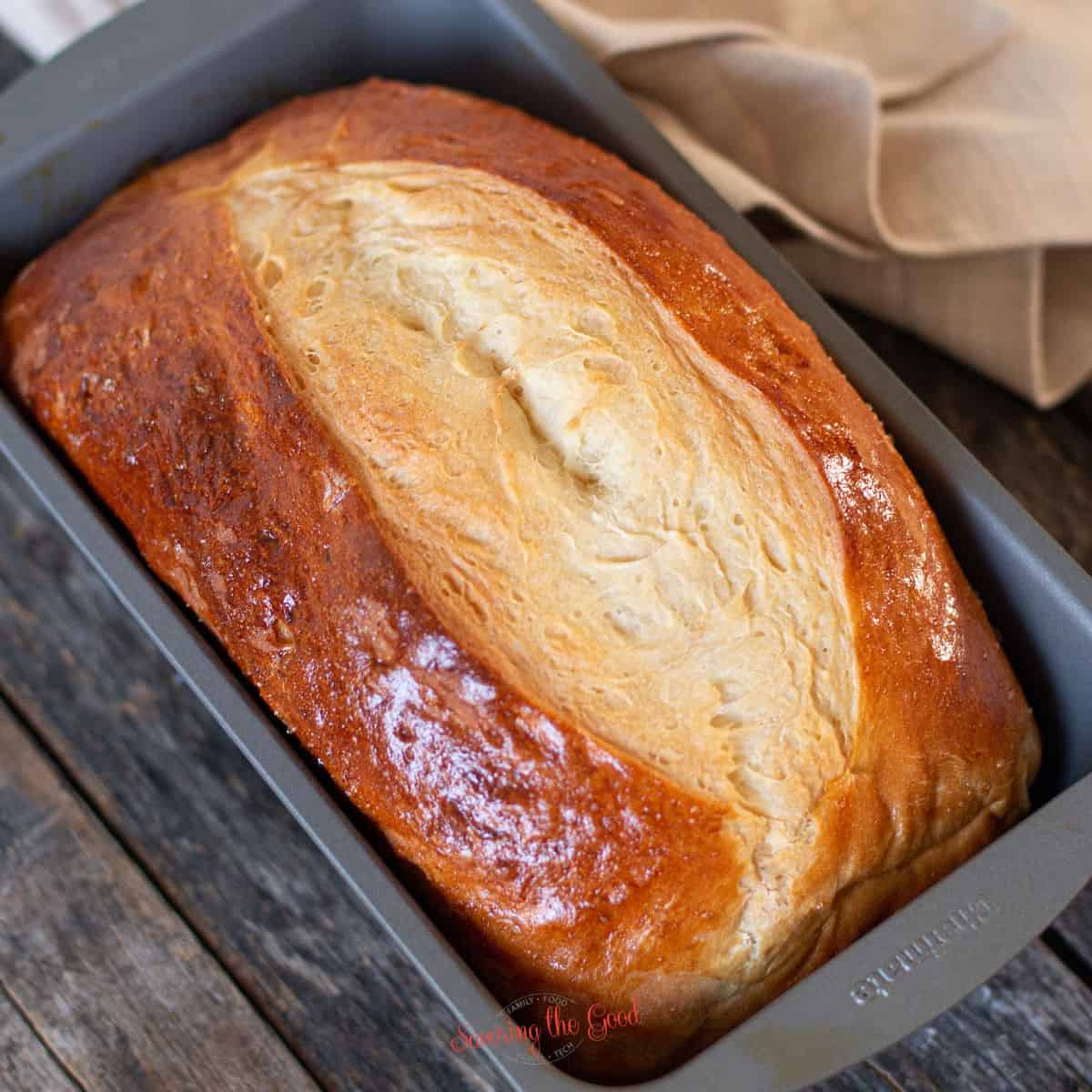
Traditionally baked on Good Friday and taken to church in an Easter basket to be blessed, Paska is more than a recipe - it is a living tradition. We make this every year, and if there are leftovers, they become the most incredible French toast you will ever eat.
The Tradition Behind Paska
Paska literally means "Easter" in Ukrainian. The bread is central to the Eastern Orthodox and Greek Catholic Easter celebration, baked at home, placed in a woven basket alongside eggs, kielbasa, horseradish, butter, and sometimes nut roll, and carried to church on Holy Saturday to be blessed by the priest before the Easter meal. This practice goes back centuries and continues today in Ukrainian communities across the world and here in the United States. The bread itself is intentionally rich, eggs, butter, and sugar, because it was made to celebrate the end of the Lenten fast. Every slice is earned.
Recipe Card?
To find the full printable recipe with specific measurements and directions CLICK HERE to go to the recipe card.
How to make Paska bread:
With its soft, tender crumb and slightly sweet flavor, this Paska bread is a labor of love that's worth every minute of preparation.

Scald The Milk
Heat milk until small bubbles form around the edges and steam rises, but do not boil.
Bloom the Yeast
In a medium bowl, mix 1 teaspoon sugar, lukewarm water, and yeast. Let sit for 10 minutes until foamy.

Mix Dough
- Combine yeast mixture, scalded milk, and 5 cups flour.
- Cover and let rise in a warm place for 1 hour until bubbly.

Add Remaining Ingredients
- Stir in melted butter, beaten eggs, 1 cup sugar, and salt.
- Gradually add flour (up to 10 cups) until the dough is soft and slightly sticky. (The dough should be soft and slightly sticky but not stick to your hands).
Create a warm environment for rising
Place the dough in a lightly greased bowl, cover with a damp towel, and let rise in a warm, draft-free spot. Place the bowl in an oven with the light on or near a warm stovetop.

First Rise
Transfer dough to a large bowl, cover, and let rise for 1 hour until doubled in size. (It should roughly double in volume and feel puffy when gently pressed.)
Shape Dough
- Punch down dough, shape into rounds or braids, and place on baking sheets.
- Cover and let rise for 30 minutes.
Bake
- Brush with egg wash and bake at 400°F for 15 minutes.
- Reduce heat to 350°F, cover with foil, and bake for 25 minutes more.
Note on over browning
To prevent excessive browning on the surface of the bread, be sure to cover with foil. Remove the foil to allow the bread to take on your desired amount of color.
When is the bread done?
The bread is done when it sounds hollow when tapped on the bottom and the internal temperature reaches 190°F.

Cool and Serve
Let cool completely before slicing.
What do I serve with Paska?
Paska is traditionally served as part of the Easter basket blessing alongside kielbasa, hard-boiled eggs, horseradish, butter shaped into a lamb, and sometimes nut roll. At the table it is wonderful sliced and spread with butter, cream cheese, or jam. It also pairs beautifully with a simple honey drizzle. The day after Easter, use any remaining slices for French toast, it is the best possible use of leftover Paska.
Did you make this recipe?
Do you have feedback that would be helpful to others? If so can help this small business owner by leaving a rating and a review in the comments section? Thank you for being part of the Savoring The Good Community. ~ Sarah
Frequently asked questions, answers and tips:
I tell you to cool the scalded milk because if the milk is too hot (120 F or higher) then it starts to kill the yeast. The optimal temperature is about 100F.
Depending on how warm your warm place will be this could take an hour or so.
We love to serve fresh, warm Paska bread with butter or butter and jam. It is wonderful dunked in your favorite soup or sliced thick to make french toast.
Just know that this is not a quick process and you should allow at least 4 hours for the entire process if you are making a single recipe. Recently my sister and I made three batches and it took us just over 6 hours. Trust me, the time is well worth it!
Yes, and in two ways. The dough can be made the night before and refrigerated after the first rise. The next morning, let it come to room temperature for about 30 minutes before shaping and proceeding with the second rise and baking. Alternatively, bake the bread completely and freeze it, wrapped tightly in plastic wrap and then foil, for up to 2 months. Thaw overnight at room temperature, still wrapped.
Both are Eastern European Easter breads made with enriched yeast dough, but they have distinct traditions. Paska is Ukrainian and typically baked as a round, flat loaf decorated with braided dough on top. Kulich is Russian and tends to be taller and more cylindrical - similar in shape to Italian panettone. The flavor profiles are similar - sweet, eggy, buttery - but the shapes and decorating traditions differ by family and region.
The time is mostly hands-off rising time, not active work. The enriched dough - all those eggs, butter, and sugar - needs adequate time to develop structure and flavor. Rushing the rises by using too much heat or not enough time results in dense bread with poor texture. Plan for at least 4 hours start to finish, but the actual hands-on time is closer to 30-40 minutes. It is a labor of love, not a labor of effort.
Yes, and this is actually the traditional method in many Ukrainian households. While my grandmother did the braided loaves, her sister would bake in the coffee can. A clean, tall metal coffee can (about 1 pound size) gives the bread the characteristic tall, cylindrical shape. Grease the can well and fill it no more than halfway with dough. The bread will rise above the top of the can as it bakes, creating that iconic crown shape. Remove the bottom of the can for easy release once the bread has cooled.
Leftover Paska French Toast
If there is any Paska left the next day, and there rarely is in my house, slice it thick and make French toast. The enriched dough soaks up egg and milk beautifully, the slight sweetness means you need almost no syrup, although we still do, and the golden crust crisps up in the pan in a way that regular sandwich bread never achieves. It is genuinely the best French toast you will make all year. Serve with fresh fruit, a dusting of powdered sugar, and strong coffee.
Stories from Sarah's Kitchen
Paska, traditional Easter bread, is always part of the Easter recipes I make each year and this year we will enjoy my new Easter cocktail. But before Easter comes Shrove Tuesday and on that day we make Fastnachts from the German side of my heritage. As you can tell we love a family recipe with lots of carbs in my house!
There is nothing like breathing in the familiar smells of warm rising dough full of yeast, butter and eggs to take me back to the Easters of my childhood. I will treasure memories of sitting in front of a plate of freshly sliced Paska with full access to the whipped butter to slather across the slice and no adult to tell me to stop. Even if this is your first time making any kind of sweet bread, it will be sure to transport you to a state of childlike happiness.
Thank you to Yahoo! for including this recipe in their article on Ukrainian family recipes.
Paska Recipe. Ukrainian Tradition.
One of my favorite memories of Easter is my Grandmother making traditional paska bread, an Easter bread for us each year and this is the original recipe that she used. My Grandmother didn't make it the traditional Ukrainian paska with red-dyed, hard-boiled whole eggs tucked into the braids, but she did make a nice braid out of the dough. I have opted to go a little more modern and forgo the braiding altogether and opt for a loaf or round pans. This traditional bread is full of eggs and butter. It is rich, thick and makes AMAZING french toast if you can keep it around for more than a few hours.


Ingredients
- 1 Teaspoon Sugar
- 1 Cup Water luke warm
- 2 ½ Teaspoons dry yeast
- 3 Cups Whole Milk scalded and cooled
- 15 Cups Flour, All Purpose divided
- 6 Egg beaten
- 1 Cup Sugar
- ⅔ Cup Butter melted
- 1 Tablespoon Salt
- 1 Egg for brushing over bread
Instructions
- Combine the sugar, warm water and yeast and allow to sit for about 10 minutes until the yeast becomes soft and starts to bloom.1 Teaspoon Sugar, 1 Cup Water, 2 ½ Teaspoons dry yeast
- Combine the yeast mixture with the cooled scalded milk and 5 cups flour.3 Cups Whole Milk, 15 Cups Flour, All Purpose
- Cover and allow to rise in a warm place until light and bubbly. Depending on how warm your warm place will be this could take an hour or so.
- Once you have reached the light and bubbly stage it is time to add the melted butter, 6 beaten eggs, 1 cup sugar, 1 Tablespoon salt and Stir to combine.6 Egg, 1 Cup Sugar, ⅔ Cup Butter, 1 Tablespoon Salt
- Add enough flour to make the dough come together. It should not be too sticky or too stiff. This could be up to 10 cups of additional flour
- Place the dough in a large pot or bowl, cover and allow to rise in a warm place until double in size.
- After the rise, punch the dough down and work it into a smooth ball adding additional flour if needed.
- Divide the dough into rounds, or braid it or shape it for small loaf pans. Make sure the dough is tight and well worked before you place it on a pan.
- Cover and allow the dough to rise ONE MORE TIME! Yes, this is the FINAL rise.
- Whisk together the egg with about a tablespoon of water to make an egg wash.1 Egg
- Brush the egg wash over the dough for a shiny finish when the bread comes out of the oven. Score the dough if you are looking for a bit of decoration.
- Bake at 400 F for 15 minutes.
- Lower the temperature in the oven to 350 (without removing the bread from the oven) but quickly open the oven and cover the bread with foil to prevent over-browning.
- Close the oven door and bake an additional 25 minutes at 350.
- Cool completely and store wrapped in plastic wrap or a zip top bag to keep it fresh.
Nutrition
Notes
originally published Mar 22, 2016

I am Sarah Mock. Welcome!
Sarah Mock is a classically trained Chef and a graduate of Johnson & Wales University. A culinary blogger for 17 years, Sarah helps the home cook prepare her recipes with professional results.



Kristen Nicole Back says
how are you supposed to cover it with foil for the 350 bake if you can't open the oven or take the bread out? it doesn't say cover in foil when you bake it at 400 for 15 minutes? Make this make sense.
Sarah Mock says
Thanks for noticing my grammatical error Kristen. I appreciate you calling it out so I can make instructions as simple and easy to understand as possible. Here is what is listed in the post: Lower the temperature in the oven to 350 (but don't remove the bread or open the oven door). Cover the bread with foil to prevent over-browning.
Here is what is listed in the recipe card:
Lower the temperature in the oven to 350 (but don't remove the bread). Cover the bread with foil to prevent over browning.
Bake an additional 25 minutes at 350.
It looks like I updated the recipe card without updating the text IN the post.
I will update both to say: Lower the temperature in the oven to 350 (without removing the bread from the oven) but quickly open the oven and cover the bread with foil to prevent over browning. Close the oven door and bake an additional 25 minutes at 350.
I hope this is more clear and makes sense.
If not let me know and I will try again.
Joyce G says
I wonder about the size of the pans and how many pans or loaves does it make. 15 c of flour is a lot! It would be helpful to know
T says
What size loaf pans do you use.
Alexia says
Such a good recipe! Brings back memories.It IS a long time from start to finish but well worth it.
AJ says
Just like my grandmother use to make! memories.....
Karla says
THANK YOU! This reminds me so much of my childhood at my grandmothers house!
Reesa Lewandowski says
I have never had or heard of Paska! It's a beautiful bread! Look how pretty it looks in the pan rising!
Megan says
I have a recipe for paska that is a family favorite. My recipe is slightly different than yours--the biggest difference is that my recipe has quite a bit more butter in it. :) My favorite ways to use the dough are for what my mom called crescent rolls and tea ring. For the crescent rolls I roll the dough into a circle, cut it into triangles (like cutting a pizza) then roll each one up. They're not like flaky croissants, but have the same shape. The tea ring is started by rolling dough into a rectangle. Then I spread softened butter on it and sprinkle cinnamon, brown sugar, and raisins on top (and sometimes cardamom). Then I roll it into a log shape, then put that into a circle. I use kitchen scissors to cut most of the way through (from the inside) then flip each section out. Sorry if that doesn't make sense--I'd post pictures if I knew how to do that in a blog comment. :) After it bakes, I drizzle a simple powdered sugar glaze (with almond or vanilla flavoring) over the top.
Doreen Pendgracs says
I am of Ukrainian Canadian heritage and love Paska. But the one I love the most has raisins and a touch of saffron in it. The saffron really adds that something special. Happy Easter to you!