

Basil pesto is a bright, garlicky, nutty sauce made with fresh basil, toasted pine nuts, Parmigiano, and extra-virgin olive oil. It comes together in about 15 minutes in the food processor, or 20 if you blanch the basil to keep it green.
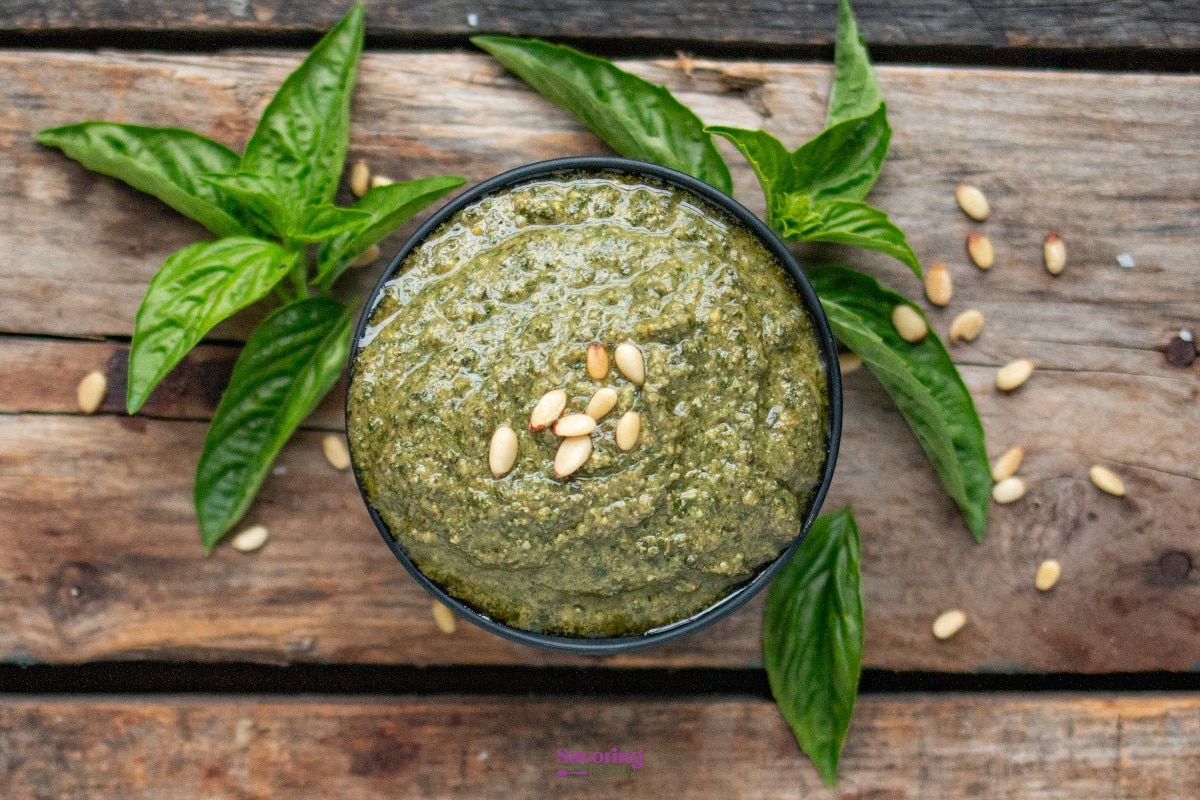
Toss it with hot pasta, spoon it over grilled fish, or stir a spoonful into pesto mayo for the best sandwich spread in your fridge. When the basil plant is taking over the garden, this and basil salt are how I save the harvest.
Ingredients for Basil Pesto
Pesto has only a handful of ingredients, so every one of them shows up in the finished sauce. Here is where your choices matter most.
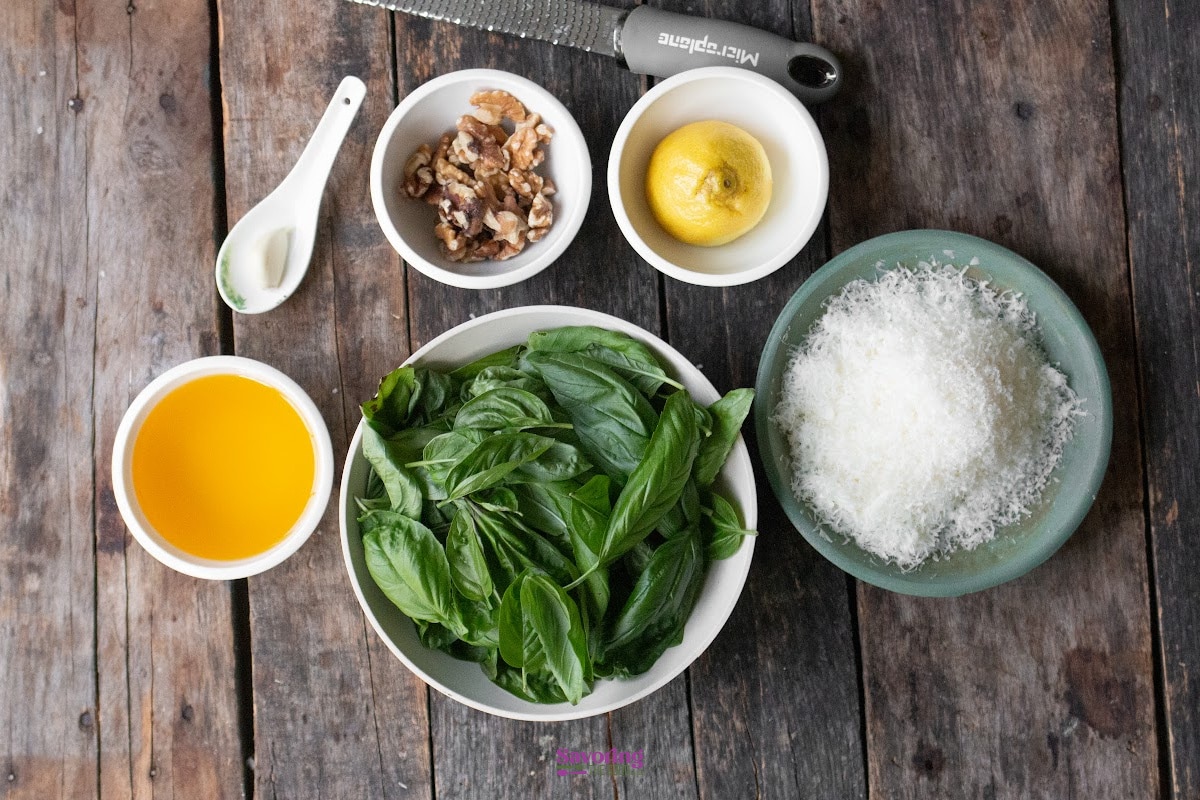
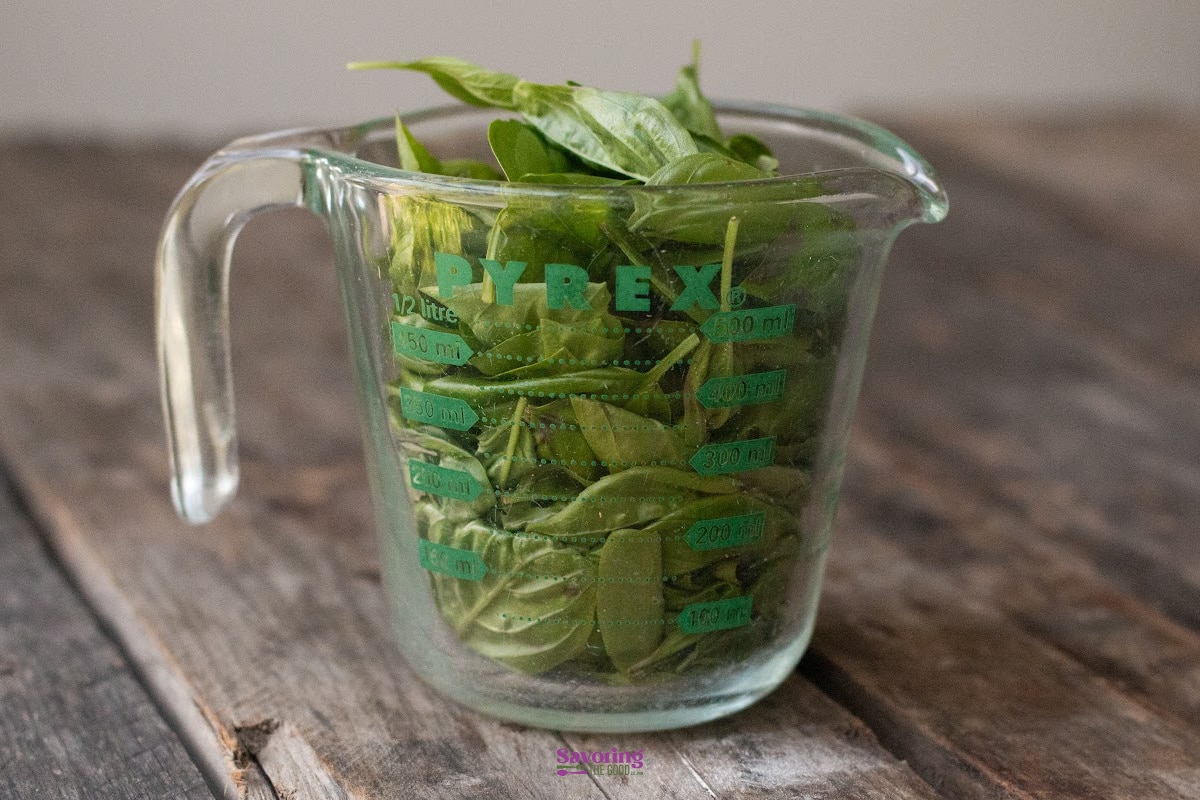
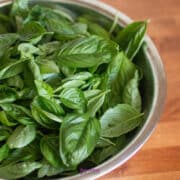
- Fresh basil: Look for Genovese-type sweet basil with large, tender leaves. To measure, press the leaves down gently with your hand so they settle, but do not crush them; bruised basil darkens faster. Wash it and dry it completely; any water left on the leaves thins the sauce and keeps the oil from coating everything. I spin mine in a salad spinner, then roll it in a clean kitchen towel.
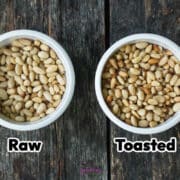
- Pine nuts: Toasting draws out their natural oils and gives the pesto a deeper, roasted flavor. Stay at the stove; pine nuts go from golden to burnt in well under a minute.
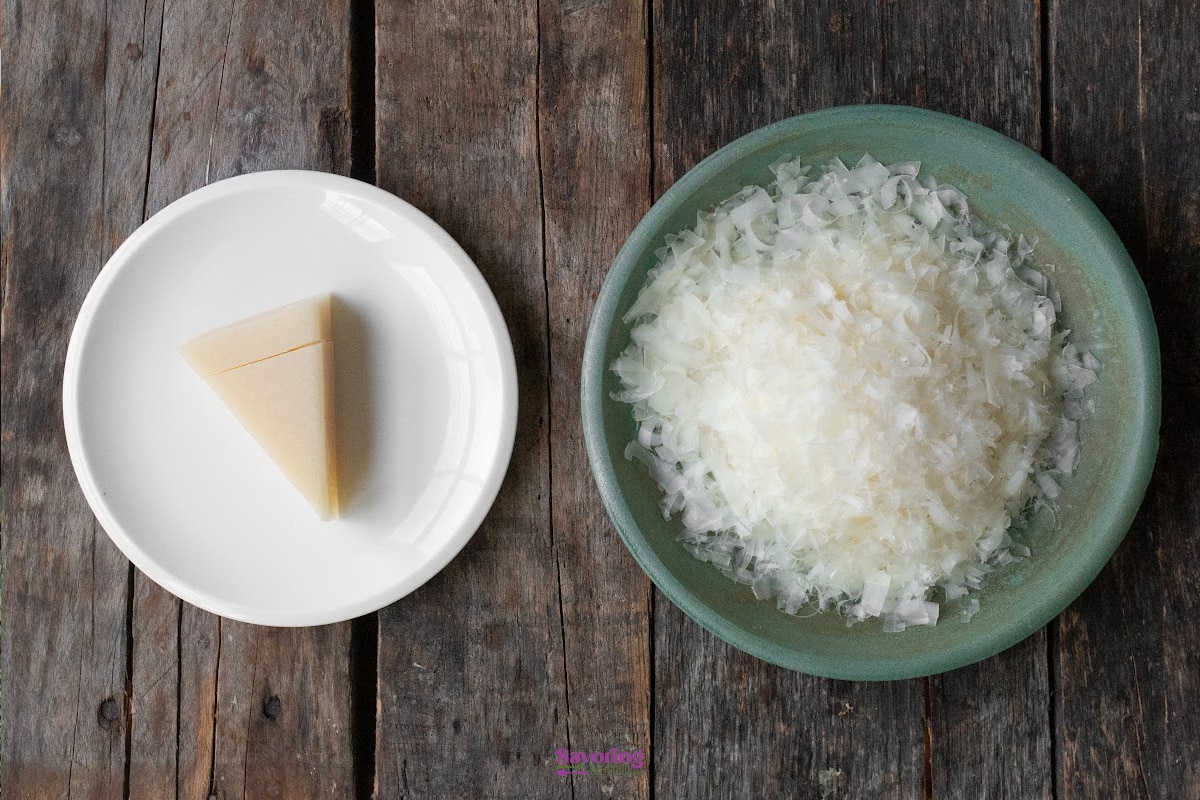
- Parmigiano: This is my default, and I grate it myself. Pre-grated cheese often carries an anti-caking coating, so it does not blend as smoothly into the sauce. I grate mine on a Microplane ultra-fine grater, which makes light, fluffy shreds. A box grater packs denser, so go by weight or the thumb-length piece, not the cup.
- Extra-virgin olive oil: A mild, buttery oil is your friend here. Peppery, grassy oils can turn bitter when they are blended hard, which is why I only let the machine run for half the oil.
- Garlic: Raw garlic gets sharper the longer pesto sits, so start with 1 clove. You can always pulse in more after you taste.
- Lemon zest and juice: A little lemon brightens the basil and cuts through the richness of the cheese and oil. It does not make pesto safe to store at room temperature; it still goes straight into the fridge.
Recipe Card?
To find the full printable recipe with specific measurements and directions CLICK HERE to go to the recipe card.
Substitutions
I keep this list short on purpose. These are the swaps I get asked about the most.
- Walnuts for pine nuts: Walnuts make an earthier, more budget-friendly pesto; toast them the same way. My walnut pesto recipe walks you through that version start to finish.
- Pecorino Romano, or half Parmigiano and half Pecorino: Pecorino is a sheep's milk cheese, sharper and saltier than Parmigiano-Reggiano. Hold back the salt completely until you taste.
How to Make Basil Pesto
The food processor does most of the work here. Your job is to watch the texture and stop at the right moment.
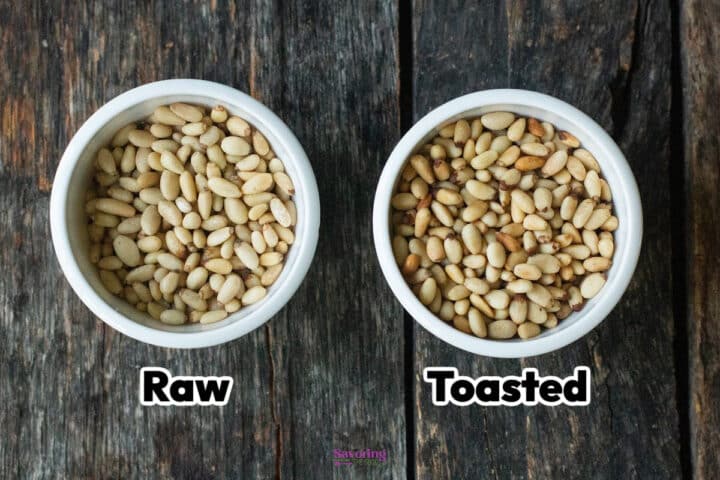
Toast the pine nuts.
Add them to a dry skillet over medium-low heat and stir often. Pull them when they are light golden and you can smell them. Move them straight to a plate, because the hot pan will keep cooking them.
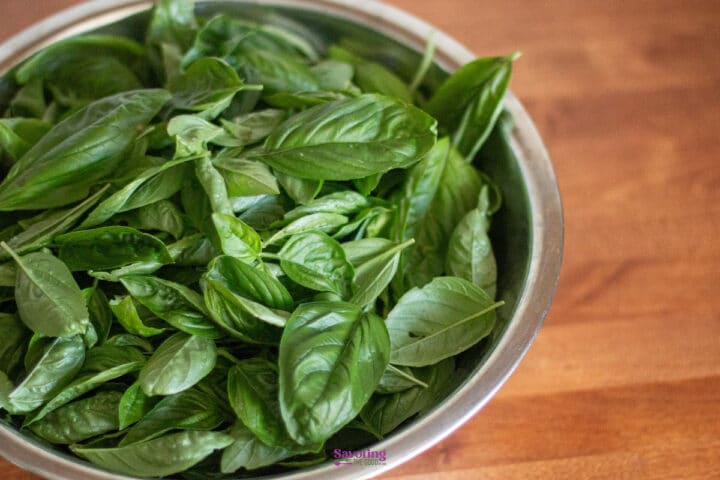
Blanch the basil (optional).
Drop the leaves into boiling water for 30 seconds. They will turn bright green and wilt completely; that color is what you are locking in.
Shock and dry the basil.
Move the leaves straight into an ice bath to stop the cooking. Then squeeze out as much water as you can and pat them dry with a clean towel. Oil and water do not mix, so any water left behind keeps the oil from coating the basil and leaves you with a thin, separated sauce.
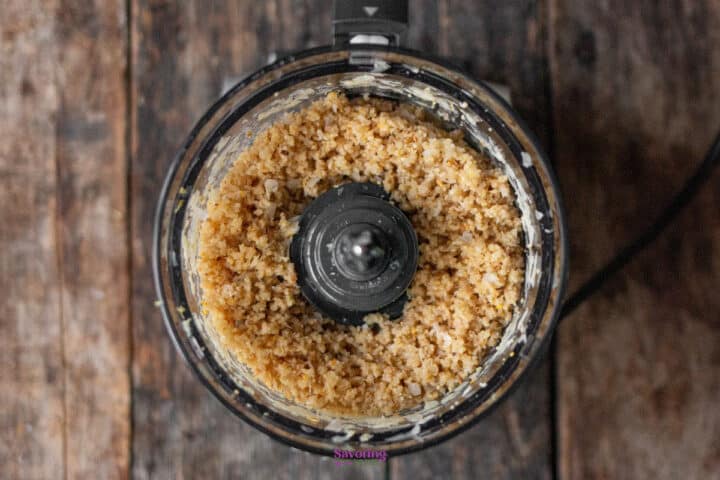
Pulse the garlic, pine nuts, lemon, and cheese.
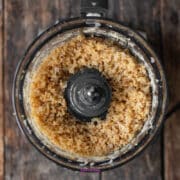
Add the garlic, toasted pine nuts, lemon zest, lemon juice, and grated Parmigiano to the food processor. Pulse until finely chopped and the texture looks like coarse sand. Scrape down the bowl so no whole nuts hide under the blade.
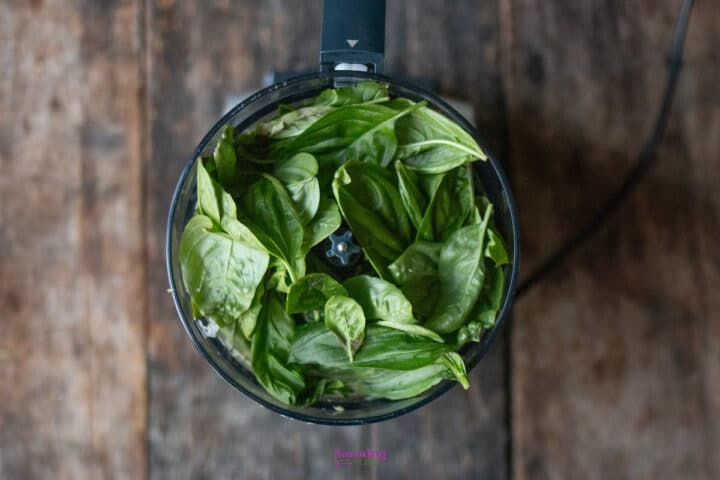
Add the basil and pulse.
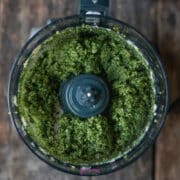
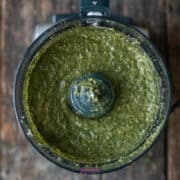
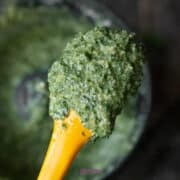
Use short pulses and scrape down the sides between them. Stop when everything is finely chopped but still has texture; you are not making a smoothie.
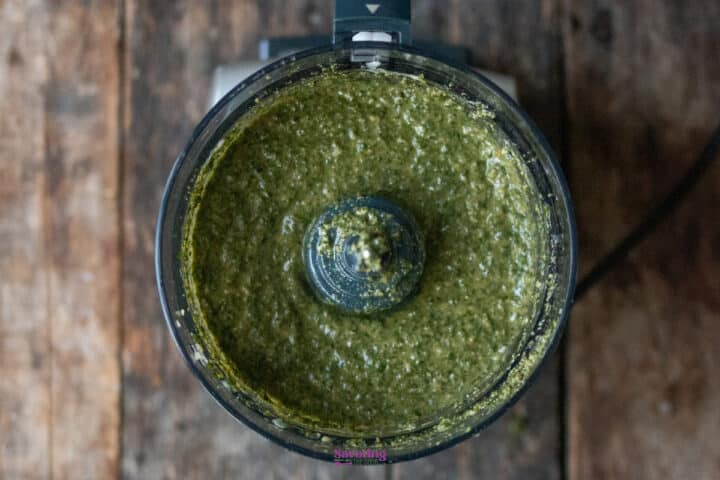
Add the olive oil.
With the machine running, pour the oil in a slow, steady stream just until the sauce looks loose and glossy.
Olive Oil Note:
A mild, buttery oil is your friend here. Peppery, grassy oils can turn bitter when they are blended hard, so stop the machine as soon as the oil is in.
Taste and season.
Add a small pinch of salt, stir, and taste again. The cheese is already salty, so go slowly.

Sarah's Culinary Insight: Bitter Pesto
The most common reason is over-blending the olive oil, which releases bitter compounds; stop the machine as soon as the oil is in. Scorched pine nuts and older basil that has started to flower can also add bitterness.
How to Keep Basil Pesto Green
Nothing is more disappointing than opening a jar of pesto the day after you made it and finding it dull and brown. Two steps make the difference.
Cut basil browns because an enzyme in the leaves reacts with air. The 30-second blanch deactivates that enzyme before it can darken the leaves.
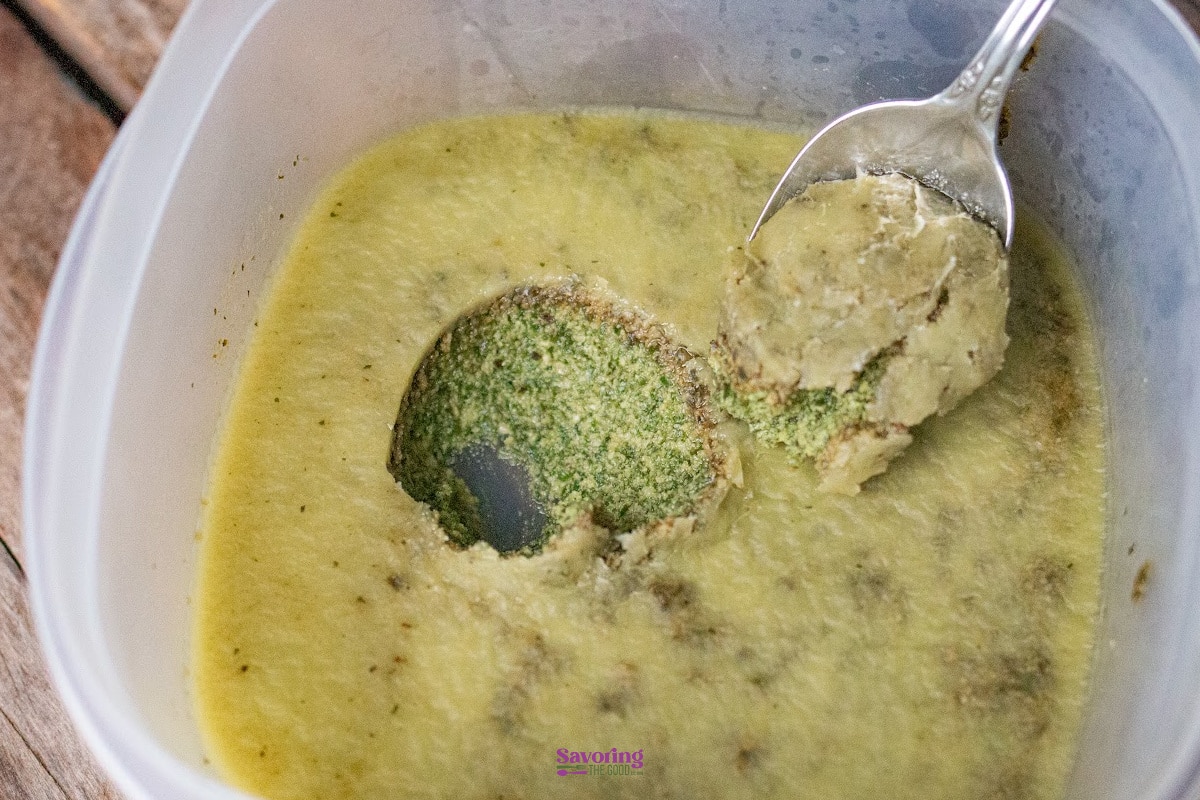
The second step keeps air away from the surface. Smooth the top of the pesto flat, pour a thin layer of olive oil over it, and add a fresh layer each time it goes back in the fridge.
Did you make this recipe?
Do you have feedback that would be helpful to others? If so can help this small business owner by leaving a rating and a review in the comments section? Thank you for being part of the Savoring The Good Community. ~ Sarah
How to Freeze Basil Pesto
Freezing is the best way to save basil pesto for the winter. Frozen in small portions, you can grab exactly what you need for one pasta dinner.
Spoon the pesto into ice cube trays, freeze until solid, then pop the cubes into a freezer bag. For small jars, leave a little headspace and add a thin layer of oil on top before freezing.
I freeze my pesto with the cheese already in it, so it is ready to use the moment it thaws.
Thaw frozen pesto in the refrigerator, never on the counter. You can also stir a cube straight into hot pasta.
Food Safety Callout
Pesto is fresh garlic in oil. Garlic can carry botulism spores, and a low-oxygen environment under oil at room temperature is exactly where they can grow.
Refrigerate pesto as soon as you make it, and do not leave it out longer than 2 hours (1 hour if it is above 90F). There is no tested safe method for canning pesto; freeze it instead.
Seasonal Favorite
This is my award-winning Crisco pie crust recipe; flaky, tender, and made with simple ingredients you already have.
Frequently asked questions, answers and tips:
While I try to share all the information you need to make this recipe in your home with restaurant-quality results, there still may be a question or two. Or these are questions I have received from the community about this recipe. I do my best to answer them as clearly as I can. I hope this helps.
Why did my pesto turn brown?
Cut basil reacts with air and darkens, and over-processing speeds that up by bruising the leaves. Blanch the basil, keep a thin layer of oil on top, and store it in a small container with as little air space as possible.
Why does my pesto taste bitter?
The most common reason is over-blending the olive oil, which releases bitter compounds; stir part of it in by hand. Scorched pine nuts and older basil that has started to flower can also add bitterness.
Can I can homemade pesto?
No. There is no tested safe canning method for pesto, and garlic in oil stored at room temperature is a botulism risk. Freeze it instead.

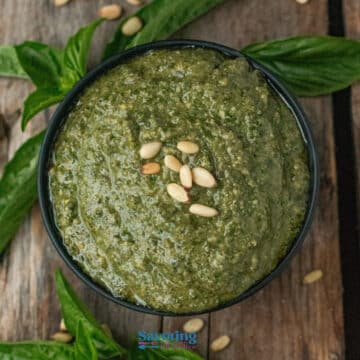
Ingredients
- 2 cups basil leaves fresh, slightly packed (about 50 grams)
- 1 clove garlic peeled
- ⅓ cup pine nuts lightly toasted
- 1 cup Parmesan Cheese finely grated (50 grams)
- ½ lemon zested
- 2 tablespoon lemon juice fresh
- ½ -¾ cup extra-virgin olive oil mild
- kosher salt to taste
- ice and water for the ice bath (if blanching)
Instructions
- Toast in a dry skillet over medium-low heat, stirring often, until light golden and fragrant, 3 to 5 minutes. Transfer to a plate to cool.⅓ cup pine nuts

Optional Blanching
- Bring a saucepan of water to a boil and set up a bowl of ice water. Blanch the basil leaves for 30 seconds, until bright green and wilted.
- Transfer the basil to the ice bath, then squeeze out as much water as possible and pat dry.ice and water
- Add the garlic, pine nuts, lemon zest, lemon juice, and Parmesan to the food processor. Pulse until the mixture looks like coarse sand, scraping down the bowl as needed.1 clove garlic, ⅓ cup pine nuts, ½ lemon, 2 tablespoon lemon juice, 1 cup Parmesan Cheese
- Add the basil and pulse in short bursts until finely chopped but not pureed.2 cups basil leaves
- With the machine running, pour in the olive oil in a slow, steady stream just until the pesto is loose and glossy. Stop the machine as soon as the oil is in.½ -¾ cup extra-virgin olive oil
- Season with salt to taste.kosher salt
Nutrition
Notes

I am Sarah Mock. Welcome!
Sarah Mock is a classically trained Chef and a graduate of Johnson & Wales University. A culinary blogger for 17 years, Sarah helps the home cook prepare her recipes with professional results.




Comments
No Comments