



How to thaw a frozen turkey safely comes down to two methods: the refrigerator, which takes about 1 day for every 4 to 5 pounds, or a cold water bath in your sink, which takes about 30 minutes per pound. I learned the cold water method in commercial food service, and I will walk you through both, plus what to do if it is Thanksgiving morning and your bird is still frozen.

Once your bird is thawed, it is ready for my turkey brine recipe, a classic juicy oven roasted turkey, or a whole smoked turkey if your smoker is calling.
The Best Way to Thaw a Frozen Turkey
The best method is the one that fits the calendar. If you have 4 or more days before you cook, use the refrigerator; it is hands-off and gives you a day or two of wiggle room.
- Less than 4 days? Use cold water.
- Never thaw a turkey on the counter or in warm water. The outside warms into the danger zone (40F to 140F), where bacteria multiply quickly, long before the center thaws.
- The USDA also lists the microwave as a safe method, but very few home microwaves hold a whole turkey. If yours does, follow the manual and cook the bird right away.
How to Thaw a Turkey in the Refrigerator
Refrigerator thawing is the safest method because the turkey never leaves safe temperatures. The only trick is starting early enough.
- Step 1: Count backward. Allow 24 hours for every 4 to 5 pounds; a 16-pound turkey needs about 4 days. Add a day if your fridge is packed or runs very cold.
- Step 2: Set it on a tray. Leave the turkey in its original wrapper and set it breast side up on a rimmed sheet pan or roasting pan. The wrapper almost always leaks a little, and the pan keeps raw turkey juice off everything else.
- Step 3: Use the bottom shelf. Raw poultry always goes below ready-to-eat food, so any drips land on the pan and not on your pie dough.
- Step 4: Check your fridge temperature. It should read 40F or below. An inexpensive fridge thermometer tells you for certain; the dial inside the door does not.
A refrigerator-thawed turkey keeps for 1 to 2 days before cooking. That buffer is why I start early; it takes the panic out of the week.
How to Thaw a Turkey in Cold Water
Cold water thawing turkey takes hours instead of days because water moves heat into the bird far faster than cold air. Plan on about 30 minutes per pound, so a 16-pound turkey takes around 8 hours.

- Step 1: Check the wrapper. Run your hands over the packaging and feel for tears. If you find one, slip the turkey into a large food-safe bag and press out the air; water inside the wrapper makes the meat soggy and carries bacteria.
- Step 2: Fill the pot with cold water. Use cold tap water, never warm. You want it cold enough that your hand aches after a few seconds.
- Step 3: Submerge it breast side down. The breast is the thickest part, so it needs the most contact with the water. The bird will try to float because of the air pocket in the cavity; set the pot lid or a heavy plate on top to hold it under.
- Step 4: Change the water every 30 minutes. Set a timer. Drain the pot and refill it with fresh cold water each time; still water warms up, and the outside of the turkey warms with it.
- Step 5: Cook it right away. A turkey thawed in cold water goes straight into the oven, smoker, or brine in the fridge. It does not get a 2-day hold like a refrigerator-thawed bird.
Keep the whole bird under the water; any part sticking out thaws at a different rate.
Can You Thaw a Turkey in the Sink Overnight?

Only if fresh cold water keeps moving over it the whole time. A turkey sitting in a sink of still water overnight is not safe; by morning that water is close to room temperature.
Chef Tip
This is the method we used in commercial food service. Set the pot in the sink, then let a small trickle of cold water run into it so it constantly overflows down the open drain.
The moving water does the job of changing the water every 30 minutes, without the timer. Restaurants are allowed to thaw this way as long as the water runs 70F or colder, so put a thermometer in the water once or twice; it should read well below that.
Time it so the turkey finishes when you are ready to cook. A 16-pound bird started at 10 pm is ready to roast around 6 am; it still has to be cooked right away.
Double-check that the drain is open before you walk away. The last thing you want is to come downstairs to a flooded kitchen.
What size container should I use?

Use a pot big enough to cover the whole bird with water. If your turkey is bigger than any pot you own, a clean insulated cooler works well, and a scrubbed and sanitized sink works too.
Leave the turkey in its store packaging. It is sealed, and it keeps the juices out of your water and off your sink.
Turkey Thawing Times Chart
Find your turkey's weight on the package, then read across. These times come from the USDA, and they are approximate; every bird and every fridge is a little different.
| Turkey weight | In the refrigerator | In cold water |
|---|---|---|
| 4 to 12 pounds | 1 to 3 days | 2 to 6 hours |
| 12 to 16 pounds | 3 to 4 days | 6 to 8 hours |
| 16 to 20 pounds | 4 to 5 days | 8 to 10 hours |
| 20 to 24 pounds | 5 to 6 days | 10 to 12 hours |
Thawing a frozen turkey breast follows the same rules. A 6-pound bone-in breast takes about 1 to 2 days in the fridge or about 3 hours in cold water.
For a 25-pound turkey or bigger, keep going at the same rate: about 6 days in the fridge or about 12 to 13 hours in cold water. The USDA also has a turkey thawing calculator if you want the math done for you.
How to Tell Your Turkey Is Fully Thawed
The clock gets you close, but your hands tell you for sure. The cavity is the last part to thaw, so that is where you check.
- Reach inside the cavity. You should be able to pull out the neck and the giblet bag easily, with no ice crystals inside.
- Wiggle a drumstick. The leg should move freely at the joint, and the thickest part of the breast should give when you press it.
- If you hit ice, give a cold water bird another 30 to 60 minutes, or a refrigerator bird a few more hours. A turkey that goes into the oven with a frozen center cooks unevenly, with dry breast meat and underdone thighs.
Still Frozen on Thanksgiving Morning?
Take a breath; you have options. If the bird is mostly thawed, move it from the fridge into a cold water bath to finish it.
If it is still rock solid, you can safely roast a turkey from frozen or partially frozen. Plan on at least 50 percent more cooking time, and pull out the giblet bag with tongs once the cavity loosens up partway through.
Either way, use an instant-read thermometer. The turkey is done when the thickest part of the breast and the innermost thigh both read 165F.
What to Do After Thawing
A refrigerator-thawed turkey keeps 1 to 2 days before cooking. Some turkey brands say up to 4 days; I stick with the USDA's shorter window, because a crowded holiday fridge is opened all day long.
A cold water thawed turkey gets cooked immediately. Save that giblet bag for homemade giblet gravy, and if you want a juicy bird in less time, a fully thawed turkey is easy to spatchcock.
When it comes out of the oven, I can teach you how to carve a turkey breast into clean, even slices.




Seasonal Favorite
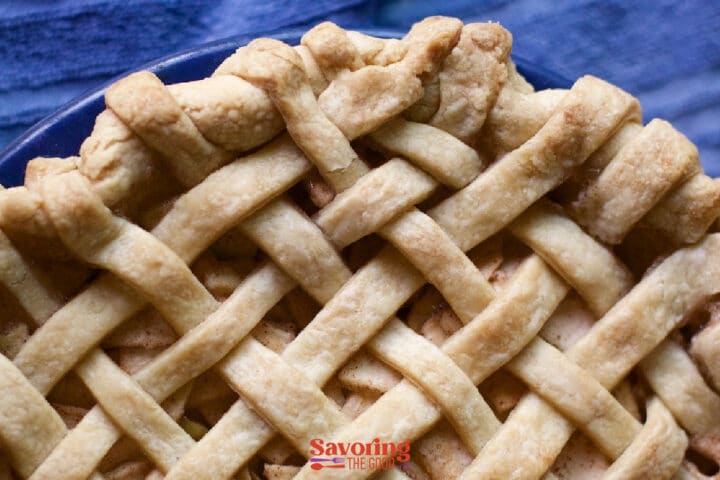
This is my award-winning Crisco pie crust recipe; flaky, tender, and made with simple ingredients you already have.
originally published Nov. 2017


Ingredients
- 1 Turkey
Instructions
Refrigerator Method
- Allow 24 hours for every 4 to 5 pounds of turkey.1 Turkey
- Leave the turkey in its original wrapper and set it breast side up on a rimmed pan.
- Thaw on the bottom shelf of a refrigerator set to 40F or below.
Cold Water Method
- Allow 30 minutes per pound of turkey.
- Check the wrapper for tears; bag the turkey if needed.
- Submerge breast side down in cold tap water; weigh it down with a lid or plate.
- Change the water every 30 minutes, or keep a trickle of cold water running so the pot overflows down an open drain.
- Cook immediately after thawing.
Nutrition
Notes
- A refrigerator-thawed turkey keeps 1 to 2 days before cooking and may be refrozen.
- A turkey thawed in cold water must be cooked immediately; refreeze only after cooking.
- The turkey is thawed when the cavity has no ice crystals and the giblet bag pulls out easily.

Sarah's Culinary Insight
A few things I have learned from defrosting dozens of frozen birds over the years.
- The bird always floats. Every frozen turkey I have thawed in water tries to bob to the top, because the cavity holds a pocket of air. A lid or a heavy plate fixes it; the part above the waterline stays warmer and thaws slower than the rest.
- Skip the water change and the bath warms up. Still water climbs toward room temperature within a couple of hours, and the outer layer of meat climbs with it. Change it every 30 minutes or keep a trickle running; there is no middle ground.
- The outside lies to you. A turkey can feel soft all over and still have a solid block of ice around the giblet bag. Always reach into the cavity before you plan your roast time.
- A holiday fridge thaws slower. A fridge packed with Thanksgiving groceries, or one set to 34F, can add a full day to the chart. When in doubt, start a day early; a thawed bird holds for 1 to 2 days, and a frozen one on Thursday morning holds up dinner.

I am Sarah Mock. Welcome!
Sarah Mock is a classically trained Chef and a graduate of Johnson & Wales University. A culinary blogger for 18 years, Sarah helps the home cook prepare her recipes with professional results.




Linda says
Great hack. Thanks for posting!
Sarah says
You are welcome Linda! Happy Holidays to you and your family. Sarah