

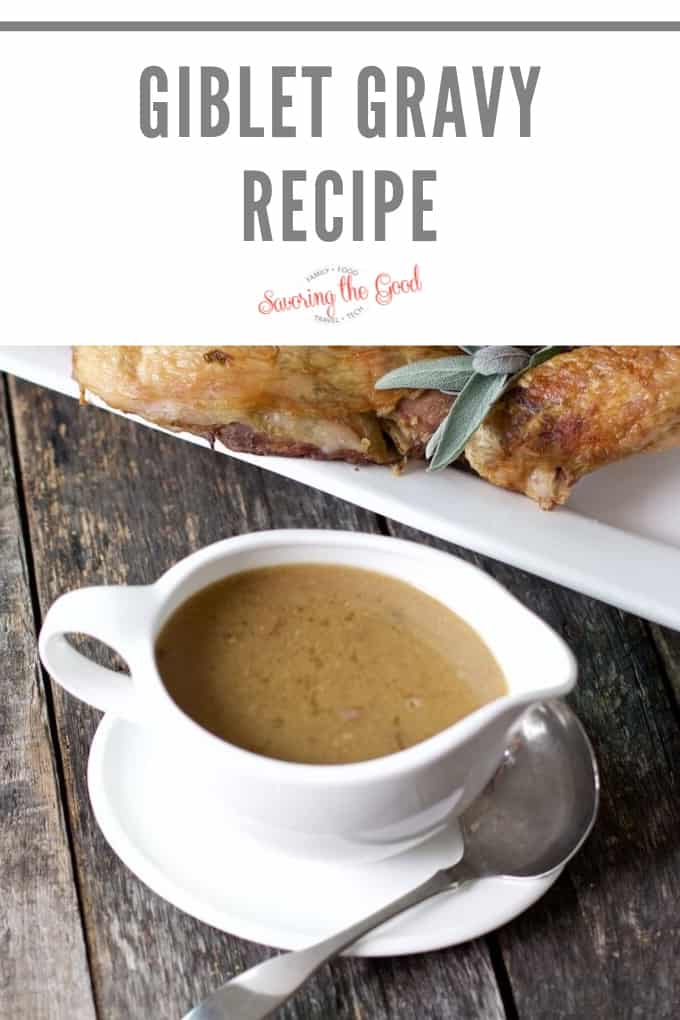

Turkey giblet gravy is a rich, from-scratch gravy made by simmering turkey giblets and the neck into a broth while the bird roasts, then whisking that broth into the pan drippings. If you have never made gravy from scratch, this is the recipe that teaches you how. Ready in about 45 minutes of simmering, most of it hands-off while your turkey cooks.

I have made it this exact way every Thanksgiving for years; it is the one dish nobody at my table questions and expects to be part of the meal. This gravy simmers on the stove while the turkey cooks and finishes in minutes once the bird comes out to rest before carving.
Drizzle it over Thanksgiving turkey, spoon a pool of it into your mashed potatoes, or pour it over turkey poutine; it earns a spot on the table every year.
What Are Giblets, Exactly?
Giblets are the heart, liver, and gizzard tucked in a small bag inside the turkey cavity, usually with the neck riding along in the same bag. Pull that bag out before you season or roast the bird; it holds the pieces that build the deep, savory base for this gravy.
I use the heart, gizzard, and neck every time. The liver is optional since it carries a stronger, more mineral flavor that not everyone loves, and I leave it out more often than not.
Ingredients:
The turkey neck and giblets are what turn plain broth into real gravy; they add body and the savory backbone you cannot get from stock alone. Butter and flour build the roux that thickens everything into proper gravy instead of a thin broth. Salt and pepper come in at the end, once the broth has reduced, since concentrating the liquid concentrates the seasoning too.
Recipe Card?
To find the full printable recipe with specific measurements and directions CLICK HERE to go to the recipe card.
Substitutions:
Here is what happens when you need to swap a piece of this recipe.
- No Liver: Skip it. I leave the liver out more often than not since it pushes the flavor toward mineral and organ-heavy, and the gravy tastes just as rich without it.
- Chicken Giblets Instead of Turkey: This works well and is what I use for a chicken dinner version of this same gravy. The flavor turns lighter, not worse, just less turkey-forward.
- No Turkey Neck: A whole chicken wing simmered in its place gives you similar body from the bone and connective tissue. I have tested this in a pinch and would use it again.
- Cooked Sausage Instead of Giblets: This turns the gravy into more of a Southern-style sausage gravy. It tastes good, but at that point it is a different dish, not a giblet gravy anymore, so I only recommend it if that is genuinely what you are after.
- Mushrooms for a Vegetarian Version: Mushrooms add real earthy depth and make a genuinely good vegetarian gravy. It will not taste like giblet gravy, but it holds its own as its own thing.
Instructions:
Making turkey giblet gravy is a satisfying holiday ritual; simmer, sizzle, and whisk your way to a gravy that makes mashed potatoes worth fighting over. Here is how anyone, from total beginners to Thanksgiving veterans, can work through each stage.

Make the Giblet Broth
Brown the giblets, turkey neck, and backbone if you have it, in melted butter over medium heat. Give the pieces a few minutes on each side until they pick up real color, not just gray to light brown; that browning is where the flavor comes from, not the simmering that follows. Do not rush this step. A pale sear here means a flat-tasting gravy later, and there is no fixing that once the broth is simmering.
Simmer the Stock
Add the chopped onion, celery, carrot, and herbs, then cover everything with water. Let it bubble gently, not boil hard, on low heat while your turkey finishes roasting; a hard boil clouds the broth and toughens the neck meat. You want a broth that smells rich and tastes seasoned on its own before you ever strain it.
Make the Roux
Once your turkey comes out to rest, whisk flour directly into the hot drippings left in the roasting pan. Keep whisking over the heat until the mixture turns a light golden color and smells toasted rather than raw; that color change is what cooks out the starchy flour taste.

Combine and Finish
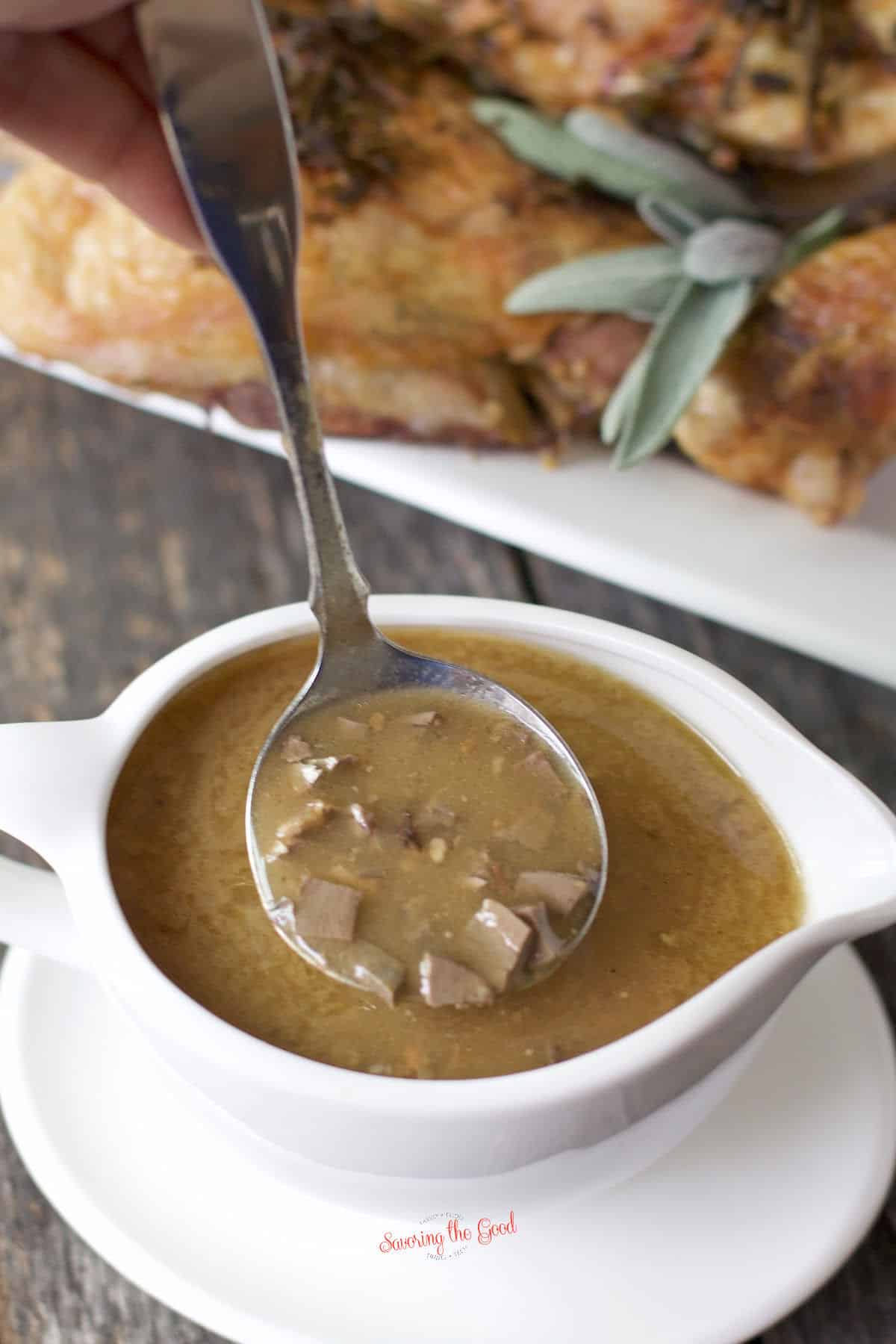
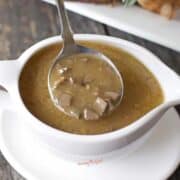
Chop the giblets finely, strain your broth to remove the solids, and whisk the strained broth into the roux a little at a time. Let the gravy simmer until it coats the back of a spoon. If you pour all the broth in at once instead of whisking it in gradually, you risk lumps you cannot smooth back out.
Gravy Too Thick?
Loosen up too-thick gravy with a splash of broth or wine if needed.
Serve
Pour the finished gravy into a warmed gravy boat so it stays hot longer at the table. Pour, pass, and let people go back for seconds.
Make Ahead Tip
Giblet gravy is genuinely make-ahead friendly; simmer, strain, and refrigerate up to two days ahead. Reheat gently on the stovetop over low heat, whisking in a splash of extra broth if it has thickened up too much in the fridge.

Turkey Preparation Essentials



Storage Tip
Leftover turkey giblet gravy holds its flavor and texture well; plan on up to four days in the refrigerator or a full month in the freezer. Cool it completely, divide it into containers or freezer bags, and reheat gently on the stovetop rather than the microwave to keep the texture silky instead of separated.

What I Have Learned Making This Gravy Year After Year
I have made this gravy the same way for close to fifteen Thanksgivings now, and a few things hold true every single time.
- Browning the giblets and neck properly before adding water is the one step that decides whether your gravy tastes deep and savory or thin and flat; I learned this the year I rushed it and ended up with a pale, disappointing stock.
- The neck matters as much as the giblets themselves, sometimes more. It is mostly bone and connective tissue, and simmering it low and slow is what gives the broth its body. Skip the neck and the broth thins out noticeably.
- Whisking the strained broth into the roux gradually, not all at once, is what keeps the gravy smooth. Dump it in fast and you will be straining lumps out at the last minute in front of your guests.
- This gravy freezes genuinely well for up to a month, which I lean on most years since Thanksgiving morning already has enough going on. I make the broth a few days ahead and finish the roux and gravy the day of.
FAQ's and Tips
The giblets of a turkey include the heart, liver, gizzard of the turkey. These organs along with the neck are usually found in a bag and this bag needs to be removed from the cavity of the turkey before roasting the turkey.
A lot of traditional turkey gravies will have giblets as part of the ingredients. The addition of the cooked heart and liver to the gravy will add not only flavor to the gravy but an added boost of iron.
Yes, giblet gravy freezes well for up to a month. Cool it completely, portion it into freezer-safe bags with the air pressed out, and thaw it in the refrigerator before reheating gently on the stovetop.
There is nothing worse than cold gravy on the Thanksgiving table. To keep the gravy warm I will first warm the gravy boat with hot water for about 5 minutes. Or, you can use an insulated gravy boat to keep the gravy warm.
Community Contribution
Have your own secret gravy ingredient or substitution? Share your favorite tweaks and any questions in the comments below!


Ingredients
- Turkey giblets
- Turkey neck
- 2 tablespoons Butter
- 4 Cups Water
- 2 Stalks celery roughly chopped
- 2 Large Carrots roughly chopped
- 1 medium onion roughly chopped
- 2 each Bay Leaves
- ¼ Cup Parsley chopped
- 3 springs Rosemary
- 8-10 leaves sage
- 3 Tablespoons Flour, All Purpose
- salt and pepper to taste
- Drippings from roasted turkey
Instructions
How to cook giblets for gravy:
- Brown the giblets, turkey neck, and backbone if you have it, in melted butter over medium heat. Give the pieces a few minutes on each side until they pick up real color, not just gray to light brown; that browning is where the flavor comes from, not the simmering that follows. Do not rush this step. A pale sear here means a flat-tasting gravy later, and there is no fixing that once the broth is simmering.Turkey giblets, Turkey neck, 2 tablespoons Butter

- Add the chopped onion, celery, carrot, and herbs, then cover everything with water. Let it bubble gently, not boil hard, on low heat while your turkey finishes roasting; a hard boil clouds the broth and toughens the neck meat. You want a broth that smells rich and tastes seasoned on its own before you ever strain it.4 Cups Water, 2 Stalks celery, 2 Large Carrots, 1 medium onion, 2 each Bay Leaves, ¼ Cup Parsley, 3 springs Rosemary, 8-10 leaves sage, salt and pepper
- Once your turkey comes out to rest, whisk flour directly into the hot drippings left in the roasting pan. Keep whisking over the heat until the mixture turns a light golden color and smells toasted rather than raw; that color change is what cooks out the starchy flour taste.3 Tablespoons Flour, All Purpose, Drippings from roasted turkey
- Chop the giblets finely, strain your broth to remove the solids, and whisk the strained broth into the roux a little at a time. Let the gravy simmer until it coats the back of a spoon. If you pour all the broth in at once instead of whisking it in gradually, you risk lumps you cannot smooth back out.
- Pour the finished gravy into a warmed gravy boat so it stays hot longer at the table. Pour, pass, and let people go back for seconds.

Nutrition
Notes

I am Sarah Mock. Welcome!
Sarah Mock is a classically trained Chef and a graduate of Johnson & Wales University. A culinary blogger for 17 years, Sarah helps the home cook prepare her recipes with professional results.


Comments
No Comments